
Dallas-Fort Worth has quietly become one of the most important business technology markets in the United States. The DFW metroplex is home to more Fortune 500 headquarters than any US metropolitan area outside New York — American Airlines, AT&T, Southwest Airlines, Toyota North America, and dozens of others have made North Texas their operational base.
The downstream effect of that corporate concentration is a large, sophisticated market for business software. Dallas businesses — from established enterprises to fast-growing startups — need custom software solutions for operations, logistics, finance, and customer experience that standard off-the-shelf products don't cover.
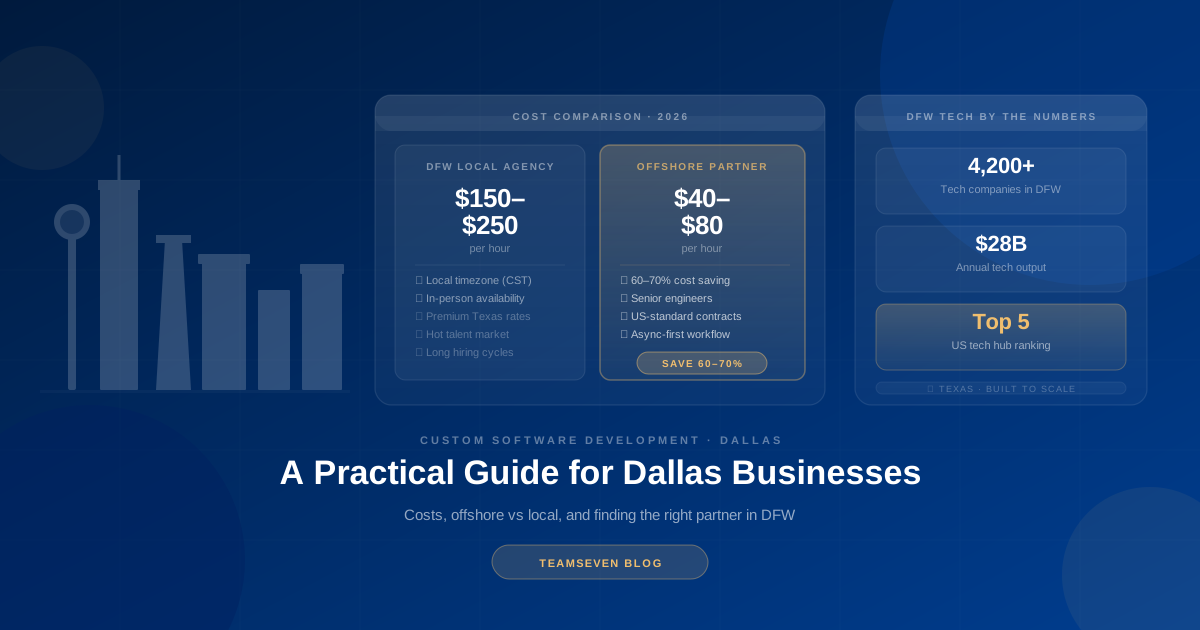
Dallas is also, like every major US metro, an expensive place to hire software developers. Senior engineers command $120,000–$175,000 annually. Local agency rates run $100–160/hr. For the middle market — companies too small for Big Four consulting but too operationally complex for generic software — the gap between what they need and what they can afford locally is real.
What makes Dallas distinctive as a software market
Dallas businesses have several characteristics that shape their software development needs:
Scale and operational complexity. DFW's economy is built around operations — airline operations, telecom infrastructure, logistics and distribution, financial services, healthcare. These businesses need software that handles real operational complexity, not generic SaaS tools adapted with workarounds.
Conservative procurement culture. Dallas business culture, shaped by its enterprise roots, is relationship-driven and due-diligence-heavy. Decisions about software vendors are made carefully, with reference checks, contract review, and clear accountability structures. This is actually a good fit for professional offshore development — the structured contractual approach that Dallas businesses expect is also the approach that produces good offshore engagements.
Growth-stage startup activity. Beyond the enterprise layer, Dallas has a growing startup ecosystem — particularly in fintech, healthcare technology, and logistics technology. These founders need to build products capital-efficiently and frequently evaluate offshore development as their first engineering strategy.
Logistics and distribution hub. DFW Airport is one of the world's busiest cargo hubs. Dallas's central US location makes it a major distribution center. Dozens of logistics companies, 3PLs, and freight forwarders are headquartered or have significant operations here — all with software needs that generic platforms don't meet.
What custom software development costs in Dallas in 2026
Local Dallas agency:
- Senior developer rate: $100–160/hr
- 16-week MVP project (2 developers + QA): $160,000–$280,000
- Monthly dedicated team retainer: $20,000–$45,000
Eastern European agency:
- Senior developer rate: $50–80/hr
- Same 16-week project: $75,000–$130,000
- Monthly retainer: $12,000–$20,000
South Asian agency:
- Senior developer rate: $25–55/hr
- Same 16-week project: $40,000–$90,000
- Monthly retainer: $8,000–$15,000
For a Dallas logistics company or mid-size enterprise, the difference between local and professional offshore development for a meaningful custom software project runs $100,000–$200,000. That's real capital that either stays in the business or doesn't.
Dallas's industries and specific software needs
Logistics and supply chain. Dallas's position as a central US distribution hub means significant demand for custom freight management, warehouse management, and last-mile delivery software. Companies with specific carrier relationships, unusual rate structures, or multi-modal freight requirements consistently find that off-the-shelf platforms require expensive customization or leave critical gaps.
Financial services and fintech. Dallas is a growing fintech center. Payment processing companies, lending platforms, insurance technology, and financial data businesses are building custom software here. Fintech development requires specific security and compliance expertise — NACHA for payments, SOC 2 for data handling — that experienced agencies understand from previous projects.
Healthcare technology. North Texas's large and diverse healthcare market generates consistent demand for custom clinical software, patient management platforms, and healthcare data tools. Dallas-based health systems and health tech startups are building custom tools that fit Texas's specific healthcare landscape.
Retail and e-commerce. Dallas's retail heritage — anchored by companies like JCPenney, Tuesday Morning, and a large DTC brand community — creates demand for custom e-commerce platforms, inventory management systems, and retail analytics tools.
Real estate technology. Dallas's booming real estate market has produced PropTech companies building custom property management, transaction, and investment analysis platforms.
What to prepare before approaching any agency
Dallas businesses that run successful software development engagements — regardless of whether they go local or offshore — tend to share one characteristic: they're prepared before they start conversations.
Preparation means: a written product brief describing what you're building and why, a clear list of required features for the initial version, a realistic budget range stated upfront, a timeline with any hard constraints, and a list of systems the new software needs to integrate with.
This document takes two to four hours to write. It produces dramatically better proposals from any agency because it replaces vague conversations with specific requirements. It also signals — to any professional agency — that you're a serious client worth prioritizing.
For Dallas businesses specifically, given the conservative procurement culture: a well-prepared brief also establishes the professionalism and seriousness that builds trust in the early stages of an agency relationship.
Working with an offshore agency from Dallas
Dallas Central Time is 10–11 hours behind Pakistan. The working rhythm is identical to other Central Time US cities: predominantly async day-to-day, weekly video calls at the time zone boundary (7–8am CST / 5–6pm PKT).
Dallas's business culture, which tends toward structured professional communication rather than constant real-time collaboration, adapts reasonably well to this rhythm. Operations-focused businesses that are accustomed to formal project updates and milestone-based accountability find the offshore engagement model familiar.
Muhammad Nabeel is the co-founder of Teamseven, a custom software development agency based in Lahore, Pakistan. We build logistics, enterprise, and SaaS software for US businesses. Get in touch to talk through your Dallas project.