
How Much Does Logistics Software Development Cost in 2026?
A real cost breakdown for custom logistics and freight software: freight management, warehouse software, TMS, and fleet platforms, from the team behind i-mve.

Logistics is the vertical we know best. We built i-mve: a full operations platform now used by 523 UK removals and storage companies, so when a logistics business asks me what custom software costs, I'm not estimating from a spreadsheet. I'm estimating from having built one.
This is the honest cost guide for custom logistics software in 2026: freight management, warehouse systems, fleet platforms, and the operational tools that logistics businesses build when off-the-shelf software stops fitting.
The short answer
| Logistics software type | What mainly drives the cost | Timeline |
|---|---|---|
| Focused tool (one function: e.g. job management or dispatch) | Narrow scope, one or two integrations | 16–24 weeks |
| Freight management system (orders, carriers, docs, tracking) | Carrier/accounting integrations, tracking data, rate engine | 24–40 weeks |
| Full operations platform (multi-module, integrations, client portals) | Multiple modules, multi-role interfaces, client portals | 36+ weeks |
Team location (South Asia, Eastern Europe, US/UK) shifts what any of these cost by a wide margin, for comparable delivery quality. That's a conversation for a scoping call, not a table. Professional agencies, full delivery. Excludes ongoing hosting, third-party API fees, and maintenance.
Now the part that helps you plan.
Why logistics software is its own thing
Logistics software is harder to estimate than most categories because logistics operations are complex and specific. Two freight forwarders that look identical from outside run completely differently inside: different carrier relationships, different rate structures, different client requirements, different exception handling.
This is exactly why logistics businesses end up building custom software in the first place. The off-the-shelf platforms (CargoWise, Magaya, Descartes) are built for the average operation. The moment your business diverges from average, the software starts fighting you. And every logistics business diverges from average, because the specifics are the business.
The cost of custom logistics software is mostly the cost of capturing that specificity correctly. The features are standard. The way your operation needs them to work is not.
What drives logistics software cost
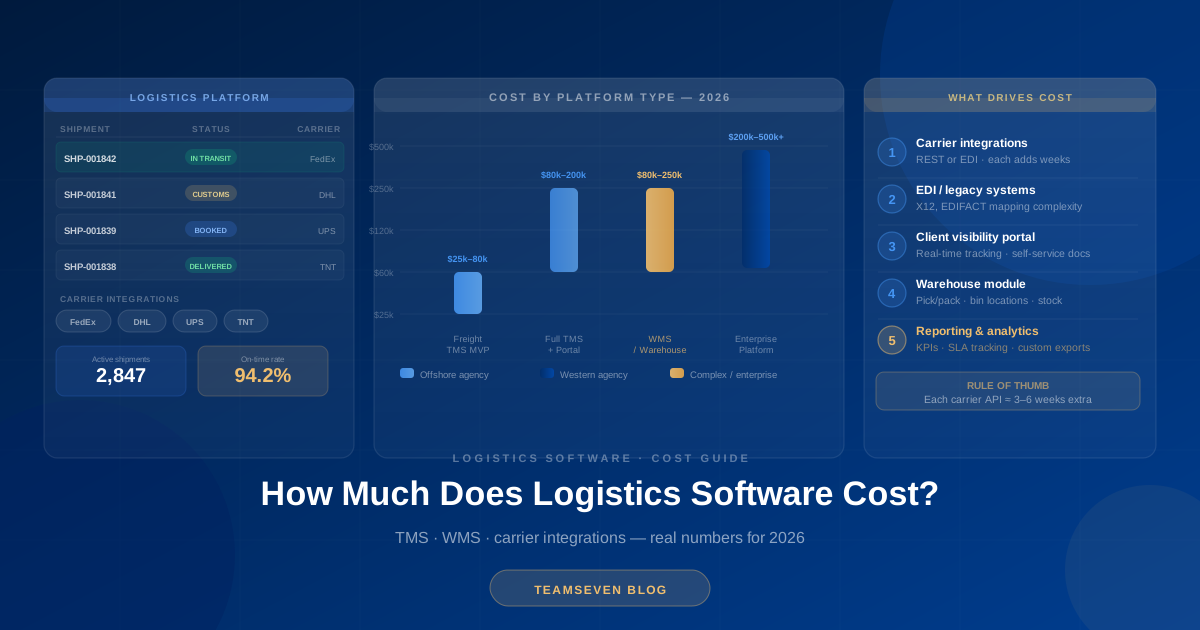
1. Integrations: usually the biggest single factor
Logistics software lives or dies on integrations. Carrier APIs. Accounting systems. Customs and compliance systems. Tracking providers. Client systems. Lead generation platforms.
When we built i-mve, the integration work was substantial. We connected it to Xero, QuickBooks, and Sage for accounting, and to UK lead generation platforms including Compare My Move, PinLocal, and Getamover. Each integration is its own mini-project: understanding the third-party API, handling its quirks, dealing with its failures, keeping it working as it changes.
Here's the honest truth about integrations that most estimates hide: integration complexity varies enormously and is hard to know upfront. A well-documented modern REST API integrates in days. A poorly-documented legacy carrier system using old EDI protocols can take weeks. The number of integrations and their individual complexity is usually the biggest swing factor in a logistics software estimate. Get these scoped carefully before anyone quotes you a final number.
2. The rate and billing engine
Logistics billing is brutal. Fuel surcharges. Dimensional weight. Accessorials. Contract rates versus spot pricing. Different rates for different clients, lanes, and service levels. Many logistics businesses end up calculating this manually because their software can't handle their actual rate structures.
Building a rate engine that captures how your business prices is one of the more complex parts of logistics software, and it's where a lot of the value is. It's also where a lot of the cost is, because your rate logic is probably more complicated than you think it is until you try to write it down precisely.
3. Real-time tracking and visibility
Clients increasingly expect real-time shipment visibility. Building that means ingesting tracking data from multiple sources, normalising it, and presenting it reliably. Real-time anything adds engineering cost because the infrastructure for live data is more complex than for static data.
4. Client portals
Enterprise logistics clients increasingly demand their own portal: self-service tracking, document access, custom reporting. A client portal is effectively another interface with its own access control and its own data requirements. It's common in logistics platforms and it adds real scope.
5. Multi-role complexity
Logistics platforms serve operators, drivers, warehouse staff, clients, and admins: each needing a different view. Like the marketplace problem, multi-role done properly means designing each experience deliberately, not hiding buttons on one shared screen.
Where logistics businesses waste money
Recreating CargoWise. Some founders try to rebuild an entire enterprise platform when they only needed the 20% of it that they use, customised to their operation. Build the part that's specific to you; don't rebuild the parts that off-the-shelf does fine.
Over-integrating early. You don't need every carrier integration on day one. Build the two or three carriers that represent most of your volume, validate the platform, then add more. Each integration is cost: sequence them by actual importance.
Building for scale before validating the workflow. Get the operation working for your current volume first. The scale architecture matters later and you'll design it better once the workflow is proven.
Skipping the discovery phase. Logistics is exactly the kind of complex, specific domain where building without a proper discovery phase leads to expensive rework. The operation's specifics need to be captured precisely before development. This is the vertical where discovery pays for itself most reliably.
What's included and what isn't
A real logistics software quote should include: the core modules you scoped, the integrations you specified, multi-role interfaces, admin tooling, design, QA, and deployment.
What's frequently separate and surprises people: ongoing third-party API costs (some carrier and tracking APIs charge per call or per month), hosting and infrastructure (scales with data and usage), additional integrations added later, and maintenance (15–20% of build cost annually, and logistics software needs real maintenance because the third-party APIs it depends on keep changing).
That last point matters in logistics specifically. Your software depends on external carrier and accounting APIs you don't control. When they change, and they do, your integration needs updating. Budget for it.
The i-mve example
When we built i-mve for the UK removals industry, the scope was a full operations platform: job management, crew scheduling, automated quoting and invoicing, client contracts, document generation, plus the accounting and lead-gen integrations. That's a substantial platform, not a focused tool. It sits in the "full operations platform" row of the table above.
What made it work wasn't building fast. It was understanding the removals business deeply before building, capturing the specific way removals companies operate, and getting the integrations right. It's now live across the UK, used by 523 companies, replacing the spreadsheets and manual processes those businesses used to rely on. That's what custom logistics software is for: fitting the operation instead of forcing the operation to fit the software.
How to get your real number
State your modules. Job management, dispatch, warehouse, tracking, billing, client portal, which do you need in version one?
List your integrations specifically. Which carriers, which accounting system, which other platforms? This is the biggest cost driver, so name them.
Describe your rate structure honestly. The more complex your pricing, the more the billing engine costs. Write down how you price, in detail.
Do a discovery phase. In logistics especially, the specifics matter enormously, and capturing them before development is the difference between an accurate estimate and a 50% overrun.
Offshore for logistics software
Logistics is well-suited to offshore development: the scope is definable, the work is substantial, and the cost difference is significant. The thing that matters most when choosing an agency for logistics: do they understand logistics? An agency that has built freight or logistics software knows what a bill of lading is, why fuel surcharges are complex, and what carrier integration involves. An agency learning logistics on your project learns it on your budget.
We've been building logistics software since 2017 and it's our strongest vertical. Ask any agency you're considering to show you logistics work they've delivered. Domain experience in logistics is worth a real premium because the domain is complicated.
FAQ
How much does logistics software development cost? It depends on scope and team location more than anything else. A focused tool handling one function such as job management or dispatch is the smallest build, typically 16–24 weeks. A freight management system covering orders, carriers, documents and tracking is a bigger project, typically 24–40 weeks. A full multi-module operations platform with integrations and client portals is the largest, running 36 weeks or more. Book a call and we'll scope your specific project and give you a real number.
Should I rebuild something like CargoWise? Almost never. The common and expensive mistake is trying to recreate an entire enterprise platform when what you needed was the 20% of it you use, customised to how you work. That narrower build is a fraction of the cost and fits your operation better.
How many carrier integrations do I need at launch? Start with the two or three that represent most of your volume. Over-integrating early is one of the most reliable ways to inflate a logistics build: validate the workflow with your main carriers first, then add the long tail once the operation is proven.
Should I build for scale from day one? No. Get the operation working at your current volume first. The architecture that matters at scale is different from what matters now, and building for volumes you don't have yet spends money on assumptions you haven't tested.
Why does discovery matter so much for logistics software? Because logistics is a complex, specific domain where the details of how your operation runs determine the build. This is exactly the kind of project where skipping discovery leads to expensive rework: a number quoted without it is a guess.
Stay connected
Build notes, launches, and new articles from the Teamseven team.