Home
IT Staff Augmentation · AI-Native Engineers

IT staff augmentation: hire the engineers behind platforms
hundreds of companies run on daily

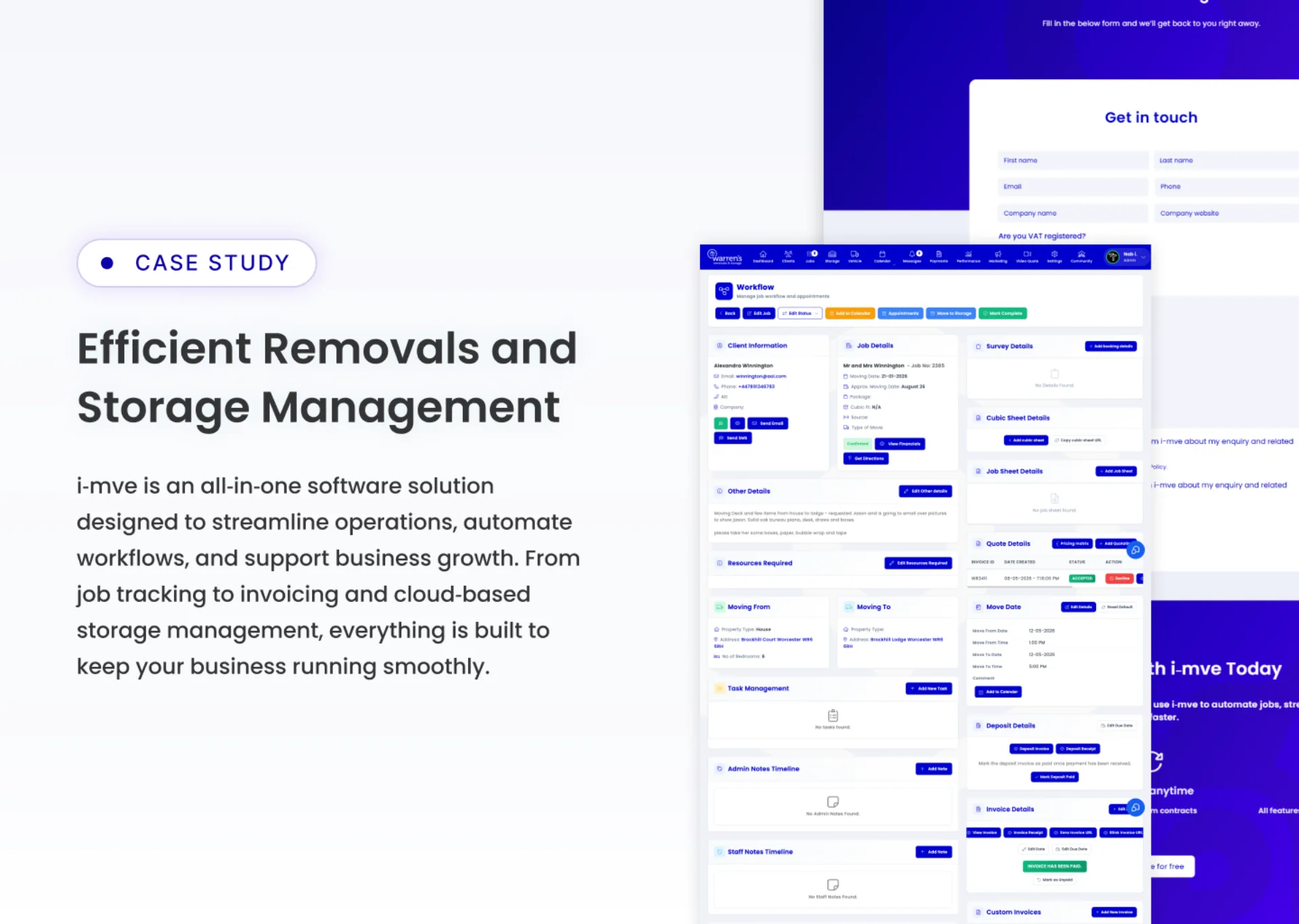
Our team built and maintains i-mve, used by 510 UK removals and storage companies, plus a smart-parking system deployed at a national ambulance service and a research platform built on HIPAA's access-control principles at Ball State University. Those are the engineers who embed with your team. You keep the roadmap, the tools, and the code; we carry the employment, payroll and HR.

Need AI on the roadmap? The engineers we embed already ship LLM features, RAG pipelines, and agentic workflows to production, with prompt versioning and eval suites, not vibes. Not developers you have to teach it to.

3–5 daysTo Shortlist
600+Tracked Projects
8+Years Experience

One transparent monthly rate per engineer · You interview every candidate

Augmented engineers · embedded in your team

"They slotted into our stand-ups, our repo, and our review process from week one. It never felt like an outside team."

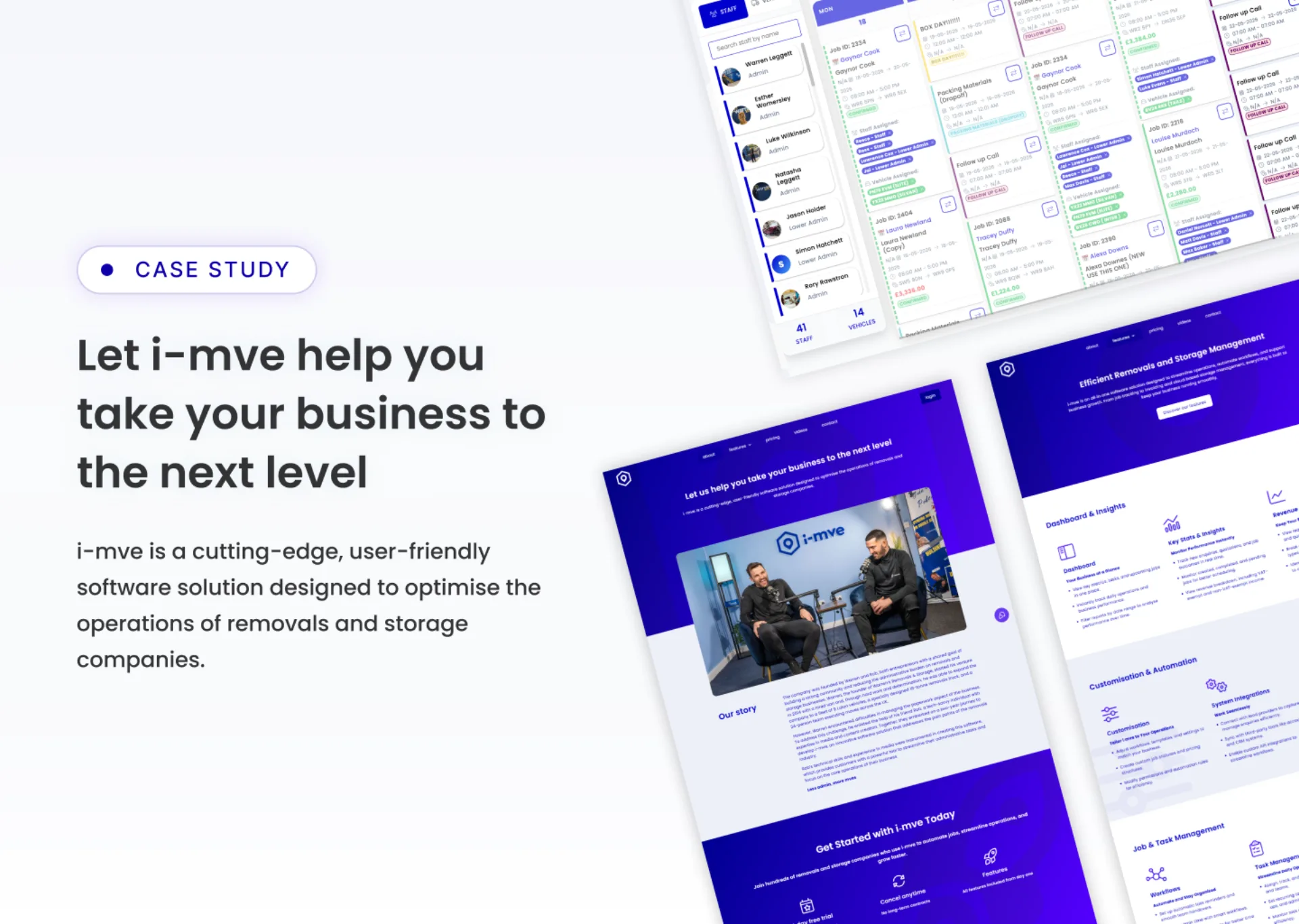
i-mveOperations SaaS · 510 UK removals companies
3–5 daysto shortlist
You interviewevery candidate
Read the i-mve case study →
Proof We Can Do The Work

The teams behind these are the engineers you'd get

Live platforms our people built and run, the same standard your augmented developers work to.

SaaS / Operations Platform · Logistics · United Kingdom

i-mve: Enquiry-to-Invoice Platform for UK Removals

Built from scratch and in continuous development since 2022, now used by 510 UK companies. Long-running, embedded engineering, exactly the model augmented developers step into.

Angular · Node.js · MongoDB · continuous development since 2022 · 510 companies live

View live platform →Read the case study →
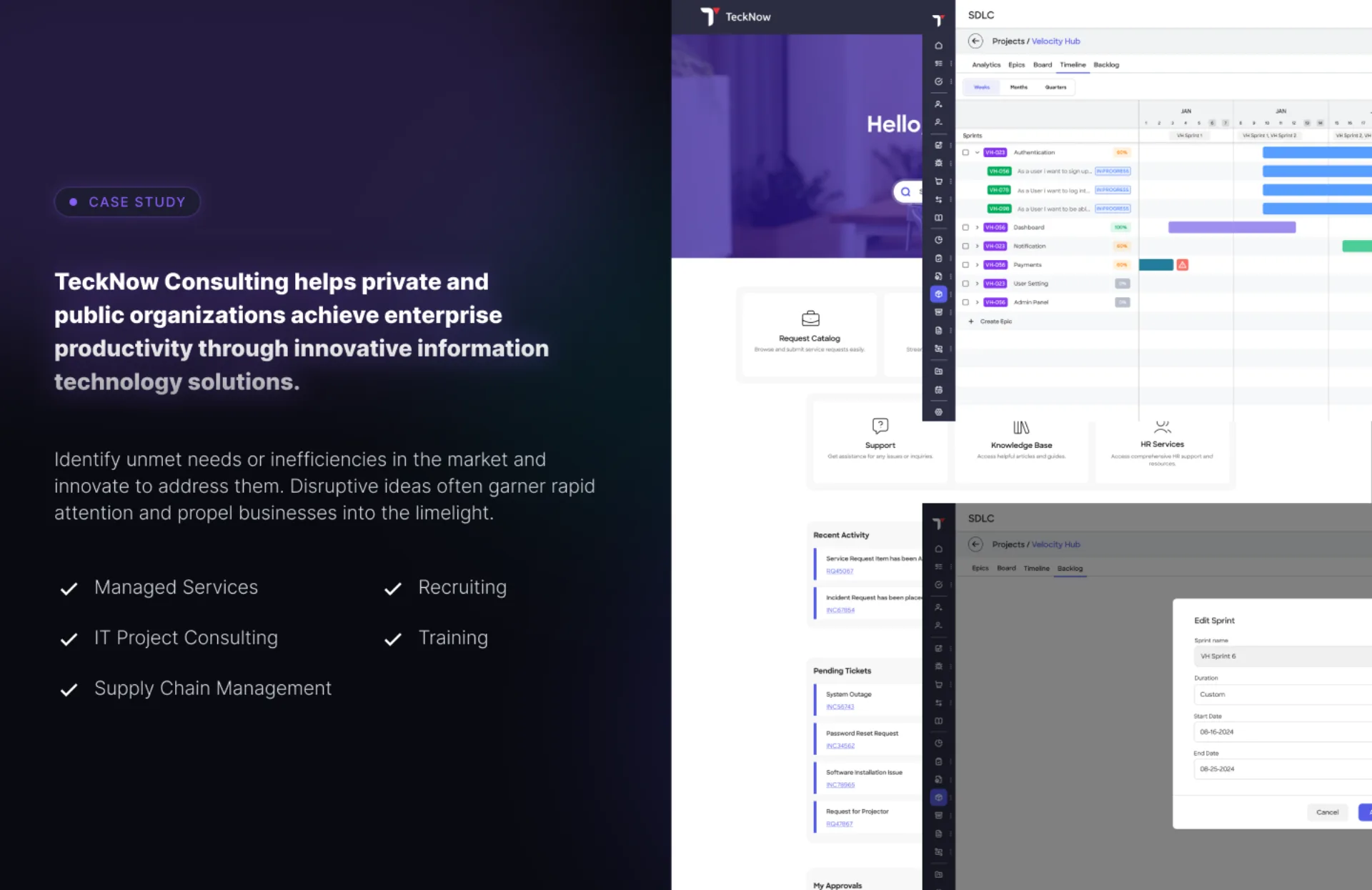
PropTech · Smart Parking · Australia

Smart Car Park Automation

ANPR cameras, boom gates, contactless payments, and real-time bay management, deployed nationally including a national ambulance service. Hardware-integrated engineering under an AU time zone.

Hardware integration · ANPR · real-time bay state · deployed nationally, AU

Read the case study →
Healthcare Research · Ball State University · United States

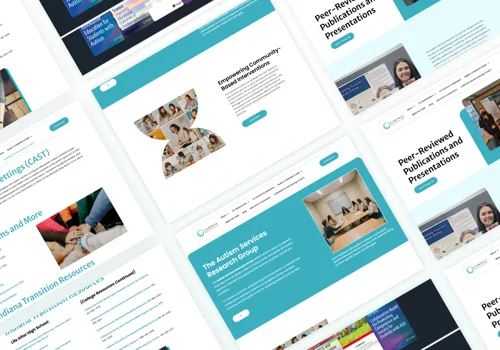
COMPASS for Autism: HIPAA-Compliant Research Platform

A HIPAA-compliant clinical research platform built to the standards of an accredited US university, with multi-role access control. Proof our engineers hold up under real compliance requirements.

HIPAA-compliant · multi-role access control · US university research standards

View live platform →Read the case study →
The Actual People

No bench. No marketplace profiles. Our own engineers.

Every engineer we place is a permanent member of Teamseven who has shipped production software across our 600+ projects. You interview them before they start, and you meet the same people who built the platforms above.

Muhammad Rehan Ijaz

Muhammad Rehan Ijaz

Co-founder

Product strategy · SaaS architecture · 8+ years

Muhammad Nabeel

Muhammad Nabeel

Co-founder

Angular · Node · .NET · React Native · 8+ years

Sound familiar?

Why teams reach for staff augmentation

If two of these are true this quarter, this is the model. Here is how we handle each.

The roadmap needs four engineers and hiring them is a six-month cycle.

Vetted seniors in weeks, not months. Angular, React, Node, .NET, and Flutter engineers who have shipped production systems, embedded into your team and your process.

The last offshore shop handed you a rotating bench and you re-explained context every month.

The same people stay on your project. You work directly with the engineers writing the code, in agreed real-time overlap hours across US, UK, and AU.

You need a skill your team does not have, for a phase, not forever.

Scale the team to the work. Add capacity for a specific push, then scale back, without carrying permanent headcount you will not need next year.

You need engineers who already build with AI, not ones you have to train on it.

AI-native by default. The engineers we place ship LLM features, RAG pipelines, and agentic workflows to production, the same way we built Tully AI and Mebag.

What You Get

Engineers who slot in: not strangers on a bench

Every augmented developer is a permanent member of Teamseven who has shipped real production software across our 600+ projects. You interview them; you never inherit someone you haven't met.

Dedicated Developers

A single engineer or a squad, allocated to you full-time. They work only on your product, in your repositories, on your board, the same as an in-house hire, minus the recruitment cycle and the overhead.

Skill-Gap Specialists

Need one senior React lead, a DevOps engineer, or a Flutter developer for a release? We place the exact skill you're missing without asking you to hire a permanent role you'll only need for a quarter.

Team Extension & Squads

Extend your team with a ready-made pod, frontend, backend, and QA who already work together, when you need to move on a roadmap faster than headcount will allow.

Overlapping-Hours Delivery

Real-time collaboration, not a 12-hour hand-off. We agree an overlap window with your US, UK, or AU team so stand-ups, reviews, and pairing happen live.

Delivery Lead Included

You direct the work; we quietly keep quality and communication on track. A Teamseven delivery lead checks in on every engagement so a problem is caught early, not at the retro.

We Carry The Overhead

Employment, payroll, equipment, leave cover, and replacement if a fit isn't right, all ours. You get an engineer contributing, not an HR function to manage.

Hire AI-Native Engineers

Engineers who build with AI: not engineers you have to teach it to

"AI-native" gets thrown around a lot. Here's what it means concretely for the engineers we place. It's how our own products, Tully AI and Mebag, were built.

LLM features, shipped properly

Prompt versioning, structured outputs, and eval suites, not a prompt hard-coded in a controller. They know how to keep an AI feature stable as the model and the requirements change.

RAG pipelines end to end

Chunking, embeddings, retrieval tuning, re-ranking, and hallucination guardrails. They've built retrieval over real, messy company data, not a toy demo over a clean PDF.

Agentic workflows in real apps

Tool use, function calling, and multi-step orchestration wired into a production app with proper error handling and human-in-the-loop checkpoints where they matter.

Cost and latency judgement

They know when to reach for a frontier model, when a small one does the job, and when the answer is no model at all. AI spend that maps to value, not a demo bill.

Fluent across the toolchain

OpenAI, Anthropic, and Gemini APIs; LangChain and LlamaIndex; vector databases; and the eval tooling that tells you whether a change actually helped.

Still senior full-stack engineers

The AI layer sits on top of real engineering. They design the data model, the APIs, and the deploy pipeline that the AI feature actually depends on, not just the prompt.

Choose The Right Model

Augmentation isn't always the answer: and we'll tell you

The three models differ in one thing: who owns the work. Pick by how much control you want to keep.

Managed Services

You share control

We take ownership of a defined function and run it to agreed targets. You hand off responsibility for a slice of delivery while keeping oversight. Best for ongoing functions you'd rather not manage yourself.

  • We manage the people & SLAs
  • Continuity for long-running work
  • Ideal for defined, ongoing functions
Project Outsourcing

You delegate ownership

You hand us a defined scope; we own delivery from spec to ship at a fixed price and return a finished product. Best when you want an outcome, not a team to run.

  • We own the whole build
  • Fixed price, fixed milestones
  • Ideal for well-defined projects

Not sure which fits? That's a five-minute conversation. If augmentation isn't right for your situation, we'll point you to the model that is, including one that isn't us. For a deeper breakdown, read our guide on dedicated team vs fixed price vs time & materials, or the honest in-house vs outsourcing decision framework.

Roles & stacks we augment

We place engineers in the stacks we build in every day, not resumes we've never worked with.

Mobile
AI & ML
AI / LLM EngineerAI-Native Full-StackRAG / RetrievalAgentic WorkflowsOpenAIML / Data EngineerAI Solutions Architect
Cloud, Data & QA
AWS / AzureDevOps / CI-CDPostgreSQLMongoDBQA Automation
How It Works

From "we need a developer" to shipping: in about two weeks

No lengthy procurement. No mystery bench. A short, honest process that ends with an engineer you chose.

01

Scope the role: 30 minutes

You tell us the skill, seniority, stack, and the overlap hours you need. We confirm whether augmentation is even the right model, and say so if it isn't. No pressure, no slides.

02

Shortlist: 3 to 5 business days

We put forward matched engineers from our own team with real code samples and references, not a marketplace of unknowns. For our core stacks this is fast because the people already exist here.

03

You interview and choose

Every candidate is interviewed by you before they start. You approve the fit, technically and culturally. We never place someone you haven't met and signed off.

04

Onboard into your process

NDA and IP-assignment signed, access provisioned under your security policies, and the engineer joins your board, repos, and stand-ups. They ramp on your codebase, most are contributing within the first week.

05

Scale, replace, or wind down: on your terms

Add engineers before a release, scale back after, or end the engagement on agreed notice. If a developer isn't the right fit, we replace them. You keep all the code, docs, and context, we build for handover from day one.

06

Regular check-ins while the engagement runs

A standing monthly review with your lead: how the engineer is performing against your goals, whether the mix of skills still fits the roadmap, and any adjustment you want to make. No account manager in the middle, you talk to the people doing the work.

Why Teams Augment

The talent gap is real: hiring for it isn't fast enough

Augmentation has become a standard way to build software teams because local hiring for cloud, AI, and modern web skills is slow.

Cloud, AI, and modern web skills are the hardest roles to fill locally. Augmentation lets you add that exact skill in weeks instead of quarters, and release it again when the work is done. If you're weighing your options, our guide on how to hire a dedicated development team walks through the trade-offs.

Engagement & Pricing

Simple, monthly, and yours to scale

One transparent rate per engineer, quoted after a short scoping call. No recruitment fees, no long lock-in.

Single Developer
Monthly rate

One dedicated engineer embedded in your team full-time, the fastest way to close a specific skill gap or add capacity.

  • Full-time on your product
  • You interview & approve
  • Overlap hours agreed up front
  • Replace on request
  • Scale up anytime
Flexible / Short-Term
Sprint-based

Extra hands for a release, a migration, or a fixed burst of work, then scaled back down when it ships. Augmentation's core strength.

  • Add capacity for a release
  • Scale back on notice
  • No permanent headcount
  • Specialist skills on demand
  • Keep all the code

Because our engineers are based in Lahore and work in your time zone, senior seniority comes at a materially lower monthly rate than hiring locally in the US, UK, or Australia, with the code ownership and control of an in-house hire.

One monthly rate per engineer, quoted after a 30-minute scoping call, no recruitment fees, no payroll tax, no minimum lock-in. Get your rate →

FAQ

Common questions

Straight answers on how matching works, contracts, overlap hours, replacements, and ownership.

What is IT staff augmentation, and how is it different from outsourcing a project?

Staff augmentation means you add our vetted engineers to your existing team, they work in your tools, attend your stand-ups, and report to your engineering manager, while we handle their employment, payroll, and HR. You keep full control of the roadmap, the code, and the day-to-day work. Project outsourcing is different: there you hand a defined scope to a vendor who owns delivery end to end and returns a finished product. Rule of thumb, augment when you have the direction and process but need more hands or a specific skill; outsource when you want someone else to own the outcome. We do both, and on the first call we'll tell you honestly which fits your situation.

How is this different from a managed services or team-as-a-service model?

With staff augmentation, the developer is embedded in your team and your management owns the work, you set the tasks and the priorities. With managed services, the provider takes ownership of a defined function against agreed targets (SLAs) and manages the people themselves. Augmentation gives you the most control; managed services trade some of that control for the provider carrying delivery responsibility. If you want engineers who slot into your process, augmentation is the right model. If you'd rather hand off a whole function, ask us about our managed delivery instead.

How quickly can you place a developer, and how do you vet them?

For roles that match our core stacks, Angular, React, Node.js, .NET, Python, Flutter, we typically shortlist candidates within 3–5 business days and can have someone contributing inside two weeks, subject to your interview process. You interview every candidate before they join; we never place someone you haven't met. Our engineers are permanent members of Teamseven, not a marketplace of strangers: they've worked across our 600+ projects since 2017, and you get their real code samples and references, not a polished bench profile.

Do I manage the augmented developers directly, or do you?

You direct the work, tickets, priorities, code review, and definition of done are yours, exactly as with an in-house hire. We handle everything behind that: employment, payroll, equipment, leave cover, and a delivery lead who checks in so quality and communication stay on track. If a developer isn't the right fit, you tell us and we replace them, you're never stuck managing an HR problem that isn't yours.

What does IT staff augmentation cost compared to hiring in-house?

You pay a single monthly rate per engineer with no recruitment fees, no payroll tax, no benefits overhead, and no long onboarding ramp. Because our team is based in Lahore, Pakistan and works across US, UK, and Australian time zones, rates are materially lower than hiring a senior engineer locally in those markets, while the seniority stays the same. We quote a transparent monthly rate per role after a short scoping call; there's no per-hour billing surprise and no minimum multi-year lock-in.

Can augmented engineers overlap with my time zone?

Yes. We already run active engagements across US (EST/PST), UK (GMT), and Australia (AEST), so our engineers work overlapping hours with your team for stand-ups, reviews, and pairing, not a fully offshore hand-off with a 12-hour lag. We agree the overlap window up front so your team has real-time collaboration when it matters.

What happens if the engagement needs to scale up, down, or end?

That flexibility is the whole point of augmentation. You can add engineers as a release approaches and scale back when it ships, on agreed notice, without the cost and delay of hiring and layoffs. When an engagement ends, you keep everything: the code, the documentation, the context. We build for handover from day one so there's no lock-in and no knowledge that walks out the door.

Can you provide AI-native engineers, not just general developers?

Yes. Every engineer we place builds with LLMs, RAG pipelines, agentic workflows, and eval tooling as part of their standard toolkit, not as a separate specialism you pay extra for. Concretely, that means prompt versioning and structured outputs rather than a prompt hard-coded in a controller; retrieval built over real, messy company data with hallucination guardrails; tool use and multi-step agent orchestration wired into a production app; and the judgement to know when a frontier model is worth the cost and when a smaller one or no model is the right call. They are fluent across the OpenAI, Anthropic, and Gemini APIs, LangChain and LlamaIndex, and vector databases. This is how we built our own AI products, Tully AI and Mebag. You still get a senior full-stack engineer, the AI layer sits on top of real engineering, and they design the data model, APIs, and deploy pipeline the AI feature depends on.

Is my code and IP protected?

Yes. Every engagement runs under an NDA and a written agreement that assigns all IP and code ownership to you. Our engineers follow your security policies, use your repositories and access controls, and we build to the data-handling guidelines your compliance programme requires, including engagements for UK clients under GDPR and US healthcare clients under HIPAA. We don't issue certifications; that's your auditor's role. You own everything they produce, unambiguously and in writing.

CLIENT RESULTS

353 reviews. 5.0 average.

Platform-level reviews of the agency — not cherry-picked project comments.

What I love about Team7 is that they always say: No worries, we can find a solution. This is the mindset of builders, creators, people who do not have fear, the partner you need if you want to excel.
Alfonso G.Founder, Mebag · 🇮🇹 Italy★★★★★
Working with Mo and his team over the past year has been nothing short of exceptional. I was admittedly sceptical about investing such a large amount, but results exceeded every expectation.
Robert SinclairOwner, i-mve · 🇬🇧 UK★★★★★
Their responsiveness and willingness to take on our challenging task were impressive.
Lisa RubleLicensed Psychologist, COMPASS for Autism · 🇺🇸 Muncie, Indiana★★★★★
EXTEND YOUR TEAM

Need a developer who ships from week one?
Tell us the role.

30 minutes. Tell us the skill, seniority, and time zone you need. We'll say honestly whether augmentation is the right fit, and if it is, shortlist engineers you interview yourself within a week.

We usually reply within an hour NDA available before we talk
⭐ 5.0 · 353 reviewsFiverr Vetted Pro8 years · 600+ projects
What happens next
  1. 01
    Book a 30-minute slotPick a time that works. No prep needed.
  2. 02
    We have a real conversationYou explain what you're building. We ask the hard questions.
  3. 03
    You get a scoped proposalFixed price. Fixed timeline. Within 48 hours, or we tell you why it's not a fit.