You have an app idea but no idea what sits behind it.
We design the whole system.
Accounts, data, notifications, payments and an admin dashboard for you. The app is the visible part; we build the rest too.
Mobile app development
Most apps fail on what sits behind them: the accounts, the data and the admin tools. We build the app and everything it needs to run, including apps that control real hardware.
The questions we hear most from people planning an app.
You have an app idea but no idea what sits behind it.
Accounts, data, notifications, payments and an admin dashboard for you. The app is the visible part; we build the rest too.
Your app needs to talk to a device, a tag or a sensor.
The EHEIM app controls filters, lights and heaters, and Sharewear’s NFC tags open a profile when tapped by any phone.
You are unsure whether to build native, cross-platform, or just a web app.
If a web app on the phone does the job, it is cheaper and we’ll say so. If you need the camera, Bluetooth or offline use, we explain the options and the cost of each.
You were quoted for iOS and Android separately, twice the price.
Cross-platform frameworks usually cover both stores from one project. We only go native when a device feature really needs it.
Apps with the backend, dashboard and integrations they need to run.
Pairing, live status and control for connected devices, tested against the real hardware, not just a simulator.
EHEIM Digital Connect.
NFC and QR profiles that open on any phone, with the owner controlling what a stranger can see.
Sharewear: ~15,000 subscribers.
Two sides, profiles, matching and payments, with a dashboard for you to run it.
FlyHire went live in 60 days.
A web dashboard to manage users, content and payments without calling a developer.
Push notifications, in-app messages and card payments through Stripe or your provider.
We say plainly which clients we still work with.
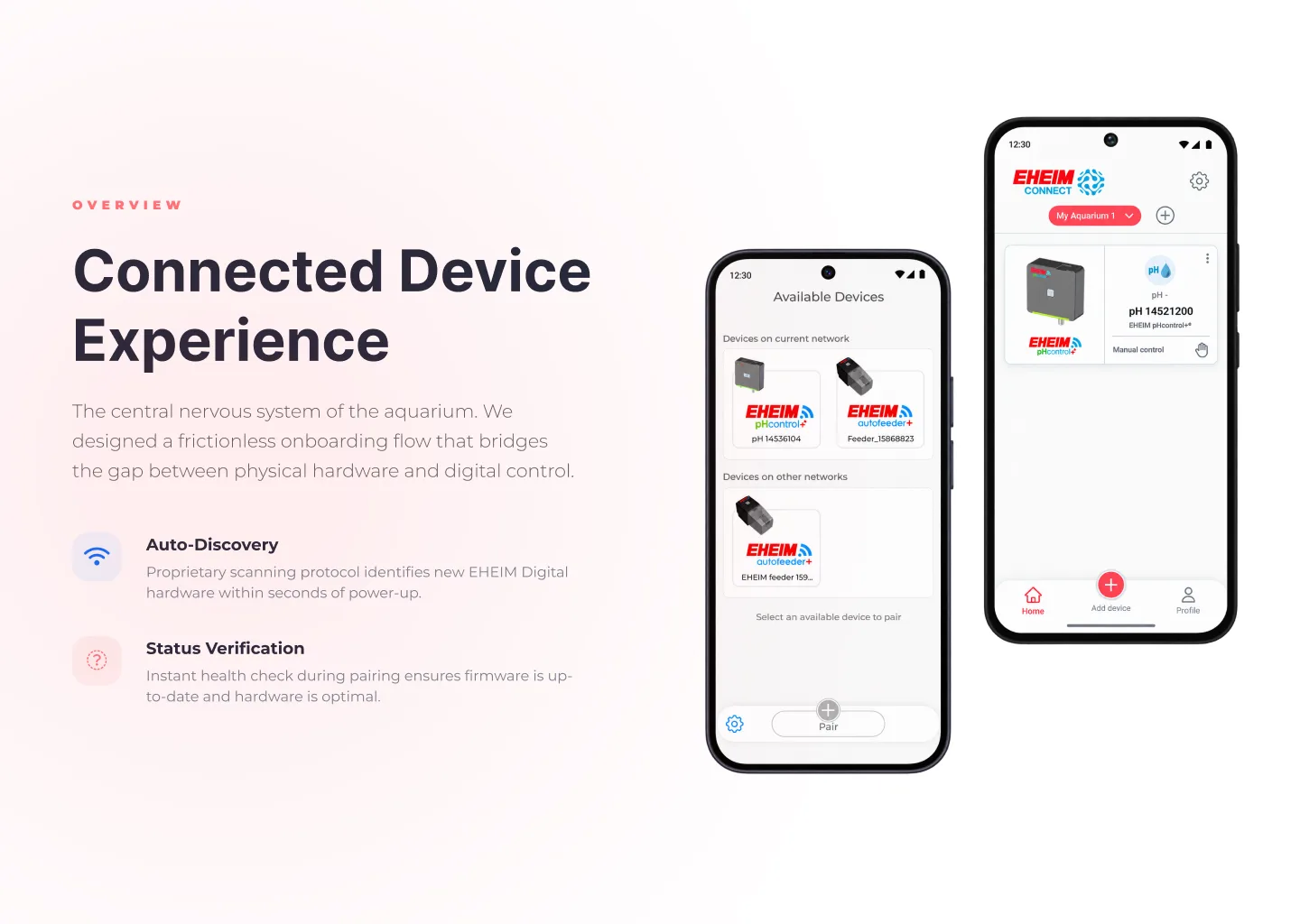
The mobile app that controls EHEIM’s connected aquarium equipment: filters, lighting, heating and feeding from one screen, tested against real devices.
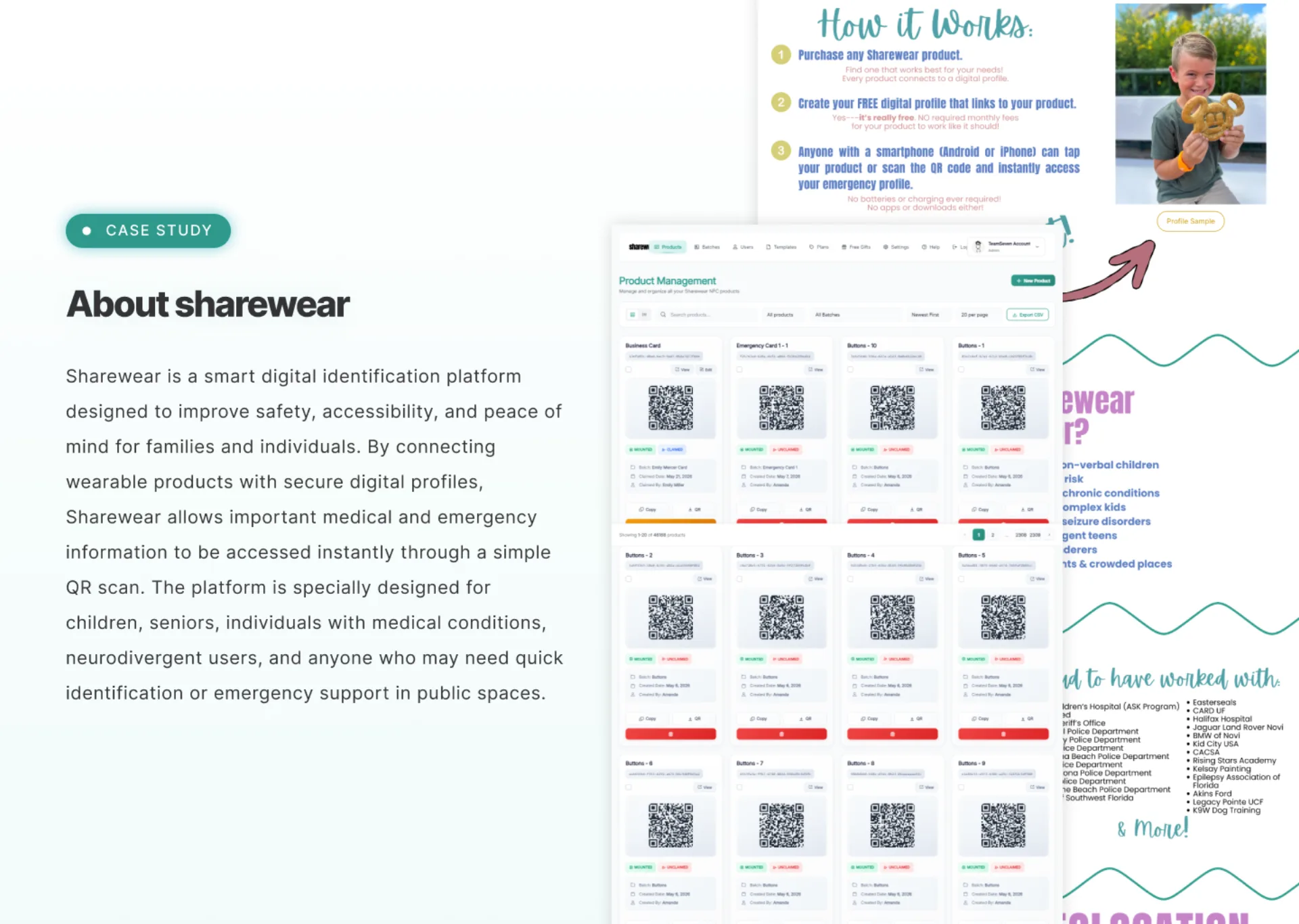
Bands, watches and rings with NFC tags that let a stranger reach family or services if the wearer is lost or hurt. We built the platform behind them from scratch.
A hiring platform connecting pilots, mechanics, instructors and dispatchers with employers, with Stripe payments. Our fastest MVP: kick-off to live in 60 days, and still in production.
Designs are approved before code, and store submission is part of launch.
Bring the problem and how you handle it today. We ask questions and tell you honestly what we would build first. We won’t pitch at you.
What is in scope, what goes on the backlog, the stack we’d use and why, the timeline and one price.
A kick-off meeting, a shared Slack channel and access to the repository. Rehan is your day-to-day contact.
We design the main screens and journeys first. Nothing gets coded until you have signed the designs off.
We agree the architecture before writing code, then build with updates twice a week on Slack. Any new request is logged as extra hours and reported weekly.
Deployed to production with your Git repositories and documentation handed over. Bug fixes are free for the first two months.
Real ranges from our own projects. Your number comes from the scoping call, as a fixed quote.
After the free two months, maintenance is $700 a month. New features are quoted as you need them, or you can have a dedicated engineer from $2,500 a month.
Platform-level reviews of the agency — not cherry-picked project comments.
What I love about Team7 is that they always say: No worries, we can find a solution. This is the mindset of builders, creators, people who do not have fear, the partner you need if you want to excel.
Working with Mo and his team over the past year has been nothing short of exceptional. I was admittedly sceptical about investing such a large amount, but results exceeded every expectation.
Their responsiveness and willingness to take on our challenging task were impressive.
They are amazing and consistently exceed expectations. They go above and beyond what is asked of them and their communication is top notch, so much so that we joke that they never sleep. The best of the best.
Straight answers on platforms, cost and the app stores.
Ask us something elseCross-platform covers iOS and Android from one project and suits most business apps. Native makes sense when the app leans heavily on device features. The EHEIM app uses Kotlin on Android with Ionic. We recommend per project and explain why in the proposal.
The smallest project we take on is $5,000. A first version usually costs $8,000 to $12,000, and a fuller app with payments, roles and a dashboard lands between $10,000 and $30,000. You get a fixed quote after the scoping call.
Yes, if the device exposes a way to talk to it, such as Bluetooth, Wi-Fi, NFC or a cloud API. We test against the real device during the build, as we did for EHEIM.
Yes. We prepare the builds and help you through submission and review. The developer accounts are in your name, so you own the listings.
You do. At handover you get the Git repositories and written documentation. There is nothing tying the software back to us, so you can take it to an in-house team whenever you like.
Bug fixes are free for two months. After that, maintenance is $700 a month. New features are quoted as you need them, or you can have a dedicated engineer from $2,500 a month.
Rehan, one of our two founders, is your day-to-day contact. You get updates on Slack twice a week and can see the code in your repository at any time. We split working hours between us to cover US, UK and Australian time zones, and we usually reply within an hour, sometimes the next morning.
A 30-minute call. We’ll tell you whether you need an app, what should be in version one and roughly what it costs.