Let's Connect
Home
Portfolio
SAAS DEVELOPMENT

Custom SaaS, built from scratch.
Not customised from a template.

We've shipped SaaS platforms for UK removals (i-mve), Australian PropTech (Parkezi), US healthcare research (COMPASS), and 40+ others. Multi-tenant from day one, scoped honestly, priced fixed.

600+Projects Delivered
40+SaaS Platforms Shipped
5.0Fiverr Rating
WHAT WE BUILD

SaaS we've actually shipped

Multi-tenant SaaS from MVP to production. Not proof-of-concepts. Not demos. Real platforms that real businesses pay for every month.

Multi-Tenant Architecture

Every SaaS we build is multi-tenant from day one — not retrofitted later. Tenant isolation, per-tenant data, subdomain routing, and the billing hooks built in before the first paying customer. We've seen what happens when you add multi-tenancy after launch. It's expensive.

Subscription Billing & Metering

Stripe integration, plan management, usage metering, upgrade/downgrade flows, dunning, and billing portals — built and tested so that failed payments don't silently keep users subscribed and billing edge cases don't require developer intervention at 2am.

Auth, Roles & Permissions

Authentication, organisation management, role-based access control, team invitations, SSO, and audit logs. We've built permission systems for platforms with 7+ role types and 50+ granular permissions. The kind of thing that looks simple until it isn't.

Onboarding & Activation Flows

The gap between signup and first value is where most SaaS churns users. We build onboarding flows that get tenants to their first meaningful action — not just a welcome email and a dashboard with empty state widgets.

Analytics & Reporting

In-product analytics for both your users and your team. Usage dashboards, cohort retention, feature adoption metrics, and the admin reporting your customer success team needs to intervene before accounts churn.

API-First & Integrations

Public API, webhooks, and third-party integrations built from the start. We've connected SaaS platforms to Xero, QuickBooks, Stripe, Salesforce, Zapier, and dozens of industry-specific tools. Integrations that work reliably — not ones that break on edge-case payloads.

HOW WE BUILD

From idea to live SaaS

Most SaaS projects fail because the foundation decisions were made wrong and too early. Here's how we avoid that.

01

Scoping: nail the MVP boundary

The most important thing we do before writing code is agree on what's in scope and what isn't. Most first-time SaaS founders scope their MVP as a full product. We cut it down to the smallest set of features that lets a real customer pay real money — then build that, not the roadmap.

02

Architecture: multi-tenant from day one

Data model, tenant isolation strategy, auth layer, API structure, and deployment architecture — decided before any feature development. The SaaS-specific decisions (how tenants are isolated, how billing connects, how roles propagate) are the expensive ones to change later. We make them right the first time.

03

Design: for the user who didn't choose the software

B2B SaaS is often used by people who didn't select it — employees, contractors, clients. We design for adoption, not for the demo. Every screen designed before implementation, with complex flows prototyped and validated before being committed to code.

04

Build: two-week sprints, working software every time

Two-week sprints. At the end of every sprint you see a working, deployable build — not a status update. Scope changes are documented and priced before additional development happens. No surprises at go-live.

05

Launch & beyond

Production deployment, CI/CD pipeline, environment configuration, and 30 days of post-launch support included. Most clients continue with a monthly retainer for feature development after launch — we've maintained i-mve since 2017. We build software we can stand behind long-term.

TECH STACK

What we build SaaS with

Frontend
AngularReactNext.jsVue.js
Backend
Node.js.NET / C#PythonLaravel
Database & Infra
PostgreSQLMongoDBRedisAWS / AzureDocker
Billing & Auth
StripeAuth0PaddleJWT / OAuth2
INVESTMENT

What SaaS development costs

We don't quote without a scoping conversation — but here's an honest range based on what we've delivered.

MVP
$25k–$60k

Core feature set only — the smallest thing a real customer will pay for. Multi-tenant, auth, billing. 10–16 weeks. One primary workflow. This is the right place to start if you haven't yet validated that people will pay.

  • Multi-tenant foundation
  • Stripe billing integration
  • Auth + basic RBAC
  • Core feature (1 primary workflow)
  • Deployment + CI/CD
Enterprise SaaS
$150k+

Complex platforms with multiple modules, white-labelling, enterprise SSO, advanced compliance requirements, or large-scale data processing. Scoped and priced phase by phase.

  • White-label / custom domains
  • Enterprise SSO (SAML / SCIM)
  • Compliance architecture
  • Custom SLA + dedicated support
REAL WORK

SaaS platforms we've built

Operations SaaS · United Kingdom

i-mve — UK Removals Industry Platform

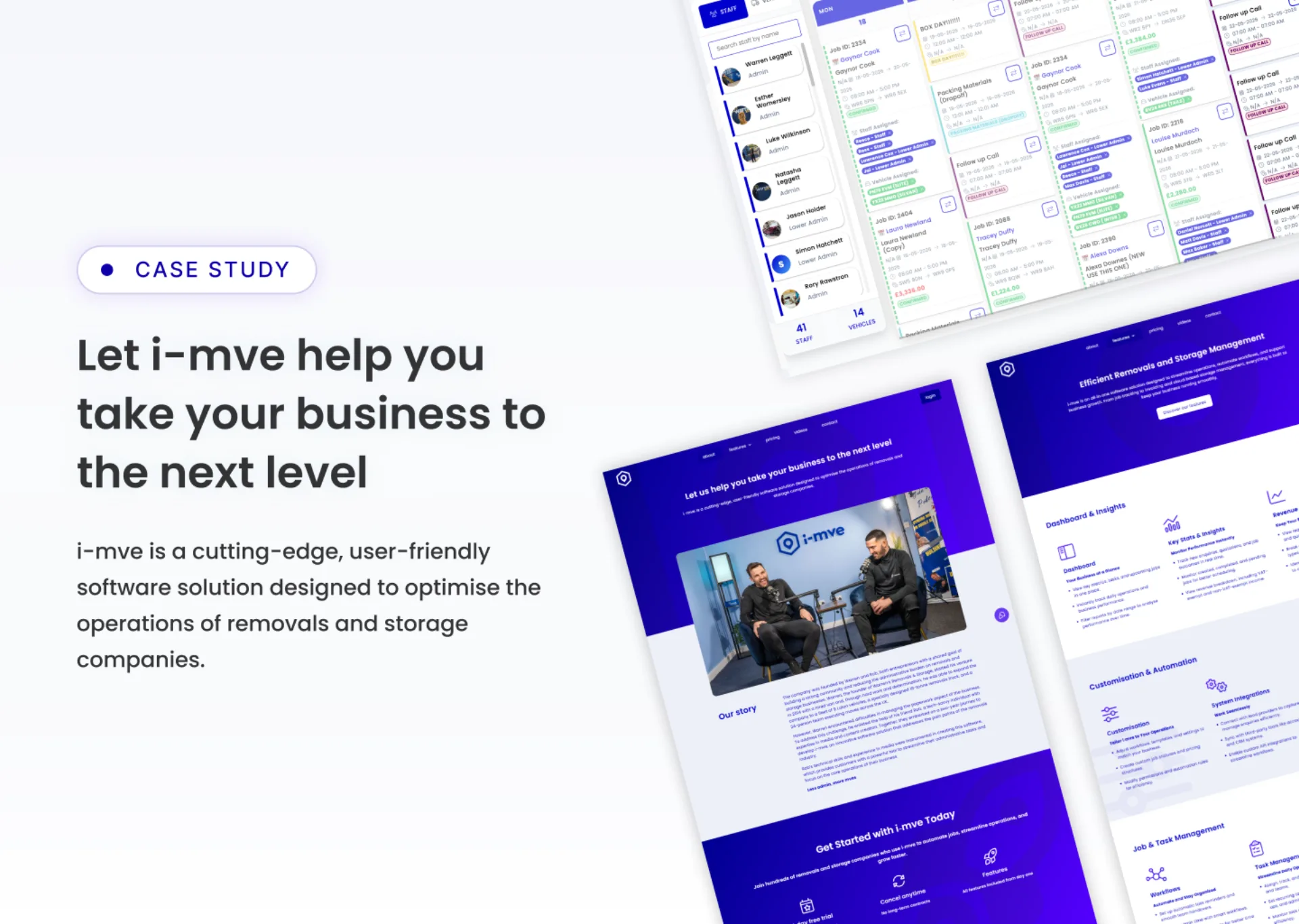
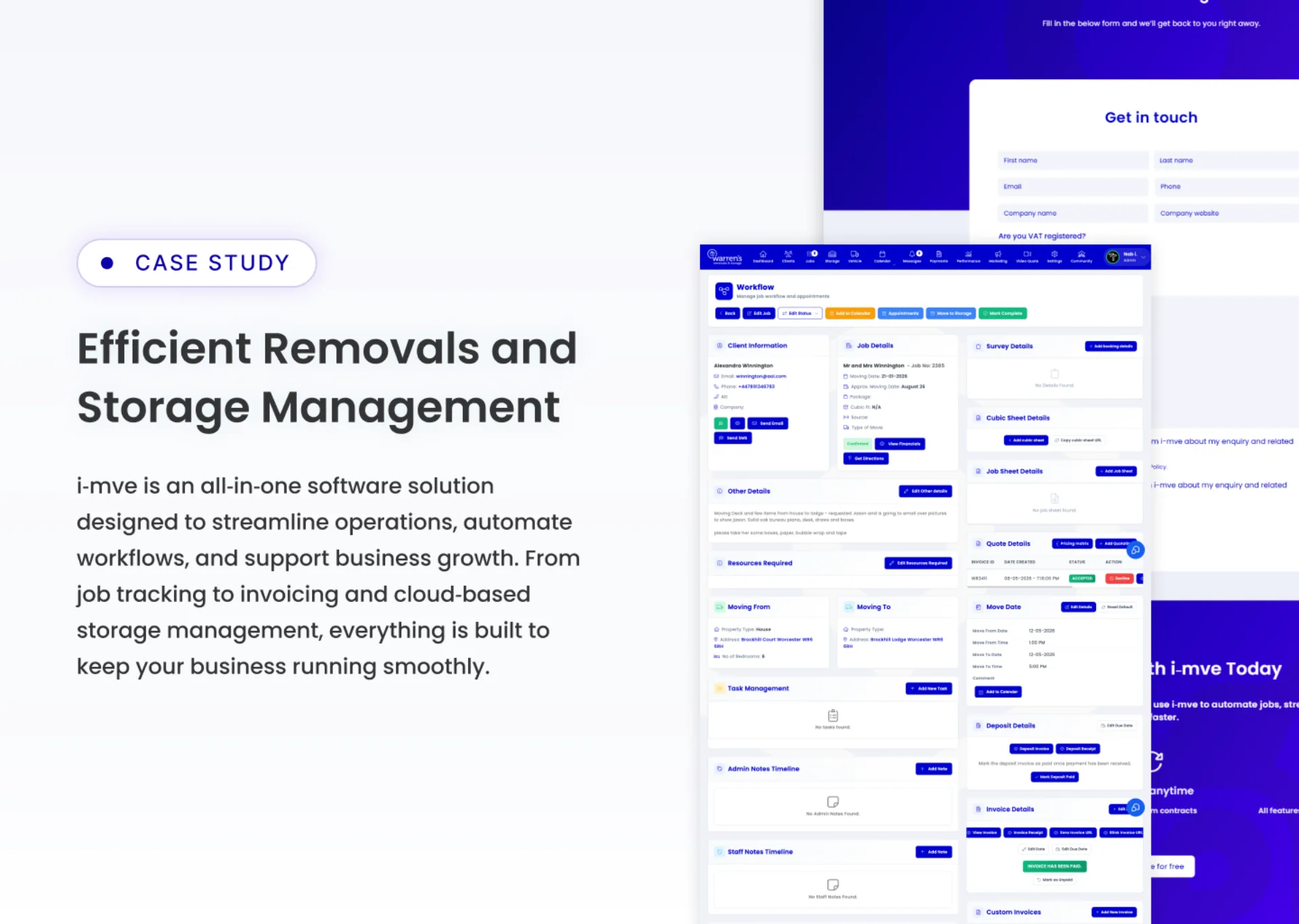
Full-featured SaaS for UK removals and storage companies — job management, crew scheduling, automated quoting, contracts, invoicing, and Xero/QuickBooks/Sage integration. Started as an MVP in 2017. Now used by hundreds of companies across the UK and still in active development. The kind of platform that generates £42k+ MRR for the founder.

View live platform →
PropTech SaaS · Australia

Parkezi — Smart Parking Automation

SaaS platform for automated parking management — real-time bay monitoring, access control, occupancy analytics, and payment processing. Deployed at NSW Ambulance headquarters and hotel chains across Australia. Multi-tenant with separate operator and driver interfaces built on a shared data layer.

View portfolio →
AI Shopping SaaS · United States

Mebag — AI-Powered Shopping Platform

An AI shopping platform that uses computer vision and LLM integration to let users discover and save products across retailers. Multi-tenant architecture with retailer onboarding, product catalogue management, personalisation engine, and mobile apps for iOS and Android.

View portfolio →
COMMON QUESTIONS

What founders ask about SaaS development

How long does it take to build a SaaS MVP?

A focused MVP — the smallest thing a real customer will pay for — typically takes 10–16 weeks. That covers scoping, architecture, design, core feature development, billing integration, auth, and deployment. The clock starts from when requirements are agreed, not from when you contact us. We provide a week-by-week timeline as part of the scoping process.

What's your minimum budget for a SaaS project?

$25k for an MVP. If your budget is under $15k, we're not the right fit — we'll tell you that honestly and point you toward the right tools for that stage. A real multi-tenant SaaS with billing, auth, and a production-grade architecture can't be built for less than that by a team you'd trust with your product.

Do you do fixed-price or time-and-materials?

Fixed-price for scoped projects where requirements are clear before development starts. We provide a written, itemised estimate after a scoping call. Scope changes are priced and approved before any additional development happens — no surprise invoices. For ongoing retainer work after launch, we work on a monthly retainer basis with a defined scope each month.

Can you build a SaaS with an AI feature?

Yes — we've integrated OpenAI, Anthropic Claude, and Gemini APIs into SaaS products. Mebag uses computer vision and LLM integration for product discovery. Tully AI is an AI content platform we built from scratch. The key is scoping AI features realistically — LLM outputs are probabilistic, not deterministic, and that changes how you design the UX and what you guarantee to users.

Will you continue developing the SaaS after launch?

Yes — most clients stay on a monthly retainer after launch. We've maintained i-mve since 2017. Retainer engagements include a defined monthly scope, priority support, and a dedicated development resource who knows the codebase. We don't treat post-launch as a separate relationship — it's an extension of the same engagement.

Do you work with clients in the US, UK, and Australia?

Yes — that's our primary market. Most communication happens over video call and async on Slack. Our Pakistan timezone overlaps well with UK mornings and Australian afternoons. For US clients we run overlap hours in the late afternoon Pakistan time. We've worked with US, UK, and Australian clients for eight years without time zones being a real issue.

START YOUR PROJECT

Ready to build your SaaS platform?
Tell us what you're building.

30 minutes. No slides. We'll look at your idea and tell you honestly what the MVP scope should be, what it will cost, and how long it will take.

Reply within 4 business hours NDA available before we talk
⭐ 5.0 · 353 reviewsFiverr Vetted Pro8 years · 600+ shipped
What happens next
  1. 01
    Book a 30-minute slotPick a time that works. No prep needed.
  2. 02
    We have a real conversationYou explain what you're building. We ask the hard questions.
  3. 03
    You get a scoped proposalFixed price. Fixed timeline. Within 48 hours — or we tell you why it's not a fit.