Your staff avoid the software and go back to spreadsheets.
Design around the real job.
We watch how the work is done today and design screens that match it, so the software is quicker than the spreadsheet.
UI/UX design
On every project we design first. You see and sign off every screen, then the same team builds exactly that. Changing a design takes an afternoon; changing code takes weeks.
Design problems we hear about most.
Your staff avoid the software and go back to spreadsheets.
We watch how the work is done today and design screens that match it, so the software is quicker than the spreadsheet.
The designer and the developers never agreed, so the build looks nothing like the designs.
Our designer works with the engineers who will build the screens, so designs are buildable and the build matches them.
You keep changing your mind once you see the product running.
Clickable prototypes let you try the product before any code exists. Changing your mind at this stage costs very little.
Your product looks dated next to competitors.
Clean layouts, clear type and consistent components. We avoid decoration that makes screens slower to use.
Product design for software people use every day.
The main user journeys mapped and designed screen by screen, for web and mobile.
Every project we build starts here.
Try the product in your browser or on your phone before any code is written.
Reusable components and styles, so new screens stay consistent as the product grows.
Modernise an existing product screen by screen without retraining everyone from scratch.
The ELA platform redesign.
Different views for staff, customers, parents or partners, each showing only what they need.
E2P+SEND for staff and parents.
Design and development by the same team.
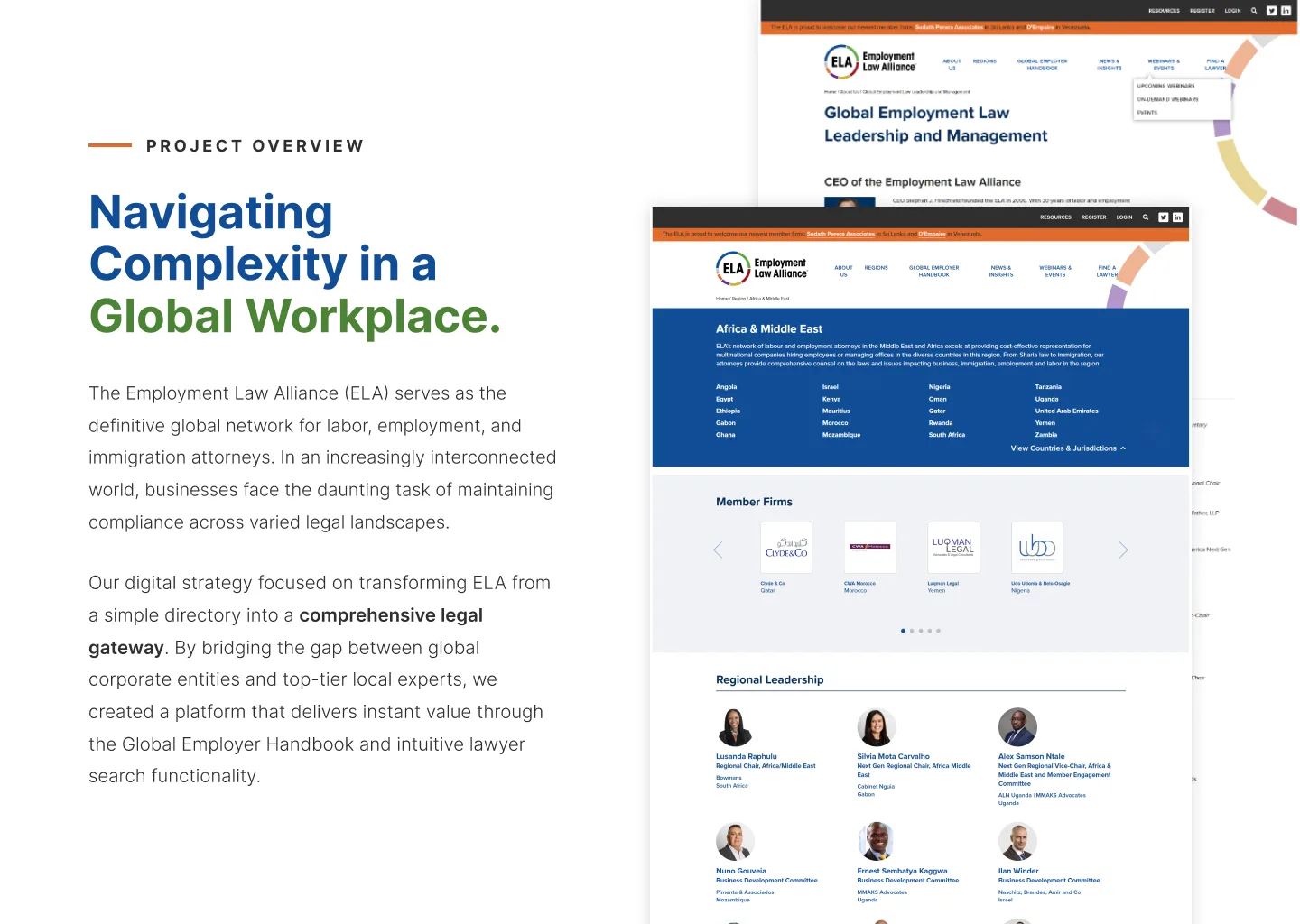
A redesigned platform for a network of employment law firms: a find-a-lawyer search, a searchable employer handbook and member firm pages under one brand.
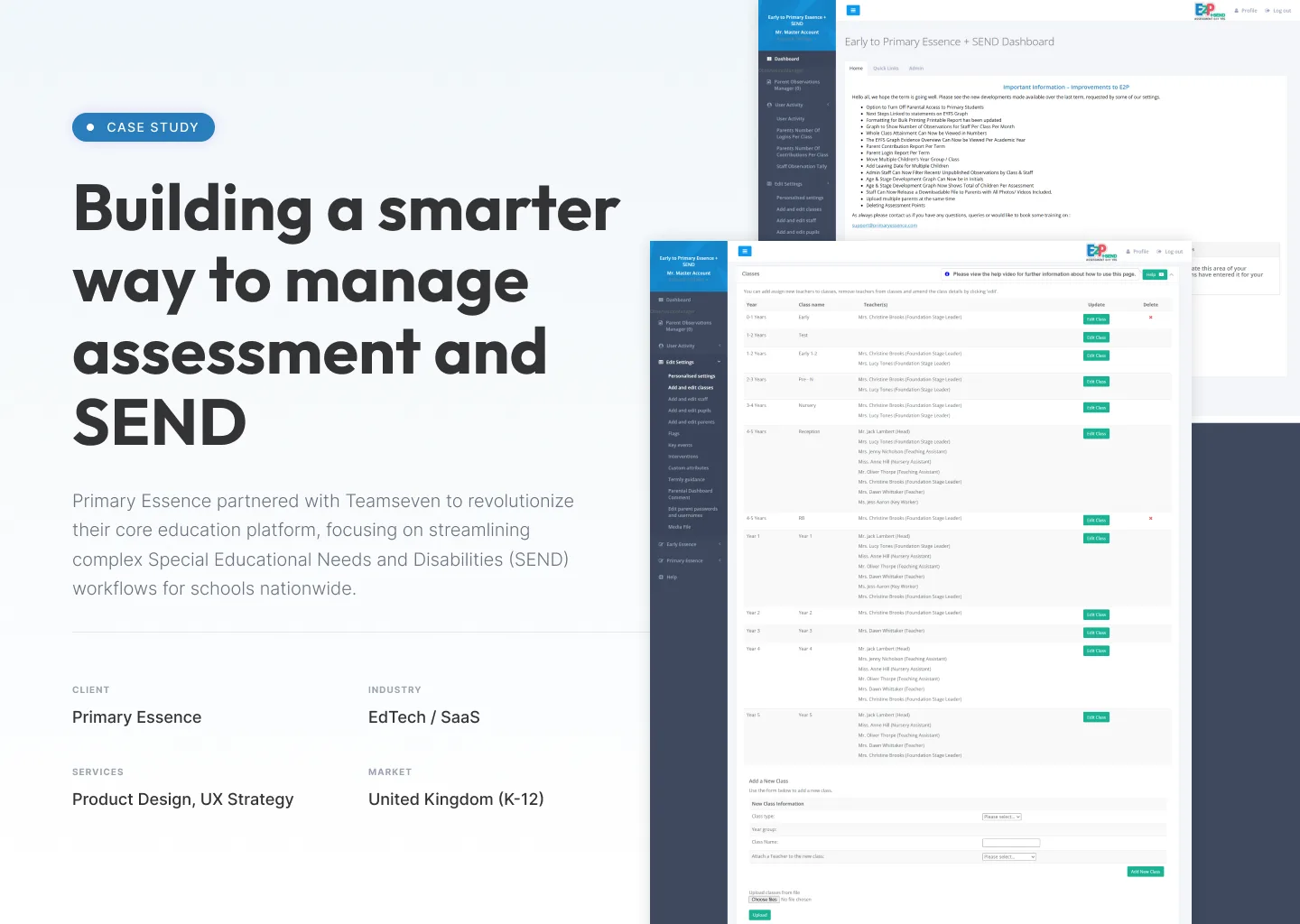
Schools track what each child learns from early years through primary, with observations, photos and SEND records that staff and parents can both see.
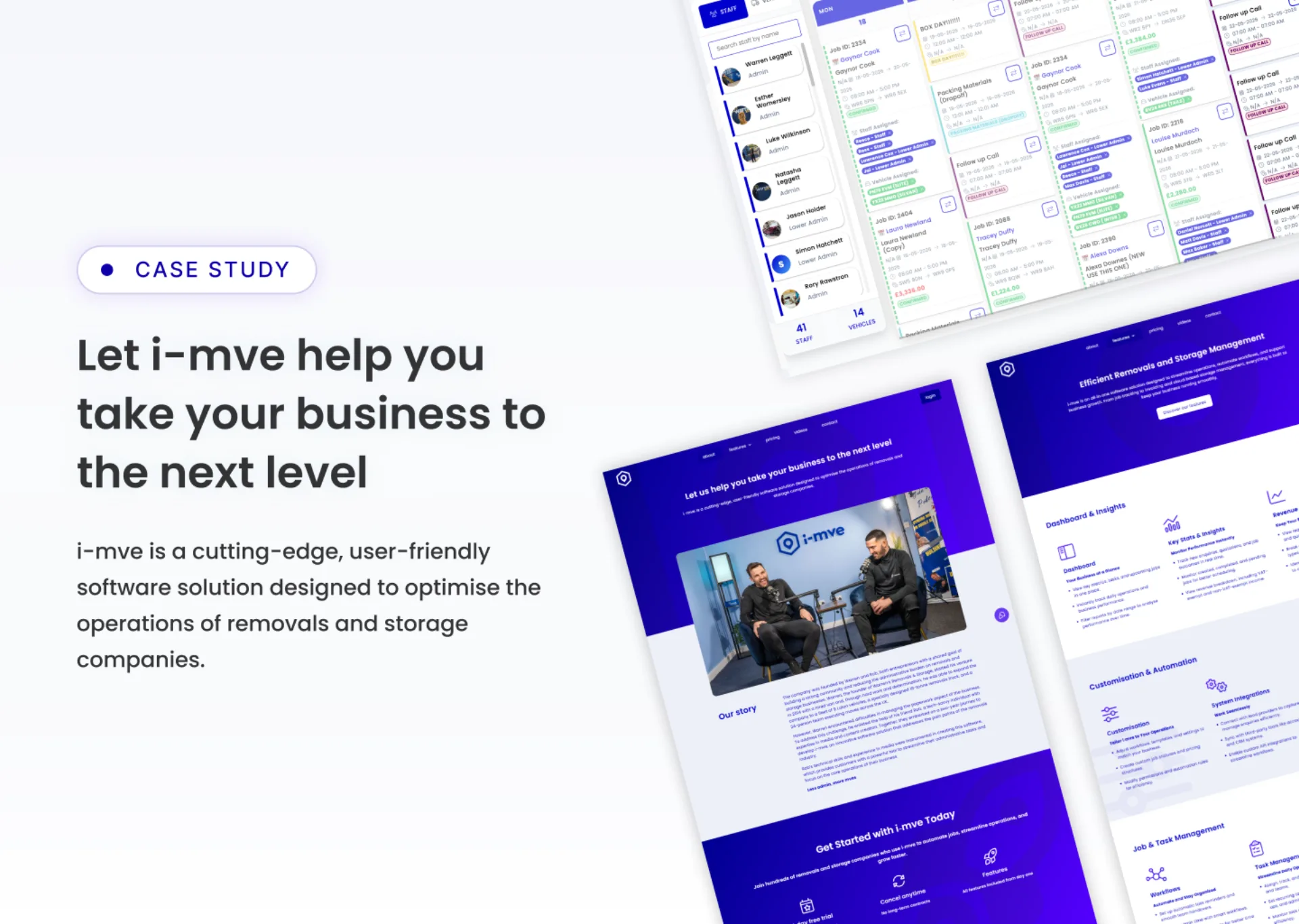
An all-in-one platform for UK removals and storage companies: enquiries, quotes, jobs, staff, invoices, storage and accounting in one place. It started as one removals firm’s system and is now sold on subscription.
Short loops, real feedback, and nothing coded until you sign off.
Tell us who uses the product and what they need to get done.
We map the main journeys and sketch the key screens in low detail, so we agree structure before style.
Full designs in Figma, reviewed with you on a call, with changes made the same week.
A clickable prototype you can share with your team or a few customers.
Nothing gets coded until you have signed the designs off.
Our engineers build from the approved designs, and our designer checks the result.
Design is included in every build we quote. Standalone design is quoted after the call.
Once the product is live, new screens are designed and quoted as part of each new feature.
Platform-level reviews of the agency — not cherry-picked project comments.
What I love about Team7 is that they always say: No worries, we can find a solution. This is the mindset of builders, creators, people who do not have fear, the partner you need if you want to excel.
Working with Mo and his team over the past year has been nothing short of exceptional. I was admittedly sceptical about investing such a large amount, but results exceeded every expectation.
Their responsiveness and willingness to take on our challenging task were impressive.
They are amazing and consistently exceed expectations. They go above and beyond what is asked of them and their communication is top notch, so much so that we joke that they never sleep. The best of the best.
Straight answers on tools, process and cost.
Ask us something elseYes. Every project we build starts with designs you approve, and that is included in the quote. You only pay separately if you want design without the build.
Figma for designs and clickable prototypes. You get access during the project and the files are yours at the end.
No. We design software screens and journeys. For logos, brand identity, illustration or video you will want a specialist, and we are happy to work from what they produce.
We review designs with you each week and make changes the same week until you sign off. If the product itself changes direction, we log the extra time and tell you before it is billed.
You do. At handover you get the Git repositories and written documentation. There is nothing tying the software back to us, so you can take it to an in-house team whenever you like.
Rehan, one of our two founders, is your day-to-day contact. You get updates on Slack twice a week and can see the code in your repository at any time. We split working hours between us to cover US, UK and Australian time zones, and we usually reply within an hour, sometimes the next morning.
A 30-minute call. We’ll tell you what should be designed first and how long it takes.