AI Software Development
Built to Solve Real Problems
We build AI-powered products and integrations for startups and businesses across the US, UK, and Australia. We built Mebag, where OpenAI powers product discovery and recommendation, and integrated OpenAI into Tecknow, an IT service delivery platform. We build AI that earns user trust and has its costs modelled before launch, not AI that demos well and breaks in production.
No commitment. Response within 24 hours.
Why Most AI Projects Fail
Most AI projects fail not because the technology doesn't work, but because the problem wasn't defined precisely enough, the data wasn't ready, or nobody modelled the infrastructure costs before building.
AI features without a clear use case
Adding AI because competitors are doing it produces features nobody uses. The integration that delivers value solves a specific, well-defined user problem, not the one that demos well in a boardroom.
Data that isn't ready for AI
AI systems are only as good as the data they run on. Inconsistent, incomplete, or unstructured data creates outputs users don't trust and systems that are impossible to maintain in production.
API costs that weren't modelled
OpenAI and Anthropic charge per token. Products built without modelling usage at scale can end up with AI infrastructure costs that destroy unit economics while revenue is still early.
Outputs that can't be trusted
Hallucinations and inconsistent outputs are a product problem, not just a model limitation. Building AI users trust takes prompt engineering, output validation, and careful UX design around uncertainty.
AI Development Services
Each block: the problem in your words, what we build, and the outcome.
AI-Powered Product Features
"We want AI in the product but we're not sure where it earns its keep." We build LLM integrations (content generation, intelligent search, recommendation, conversational interfaces) that work reliably in production, the way OpenAI powers Mebag's discovery engine.
AI-Augmented Applications
"Our team does repetitive work AI could take on." We add intelligent data processing, automated classification, smart suggestions, and workflow automation to an existing application, the way we did on Tecknow.
Conversational AI & Agents
"We need a chat interface or an agent that actually holds up." We build AI chat, assistants, and tool-using agents on foundation models, prompt-engineered, cost-modelled, and tested against real user behaviour before go-live.
RAG & AI Pipelines
"We want AI to answer questions against our own data." We build the full retrieval pipeline (ingestion, chunking, embedding, vector storage, retrieval, LLM layer) plus backend systems for document analysis and automated decision support.
How an AI Build Actually Runs
Drawn from shipping AI features that survive production, not a generic diagram.
Use-Case Definition
We pin down the exact user problem AI is meant to solve and how you'll know it worked, before any model is chosen. A vague use case is the most common reason AI builds fail.
Data Readiness Check
We look at the data the feature needs and tell you honestly whether it's ready, needs cleaning, or isn't there yet. This is where an optimistic plan meets reality.
Model Choice & Cost Model
We pick the model on capability, cost, and reliability, then produce a cost-per-user-per-month estimate you can put next to your pricing.
Build With Guardrails
Prompt engineering, output validation, fallback handling, and logging are written as acceptance criteria, so the feature is trustworthy, not just impressive in a demo.
Test Against Real Behaviour
We test the AI layer against real user inputs and edge cases, not a curated demo script, and tune prompts and validation until it holds up.
Launch & Cost Monitoring
After launch we watch token spend and output quality, because model pricing and behaviour change, and so does how your users use the feature.
AI Products We've Built
An AI-first product for a US client, and OpenAI integrated into an enterprise ITSM platform.
Mebag: AI-Powered Universal Shopping Cart
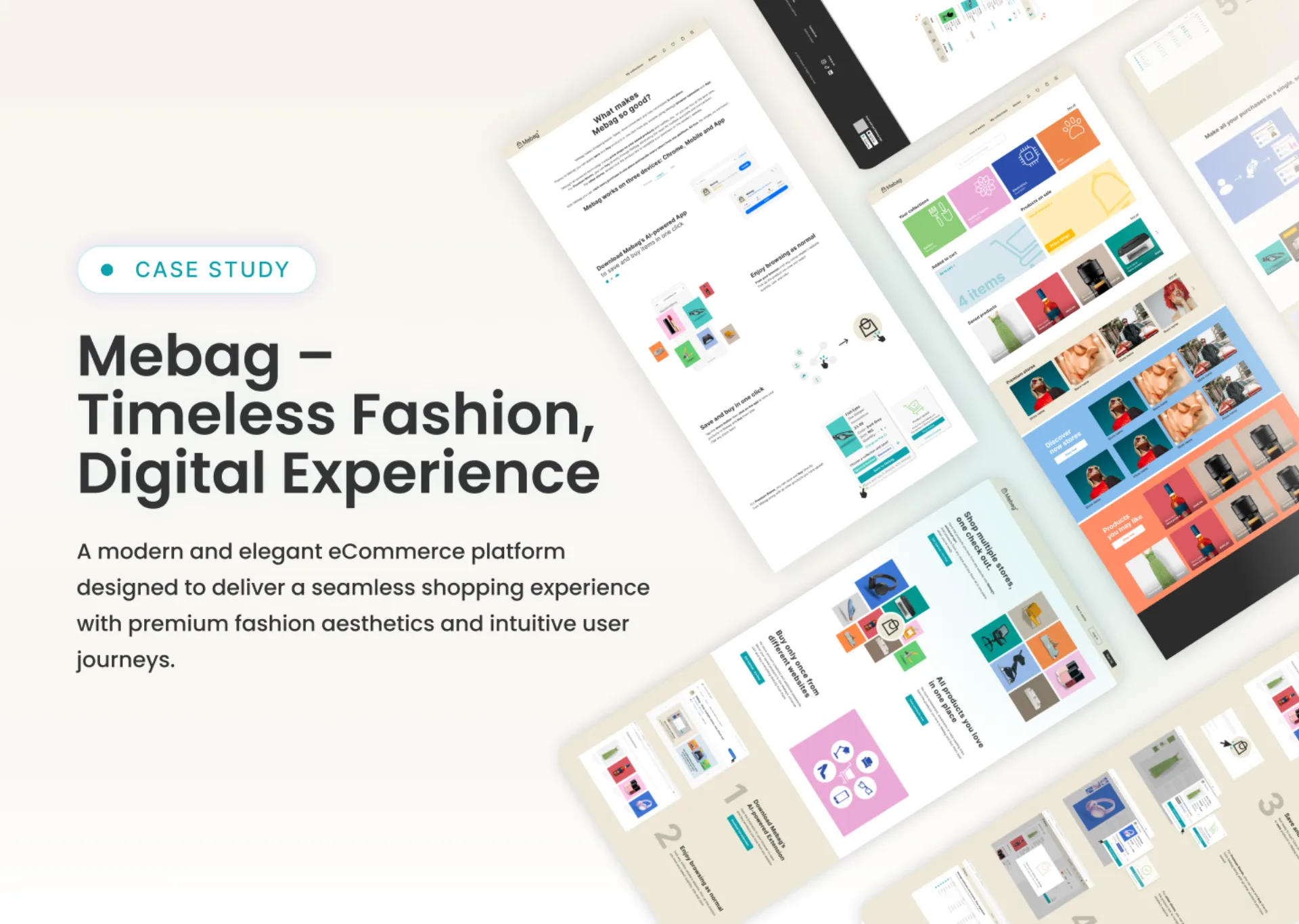
Mebag is an AI-powered universal shopping cart for the open web. We built the full product: an AI system that lets users save products from any online store, track price drops, and buy across multiple retailers in a single checkout. OpenAI powers the product discovery and recommendation engine.
Mebag represents a genuinely novel position in the e-commerce stack, the layer above retailers and marketplaces. The engagement is currently on hold, with work set to resume in September 2026.
Tecknow: Intelligent IT Service Delivery Platform
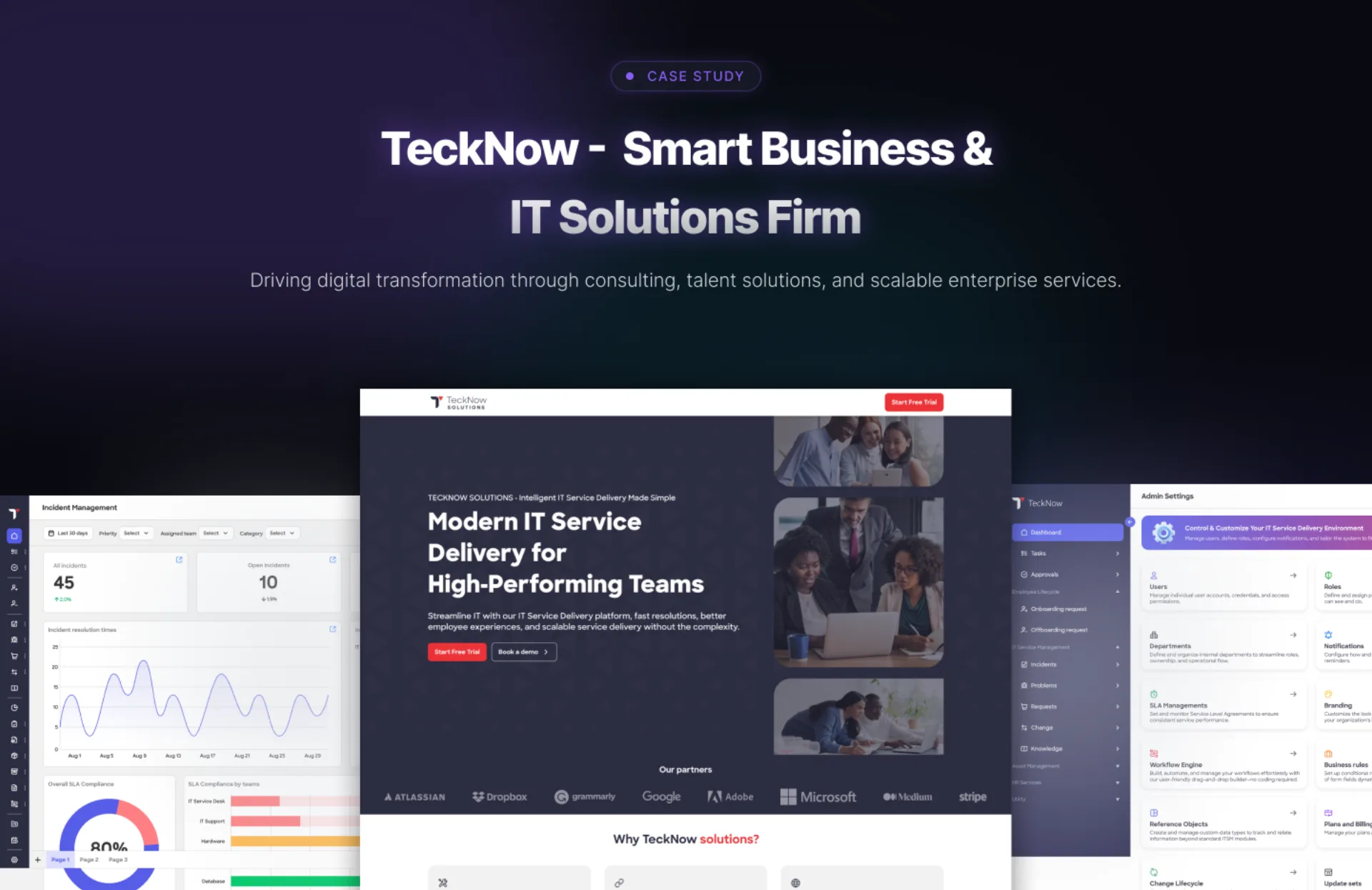
Tecknow is an IT service management platform for teams that take process seriously but want to run it themselves. We built it with real-time updates via SignalR and integrated OpenAI for intelligent service delivery, sitting between the heavyweight legacy ITSM vendors and tools too simple to be useful.
Read the Tecknow case studyBuilding an AI product or feature?
The next step is a call. We'll pressure-test the use case, check the data, and model the costs before we quote anything, and tell you honestly if AI isn't the right tool for the job.
Book a scoping callThree Ways to Engage Us
An AI-first startup, a product team adding AI, and a team stuck with a stalled AI build need different things. Pick the one that sounds like you.
Technologies We Use for AI Development
We match the AI infrastructure to the problem. These are the tools we use most on AI builds.
Questions About AI Development
Do you build with OpenAI, Anthropic, or other LLM APIs?
Yes. We have built production AI products using OpenAI (GPT and embeddings) and Anthropic Claude. On Mebag, OpenAI powers product discovery and recommendation. On Tecknow, an ITSM platform, we integrated OpenAI for intelligent service delivery. We help clients pick the right model on capability, cost, and reliability, and we model API costs as part of every build.
Can you add AI features to an existing product?
Yes. AI feature integration is one of our most common AI engagements. We assess the existing codebase, define the specific use cases that will deliver user value, and build the integration to fit the existing architecture. We do not add AI features for their own sake.
How do you handle AI output quality and reliability?
Prompt engineering, output validation, fallback handling, and UX design around uncertainty are part of how we build every AI feature. We build systems where users can trust the output, not systems that occasionally produce an impressive demo and regularly produce unusable results.
How do you model AI API costs before building?
Before any AI build we estimate token usage from expected user behaviour, model pricing, and feature scope, then produce a cost-per-user-per-month figure and build it into the product economics discussion. AI infrastructure costs that are not modelled upfront become business-model problems once you are scaling.
Do you build RAG systems or custom AI pipelines?
Yes. Retrieval-augmented generation systems that let AI answer questions against your specific data are one of our AI specialisms. We build the full pipeline: document ingestion, chunking, embedding, vector storage, retrieval, and the LLM layer on top.
Can you take over an AI product another team started?
Yes. We offer Legacy Software Modernization and Software Project Rescue. For AI products specifically, a common finding is that the prompt layer and cost model were never built properly. We audit what exists and tell you honestly whether to extend, refactor, or rebuild.
Do you build AI agents and tool-using systems?
Yes. We build agentic systems where an LLM plans, calls tools, and acts on the result, with the guardrails, logging, and human-in-the-loop checkpoints that keep them safe in production. We treat agent reliability as an engineering problem, not a prompt trick.
How much does an AI build cost?
Scope drives it. Adding one AI feature to an existing product, building an AI-first MVP, and building a full agentic pipeline are different projects. Everything is fixed-price after a scoping call, and you can get a rough range from our cost calculator first.
Will you tell us if AI is not the right answer?
Yes. Sometimes the honest answer is that a rules-based system, better search, or a small model solves the problem more cheaply and reliably than an LLM. If that is the case, we will say so on the call rather than sell you an AI build you do not need.
Building an AI product?
Tell us what it does.
We've built AI-powered products for US and UK clients, with the costs modelled and the outputs validated. Whether you're adding AI to an existing product or building AI-first from scratch, we'd like to understand the use case.