
Healthcare Software Development: What It Takes to Build Software for Medicine
A practical guide to healthcare software development: compliance, clinical workflows, and patient data, from a team that has built clinical software.

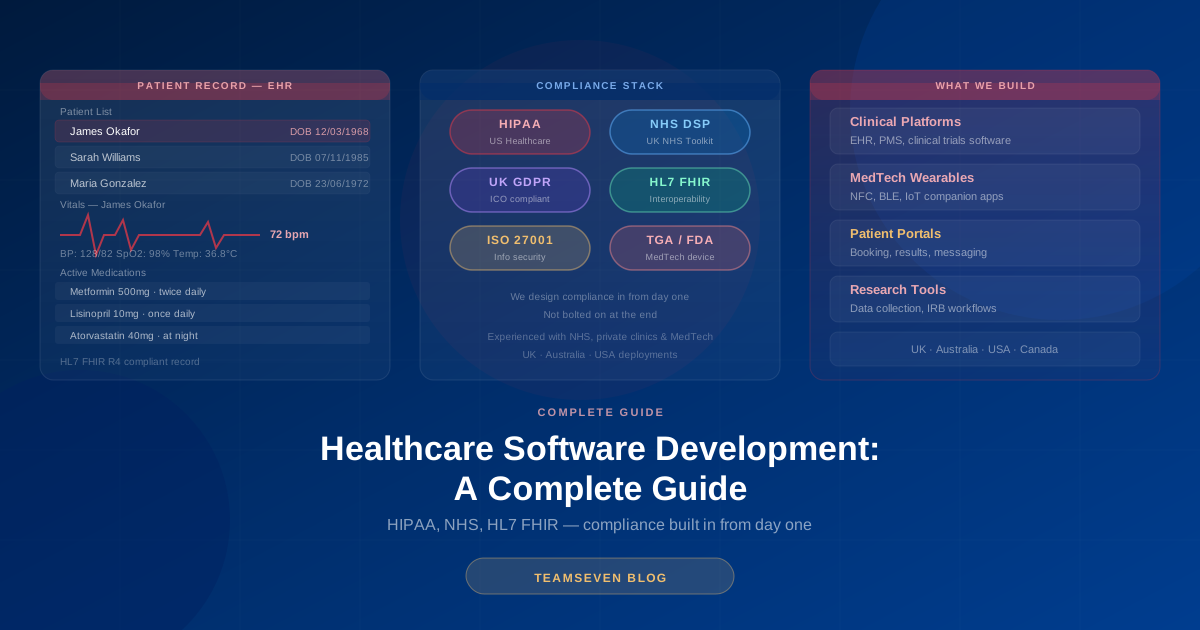
Healthcare software is different from other software in one way that changes everything: when it fails, people's health is on the line. Not their convenience. Their health.
We've built healthcare software: COMPASS for Autism, a clinical research platform at Ball State University, and Sharewear, an NFC medical safety wearable. Both taught us that building for healthcare demands a different standard than building for business. This is an honest guide to what healthcare software development involves, for anyone considering building in this space.
Why healthcare software is different
Most software, if it has a bug, inconveniences someone. They refresh, they retry, they're annoyed. Healthcare software that fails can affect someone's care, expose deeply sensitive data, or in clinical contexts, contribute to a medical error.
That reality shapes everything: how carefully you build, how rigorously you test, how seriously you take data protection, and how much the compliance requirements matter. You don't approach healthcare software the way you approach a marketing website. The standard is higher because the stakes are higher.
This isn't a reason to avoid healthcare software. It's a reason to build it with teams who understand what's different about it.
The types of healthcare software
"Healthcare software" covers an enormous range, and the requirements differ massively across it:
Clinical software used in direct patient care: EHR/EMR systems, clinical decision support, diagnostic tools. The highest-stakes category, often heavily regulated, sometimes classified as medical devices.
Patient-facing software: patient portals, telehealth, appointment booking, health tracking apps. Handles sensitive data, needs to be accessible to non-technical and often unwell users.
Research software: clinical trial platforms, research data collection, study management. Where data integrity is paramount because real conclusions depend on it. (This is where COMPASS sits.)
Operational healthcare software: practice management, billing, scheduling, hospital operations. Business software for healthcare organisations, with healthcare-specific compliance.
Medical device software and wearables: software that runs on or with medical devices. Often the most heavily regulated. (Sharewear sits near here, though as a safety/information device rather than a regulated clinical device.)
Where your product sits determines your compliance burden, your cost, and your timeline. Be precise about which one you're building, because the differences are enormous.
The compliance reality
Healthcare's defining characteristic from a development standpoint is compliance. The major frameworks:
HIPAA (US). Governs protected health information (PHI). If your software handles US patient health data, HIPAA's technical safeguards apply: access controls, audit logging, encryption, transmission security, automatic logoff. We build to these technical safeguards. Worth being clear: HIPAA compliance is partly technical (which we handle) and partly organisational and legal (which needs specialist compliance advice). We build the technical controls; we recommend a HIPAA compliance consultant for formal certification.
GDPR (UK/EU). Health data is "special category" data under GDPR, with heightened protection requirements. For UK and EU healthcare software, privacy by design, data minimisation, and proper consent handling are built in from the start.
Australian Privacy Act. Health information is sensitive information under the APPs, with specific handling requirements for Australian healthcare software.
Medical device regulation. If your software is classified as a medical device (it makes or directly informs clinical decisions), a whole additional regulatory layer applies: FDA in the US, MDR in Europe, TGA in Australia. This dramatically affects scope, cost, and timeline. If you're in this territory, get regulatory advice before you build, because it shapes the architecture from day one.
The honest guidance: identify your compliance requirements before development starts. They're not features you add at the end. They shape the architecture from the beginning. Retrofitting compliance is expensive and sometimes impossible without rebuilding.
What we learned building healthcare software
Data integrity is everything in research
Building COMPASS taught us that in research software, the data isn't just important. It's the entire point. Researchers draw real conclusions from it. Bad data doesn't just inconvenience someone; it can invalidate findings. We built data collection to be structured and validated from the start, because you can't clean research data after the fact the way you can with business data.
The vulnerable user changes how you design
Both COMPASS (autistic children and their families) and Sharewear (vulnerable people in emergencies) involve users who deserve special care. The interfaces had to be gentle, clear, and respectful: built by people who thought about the human on the other side. In healthcare, good UX isn't aesthetic polish. It's a form of care toward people who are often stressed, unwell, or vulnerable.
Reliability is a higher bar
Sharewear is tapped in emergencies. If it fails, someone doesn't get help. That reliability requirement is closer to industrial software than to a typical app, and it changes how you build and test everything. Healthcare software in general carries a higher reliability bar because the failure modes are more serious.
What healthcare software costs
Healthcare software costs more than equivalent business software, primarily because of compliance, testing rigour, and the higher reliability bar:
| Healthcare software type | Cost driver | Timeline |
|---|---|---|
| Patient-facing app (portal, booking, tracking) | Standard build plus HIPAA technical safeguards | 16–28 weeks |
| Research / data platform | Data integrity and validation requirements | 20–40 weeks |
| Clinical / operational platform | Complex permissions, audit logging, integrations | 28–48 weeks |
| Medical device software (regulated) | Formal certification and regulatory scope | 40+ weeks |
The compliance and regulatory layer is the biggest cost variable. A patient app with basic HIPAA technical safeguards is one cost; a regulated medical device requiring formal certification is a completely different one. Identify which you are early: book a call and we'll help you work out where your project sits.
Choosing a healthcare software development team
The criteria that matter specifically for healthcare:
Healthcare experience. Has the team built healthcare software before? Do they understand compliance requirements without you having to teach them? Healthcare has specific complexity that experience navigates and inexperience stumbles through expensively.
A serious approach to data and security. Healthcare data demands genuine security competence. Ask how they handle sensitive data, what their security practices are, and how they approach compliance.
Understanding of the vulnerable user. Healthcare software often serves people who are unwell, stressed, or vulnerable. A team that gets this builds better healthcare software than one that treats it like any other project.
Honesty about compliance scope. A team that claims to handle "full HIPAA compliance" as a checkbox is overselling. The honest position: we build the technical safeguards; formal certification involves compliance specialists and auditors. A team that's straight about this understands healthcare; one that promises everything doesn't.
A note on offshore for healthcare
Healthcare software can absolutely be built offshore: we've done it, for US and Australian clients, handling sensitive data appropriately. The keys: an agency that understands the relevant compliance frameworks, proper data handling practices (anonymised/synthetic data in development, never casual access to real patient data), Data Processing Agreements where required, and serious security practices.
The compliance requirements don't prevent offshore development; they require choosing an offshore team that takes them seriously. Ask any agency how they'd handle your specific compliance requirements. The quality of the answer tells you whether they understand healthcare or just want the project.
FAQ
How much does healthcare software cost to build? A focused clinical or patient-facing tool is the smallest build; a full platform costs meaningfully more; and large multi-role systems with deep integration and regulatory scope sit at the top end. Healthcare carries a cost premium over comparable business software because reliability, validation, and compliance work are part of the build rather than optional extras.
Can healthcare software be built offshore with HIPAA or GDPR requirements? Yes: we've done it for US and Australian clients handling sensitive data. The requirements don't prevent offshore development; they require an offshore team that takes them seriously: understanding the relevant frameworks, using anonymised or synthetic data in development, never casual access to real patient data, and Data Processing Agreements where required.
How do I tell whether an agency understands healthcare? Ask how they would handle your specific compliance requirements. The quality of that answer separates teams who have built healthcare software from teams who want the project. Vague reassurance is the warning sign.
Why is healthcare software held to a higher reliability standard? Because the failure modes are more serious. Sharewear, one of ours, is tapped in emergencies. If it fails, someone doesn't get help. That requirement is closer to industrial software than to a typical app, and it changes how everything is built and tested.
What's different about designing for patients and vulnerable users? Interfaces have to be gentle, clear and respectful, because the people using them are often stressed, unwell, or vulnerable. Building COMPASS for autistic children and their families taught us that in healthcare, good UX isn't aesthetic polish. It's a form of care toward the person on the other side.
Stay connected
Build notes, launches, and new articles from the Teamseven team.