
How We Built a Smart Parking Management System (And What It Actually Takes)
Parking management software development: ANPR cameras, boom gates and contactless payments, from the team that built a smart parking platform in Australia.

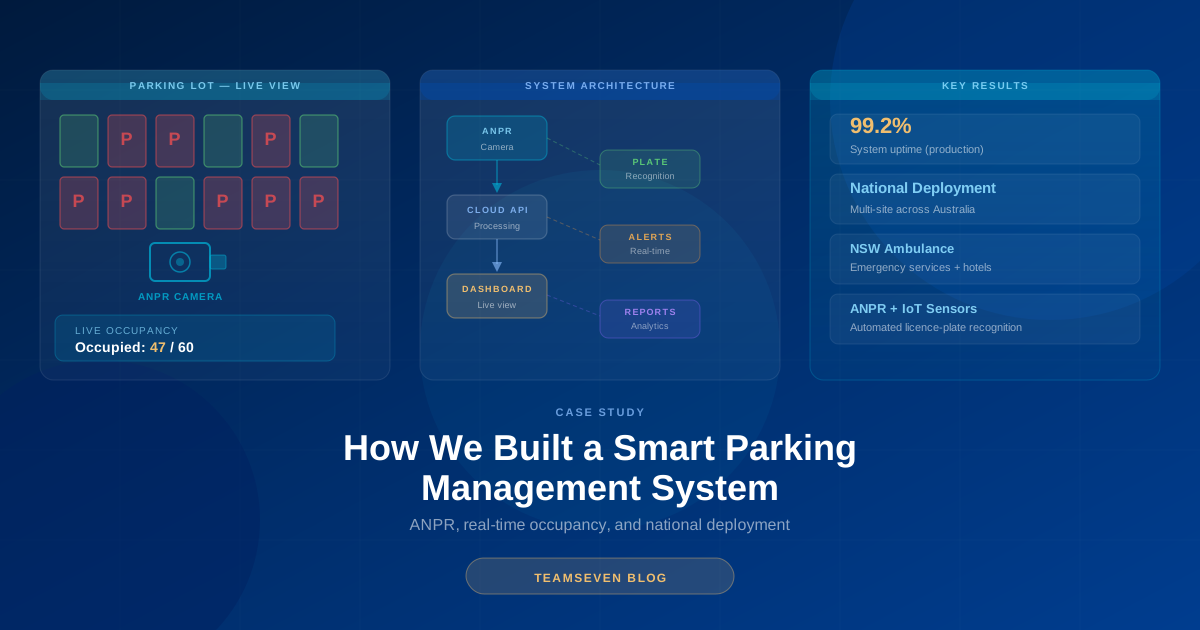
A few years ago a client came to us with an idea: what if you could run a car park with no staff, no paper tickets, and no boom gate button that jams when it rains?
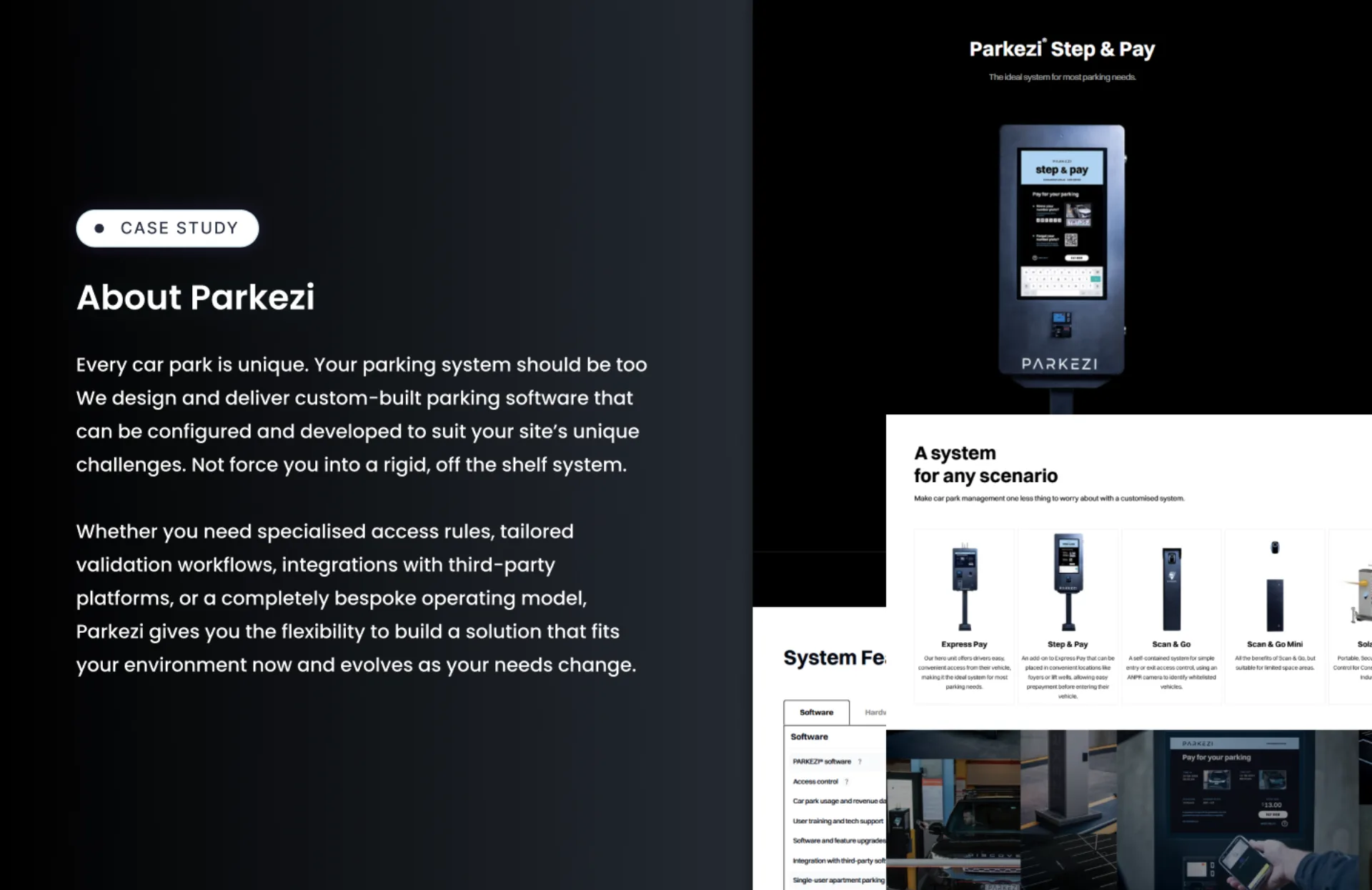
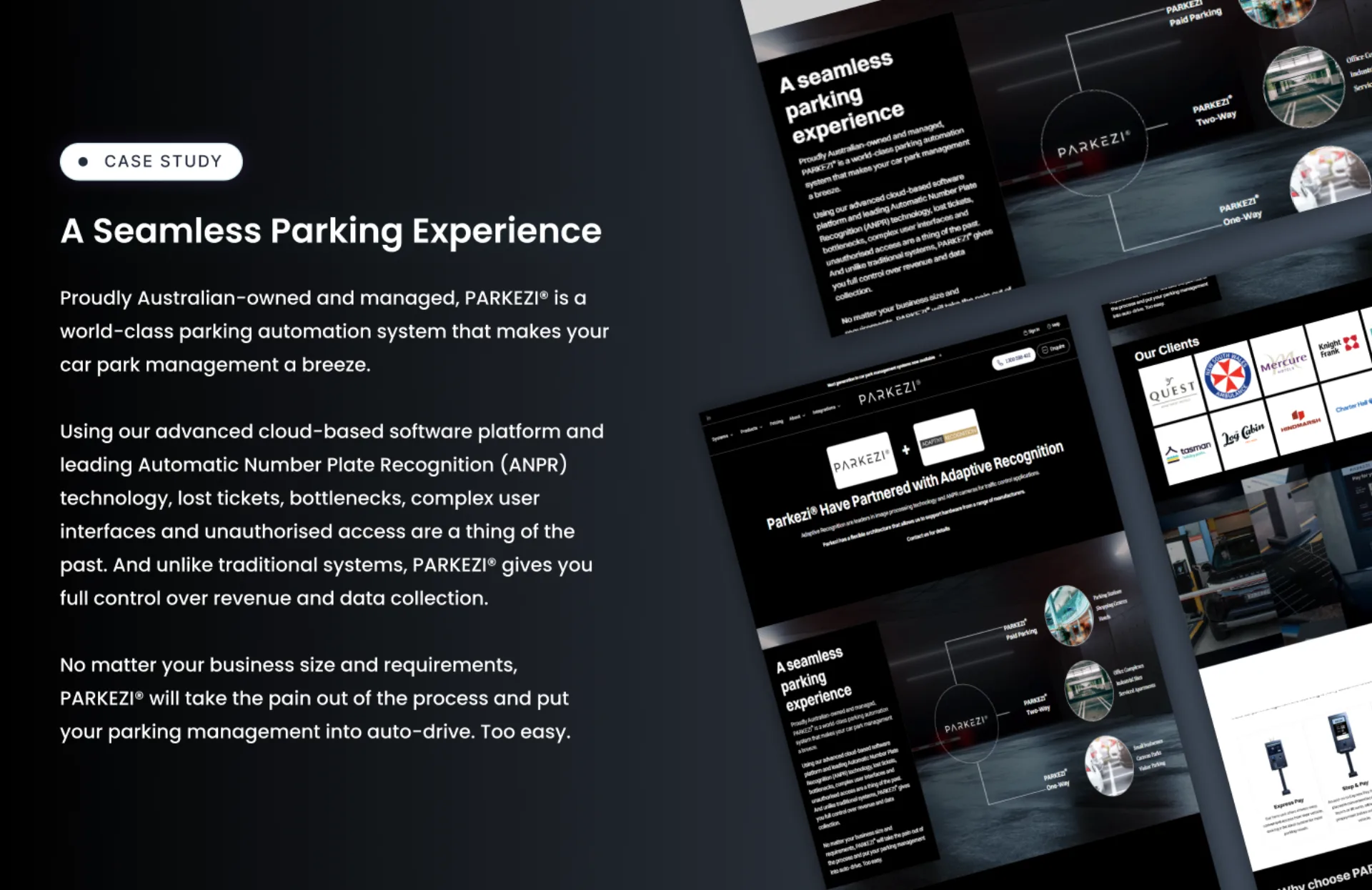
That idea became a full smart parking automation platform. Today it runs parking operations at a national ambulance service's sites, major hotel chains, and commercial parking stations across Australia. We built the whole thing: the cameras talking to the software, the boom gates opening on their own, the payments going through without anyone touching a screen.
So when someone asks me "how hard is it to build parking management software," I don't have to guess. I built it. Here's the honest version of what it takes.
What "smart parking software" means
Let me clear something up first, because the term gets thrown around loosely.
A parking app: where you find a spot, book it, and pay on your phone, is one thing. That's a consumer app with a map and a payment screen. Useful, but not what I'm talking about here.
A parking management system is the thing that runs the actual car park. It's the software connecting the camera that reads your number plate to the boom gate that lifts, to the payment system that charges you, to the dashboard where the operator sees what's happening. It's hardware talking to software talking to money, all in real time, with no human in the loop.
That second thing is the hard one. And it's the one I'm writing about.
The four pieces that have to work together
When you strip this platform down to its core, there are four systems that all have to talk to each other perfectly. If any one of them is half a second late or drops a message, a real car is sitting at a real boom gate that won't open, with a real frustrated driver behind it.
1. ANPR: the cameras that read number plates
ANPR stands for Automatic Number Plate Recognition. A camera films the car, software reads the plate, and the system now knows who just arrived.
This sounds simple. It is not.
Plates get dirty. It rains. The sun hits the camera at the wrong angle at 5pm. A plate is partially obscured by a tow bar. Someone has a novelty font on their plate. The camera reads "0" as "O" or "8" as "B". Every one of these is a real situation that happens dozens of times a day across a busy car park, and every misread is a car that the system doesn't recognise.
What we learned building it: you don't trust a single read. You take multiple frames, you score the confidence of each read, and you build logic around what to do when confidence is low. You also build a manual override so an operator can fix a misread without the whole system falling over. The happy path (clean plate, good light, correct read) is maybe 20% of the engineering. The other 80% is everything that goes wrong.
2. Boom gates and access control: the hardware layer
The software has to physically open and close a barrier. That means talking to hardware: boom gate controllers, often over protocols that were designed decades ago and documented badly, if at all.
This is where a lot of software teams come unstuck. They can write a beautiful web app, but the moment they have to send a signal to a physical relay that lifts a steel arm, they're in unfamiliar territory. The hardware doesn't speak JSON. It speaks in voltage and old industrial protocols. You have to build an integration layer that translates between your clean modern software and the messy physical world.
And it has to be reliable, because the failure mode isn't a 404 error. It's a queue of cars.
3. Payments: contactless, and it has to clear
The platform uses contactless payment processing. The driver taps, the payment clears, the gate opens. No ticket, no machine, no fumbling for coins.
Payment integration is its own discipline. You're dealing with payment gateways, transaction states, what happens when a payment is initiated but the network drops before confirmation, refunds, failed transactions, and the reconciliation that makes sure the money that should have come in came in. Get this wrong and you either charge people twice or let cars out for free. Neither is acceptable.
4. The management dashboard: where humans see everything
Behind all the automation, a human operator needs to see what's happening: how many spaces are occupied, what revenue is coming in, which gates are open, where there's a problem. Real-time data from every part of the system, presented so an operator can run the site and step in when something needs a human.
This is the part that looks like "normal" software: a web dashboard. But it's only useful because everything underneath it is feeding it accurate, real-time data.
The part nobody tells you: real-time reliability
Here's the thing that separates parking management software from most web applications.
When your SaaS dashboard is slow to load, the user waits two seconds and gets mildly annoyed. When your parking system is slow to open the gate, a car is physically blocking the entrance, the cars behind it can't move, and within a minute you have a queue spilling onto the road.
The reliability requirement is closer to industrial software than to a typical web app. You design for what happens when the internet connection at the car park drops. You design for what happens when the camera goes offline. You design for what happens when the payment gateway has an outage. Every component needs a sensible failure mode, because "the system is down" isn't an acceptable state when there are cars involved.
This is the single biggest thing I'd tell anyone thinking about building in this space: the engineering challenge isn't the features, it's the reliability. The features are achievable. Making them work reliably, in the rain, at 2am, when a component fails, with no one watching. That's the actual job.
What it costs to build parking management software
People always want a number, so here's an honest picture of what drives the cost of this kind of system.
| Scope | Relative cost | Timeline |
|---|---|---|
| Single-site MVP (ANPR + gate + basic dashboard) | Lowest | 16–24 weeks |
| Multi-site platform (payments, reporting, multi-tenant) | Mid-range | 24–40 weeks |
| Enterprise platform (full automation, integrations, scale) | Highest | 40+ weeks |
The jump between tiers isn't linear: multi-site adds payment reconciliation and tenancy logic on top of everything single-site already needs, and enterprise scale adds integrations and redundancy that single- and multi-site don't require. These ranges assume a team that has done hardware integration before. If your development team has never talked to a boom gate controller, budget for them learning on your time, which is expensive and risky. Hardware integration experience matters here in a way it doesn't for most software.
Ongoing costs matter too: hosting, payment processing fees, camera maintenance, and software maintenance as hardware and OS updates roll through. Budget 15–20% of build cost per year for ongoing support.
When custom parking software makes sense (and when it doesn't)
I'll be honest about this because it matters.
Custom parking software makes sense when you're running multiple sites, you have specific operational requirements that off-the-shelf systems don't handle, you want to own the platform rather than pay per-space licensing forever, or you're building parking automation as a product to sell to others (like the platform we built for our Australian client).
It doesn't make sense when you have a single small car park and an off-the-shelf system would do the job. There are commercial parking systems you can license. If one of them fits, use it. Don't build custom software to solve a problem an off-the-shelf subscription already solves.
The honest test: is the way you run parking different enough from the standard that existing products force painful workarounds? If yes, custom is worth it. If you're just slightly annoyed by an existing product's UI, it isn't.
What I'd tell someone starting this today
Build the reliability layer first, not the features. Get one camera reliably reading one plate and opening one gate, handling every failure case, before you build anything else. The temptation is to build the impressive dashboard first because it demos well. Resist it. The boring reliability work is the actual product.
Find a team that has done hardware integration. This is not a normal web development project. The ANPR integration, the boom gate control, the payment hardware: these need people who've worked with physical systems before. Ask any agency you're considering: have you built software that controls physical hardware? If the answer is no, that's a real risk.
Plan for the edge cases from day one. The dirty plate, the dropped connection, the failed payment, the tailgating car that follows another through the gate. These aren't edge cases in parking. They're daily occurrences. They are the product.
We built this platform from Lahore, and it's now running car parks across Australia reliably enough that a national ambulance service trusts it. That didn't happen because we built impressive features. It happened because we obsessed over what happens when things go wrong.
This smart parking automation platform now runs across 17 sites in Australia, including a national ambulance service, major hotel chains, and retail parks and shopping centres, processing around 25,000 vehicle transactions a month with no manual intervention on routine entries and exits. Read the full case study →
FAQ
What does it cost to build parking management software? A single-site MVP with ANPR, gate control and a basic dashboard is the smallest build, over 16–24 weeks. A multi-site platform with payments, reporting and multi-tenancy costs considerably more, over 24–40 weeks. Enterprise platforms with full automation and integrations sit at the top of the range. Those costs assume a team that has integrated with hardware before: we'll give you a specific number after a scoping call.
What's the hardest part of building parking software? Reliability, not features. When a dashboard is slow a user waits two seconds; when a gate is slow a car physically blocks the entrance and a queue spills onto the road within a minute. Every component needs a sensible failure mode, because "the system is down" isn't an acceptable state when there are cars involved.
Does my development team need hardware integration experience? It matters here in a way it doesn't for most software. If your team has never talked to a boom gate controller, you're paying for them to learn on your project, which is both expensive and risky. Ask directly what hardware they've integrated with before.
How does the system handle internet or component failure at the car park? That has to be designed for explicitly. You plan for the connection dropping, the camera going offline, and the payment gateway having an outage: each with a defined fallback. Systems that only work when everything works will fail in the rain at 2am with nobody watching.
When does custom parking software make sense over an off-the-shelf product? When your operation has requirements the products don't cover: unusual access rules, specific integrations, or a multi-site model they don't support. If a product broadly fits how you already work, buying it is cheaper and faster, and we'd tell you so.
Related reading
Stay connected
Build notes, launches, and new articles from the Teamseven team.