
PropTech Software Development: Building Technology for Property and Real Estate
PropTech software development: property platforms, smart building tech and parking automation, from the team that built a smart parking platform in Australia.

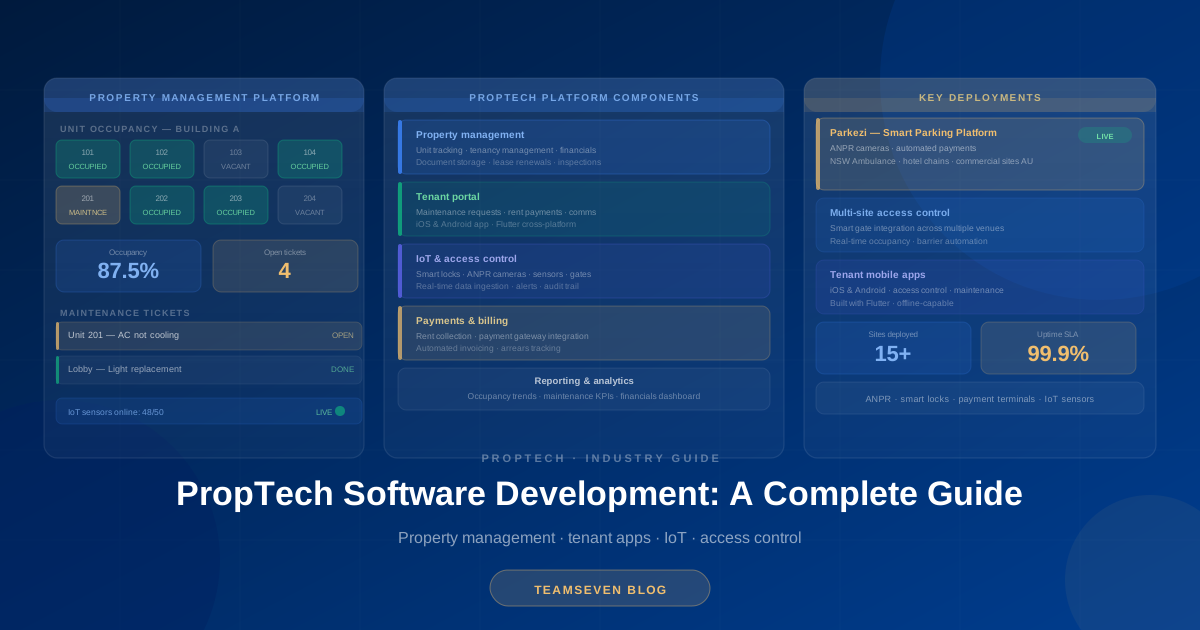
PropTech, property technology, is one of the most interesting and underserved areas of software development. It sits at the intersection of physical space and software, which makes it more technically varied than most verticals, and it's a space where we've shipped real product: a smart parking automation platform now running across Australia.
This is a practical guide to PropTech software development for anyone building technology for property, real estate, or the physical spaces people live and work in.
What PropTech covers
PropTech is broad. It's any technology applied to property and real estate. The major categories:
Property management software: platforms for managing rental properties, tenancies, maintenance, rent collection, and landlord-tenant communication.
Real estate transaction technology: buying, selling, leasing platforms, listing systems, transaction management, and the tools that move property deals through.
Smart building and IoT: technology embedded in physical buildings: access control, energy management, occupancy sensing, building automation. Where software meets hardware.
Smart parking and access: automated parking, access control, ANPR-based entry systems. (This is where our smart parking automation platform lives.)
Investment and analytics: platforms for property investment analysis, portfolio management, and real estate data.
Construction and development tech: project management, cost control, and tools for the construction side of property.
The technical demands range enormously across these: a property management SaaS is fairly standard web software, while smart building IoT and parking automation involve hardware integration that's a different discipline entirely.
What makes PropTech distinct
It often bridges software and physical space
The most interesting PropTech, and the hardest, connects software to the physical world. Our smart parking automation platform reads physical number plates with cameras and controls physical boom gates. Smart building tech controls physical access and physical systems. This hardware-software bridge is a distinct engineering challenge that pure software teams often underestimate.
When we built it, the hard part wasn't the dashboard. It was making software reliably control physical hardware (cameras, gates, payment terminals) in the real world, where it rains, plates get dirty, and a failure means a car stuck at a barrier. PropTech that touches the physical world demands engineering that handles physical-world messiness.
Reliability requirements are often high
When PropTech controls physical access (gates, doors, building entry) reliability isn't optional. A property management SaaS being slow is annoying; a building access system failing locks people out of their home or workplace. The reliability bar for physical-control PropTech is closer to industrial software.
It serves multiple distinct stakeholders
PropTech often serves landlords and tenants, or property managers and owners, or operators and end-users: distinct groups with different needs using the same platform. Like other multi-role software, this needs deliberate design per role, not one interface with hidden buttons.
Integration with legacy property systems
Established property businesses run on existing systems: accounting, property management, building management. PropTech frequently needs to integrate with these, and property industry systems are often older and less API-friendly than modern software. Integration is a common cost driver.
What we learned building a smart parking automation platform
This platform is smart parking automation: ANPR cameras reading plates, boom gates opening automatically, contactless payments, real-time management dashboards. It's deployed at a national ambulance service's sites, major hotel chains, and commercial parking across Australia.
This smart parking automation platform is deployed at a national ambulance service's sites, major hotel chains, and commercial parking across Australia.
The biggest lesson: the software-hardware bridge is where PropTech gets hard. Reading a clean number plate in good light is easy. Reading a dirty plate in the rain at a bad angle, reliably, hundreds of times a day, with a car waiting. That's the actual engineering. Controlling physical gates reliably, handling payment edge cases, keeping it all running when the connection drops, the reliability work is most of the product.
The second lesson: PropTech that works in the physical world has to be designed for physical-world failure modes from day one. The dropped connection, the failed camera read, the payment that initiates but doesn't confirm, the car that tailgates through the gate. These aren't edge cases in PropTech. They're the daily reality the product has to handle gracefully.
What PropTech software costs
PropTech cost varies enormously based on whether it touches hardware:
| PropTech type | What mainly drives the cost | Timeline |
|---|---|---|
| Property management SaaS (software only) | Standard SaaS scope, integrations with legacy property systems | 20–32 weeks |
| Real estate platform / marketplace | Multi-sided marketplace complexity, transaction handling | 24–40 weeks |
| Smart parking / access (hardware integration) | Hardware reliability engineering, physical-world failure modes | 16–40 weeks |
| Smart building / IoT platform | Device integration breadth, real-time data at scale | 28–48 weeks |
The hardware-integration PropTech (parking, access, IoT, smart building) carries the complexity and reliability premium. Pure-software PropTech (property management, marketplaces) costs more like standard SaaS. Know which you're building, and we'll walk you through where your specific project sits on a call.
Choosing a PropTech development team
If your PropTech touches hardware, hardware integration experience is essential. Building software that reliably controls physical devices (cameras, gates, sensors, payment terminals) is a distinct skill. An agency that's only built web apps will struggle with the physical-world reliability requirements. Ask specifically: have you built software that controls physical hardware? We built a smart parking automation platform, so for us the answer is yes: make sure it's yes for whoever you choose.
Multi-stakeholder design experience. PropTech usually serves distinct user groups. A team that's built genuine multi-role platforms handles this well.
Understanding of the reliability bar. PropTech, especially physical-control PropTech, has higher reliability requirements than typical software. A team that understands this builds for failure modes from the start.
Integration capability. PropTech often integrates with older property industry systems. Integration experience matters.
A note on offshore for PropTech
PropTech, including hardware-integrated PropTech, can be built offshore. We built our smart parking automation platform from Lahore and it runs across Australia. The keys are the same as any PropTech build: hardware integration experience where relevant, a serious approach to reliability, and multi-role design capability. The cost advantage of offshore is significant, and for the substantial, definable scope that PropTech platforms involve, offshore development is well-suited. Just verify the hardware experience if your product touches the physical world, that's the capability that separates a PropTech team from a general web team.
FAQ
How much does PropTech software cost to build? The range is wide because PropTech spans everything from listing portals to physical access and parking systems, and hardware integration changes the cost profile substantially: a focused software-only tool sits well below a large multi-role system with hardware or deep integrations. Book a call and we'll scope your specific project.
What makes PropTech different from ordinary business software? It frequently touches the physical world: barriers, sensors, access control, payments at a gate. Building our smart parking automation platform taught us that once software controls something physical, failure isn't a bad user experience, it's a car stuck at a barrier. That raises the reliability bar and adds real-world testing that pure software projects don't need.
Can PropTech software integrate with existing building or parking hardware? Usually yes, but the effort depends entirely on the hardware vendor's interface. Well-documented modern APIs integrate quickly; proprietary or legacy controllers can take weeks for the same nominal feature. This is the single most important thing to scope carefully before anyone quotes you.
How long does a PropTech build take? A focused tool is typically a few months; a platform with hardware integration and multiple user roles runs considerably longer, because each integration needs testing against real equipment rather than a mock.
Should I choose a PropTech specialist or a general software agency? What matters is whether the team has built something that interacts with physical systems and multiple stakeholder types before. Ask to see it. Domain familiarity matters less than proven experience with the specific hard parts: hardware interfaces, multi-role access, and payment flows.
Stay connected
Build notes, launches, and new articles from the Teamseven team.