Restaurant Table Management Software: How We Built TableTap (And What It Actually Takes)
What restaurant table management software really involves: real-time table state, reservations, and customer CRM, from the team behind TableTap.

Walk into a busy restaurant on a Friday night and watch the host stand. Somewhere on it there's a paper diary, or a laminated floor plan with a dry-erase marker, or, in the more sophisticated places, a tablet that nobody fully trusts, backed up by the same paper diary.
Now watch what happens when a party of six walks in without a booking while table 12 is finishing dessert, table 9 called to say they're running twenty minutes late, and two servers are asking the host different questions at the same time. That's the moment restaurant software either earns its keep or gets abandoned by the end of service.
We build software for a living (we've shipped SaaS platforms, logistics systems, and clinical tools since 2017) and we also build and run our own products. One of them is TableTap, a restaurant table and reservation management platform that's live in production today. This post is the honest version of what building it involved: what restaurant table management software has to do, where the hard engineering hides, and what I'd tell anyone deciding whether to buy a system or build their own.
What is restaurant table management software?
Restaurant table management software is the system that tracks the live state of every table in a restaurant (who's seated where, which tables are free, which are reserved and for when) and connects that state to reservations, customer records, and staff assignments in real time.
That definition matters because the term gets blurred with two neighbours. A reservation system takes bookings. That's the front door. A point of sale takes payments, that's the back end of the meal. Table management is everything in between: the twenty-to-ninety minutes where a physical room full of people has to match what the software believes is happening. Get that middle layer wrong and the bookings and the payments don't save you.
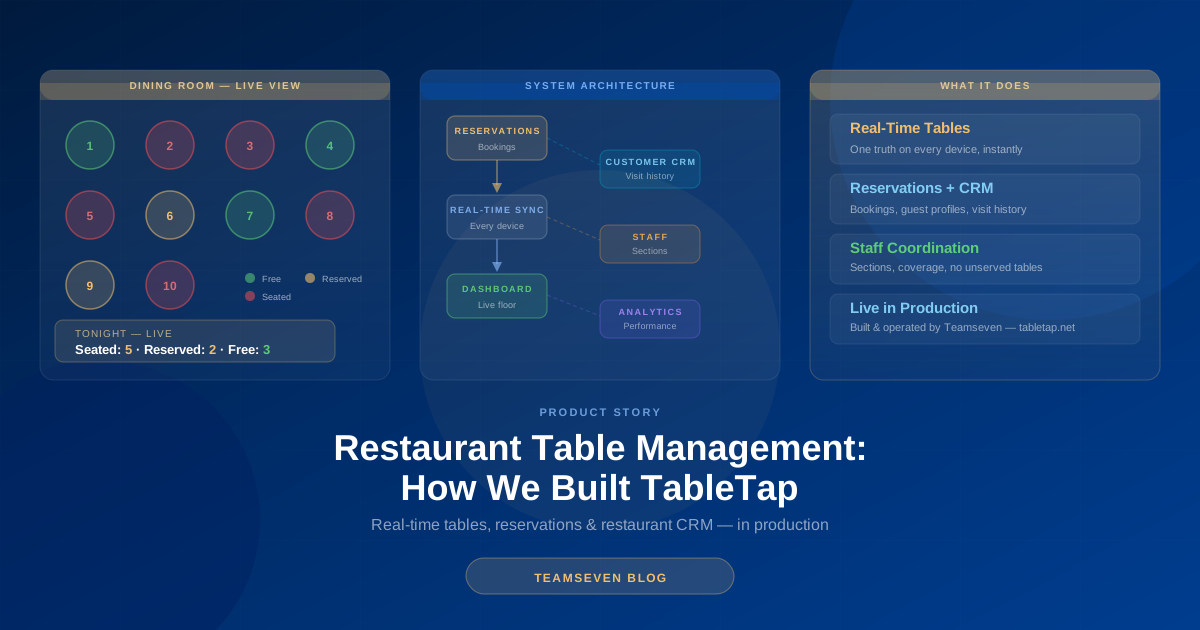
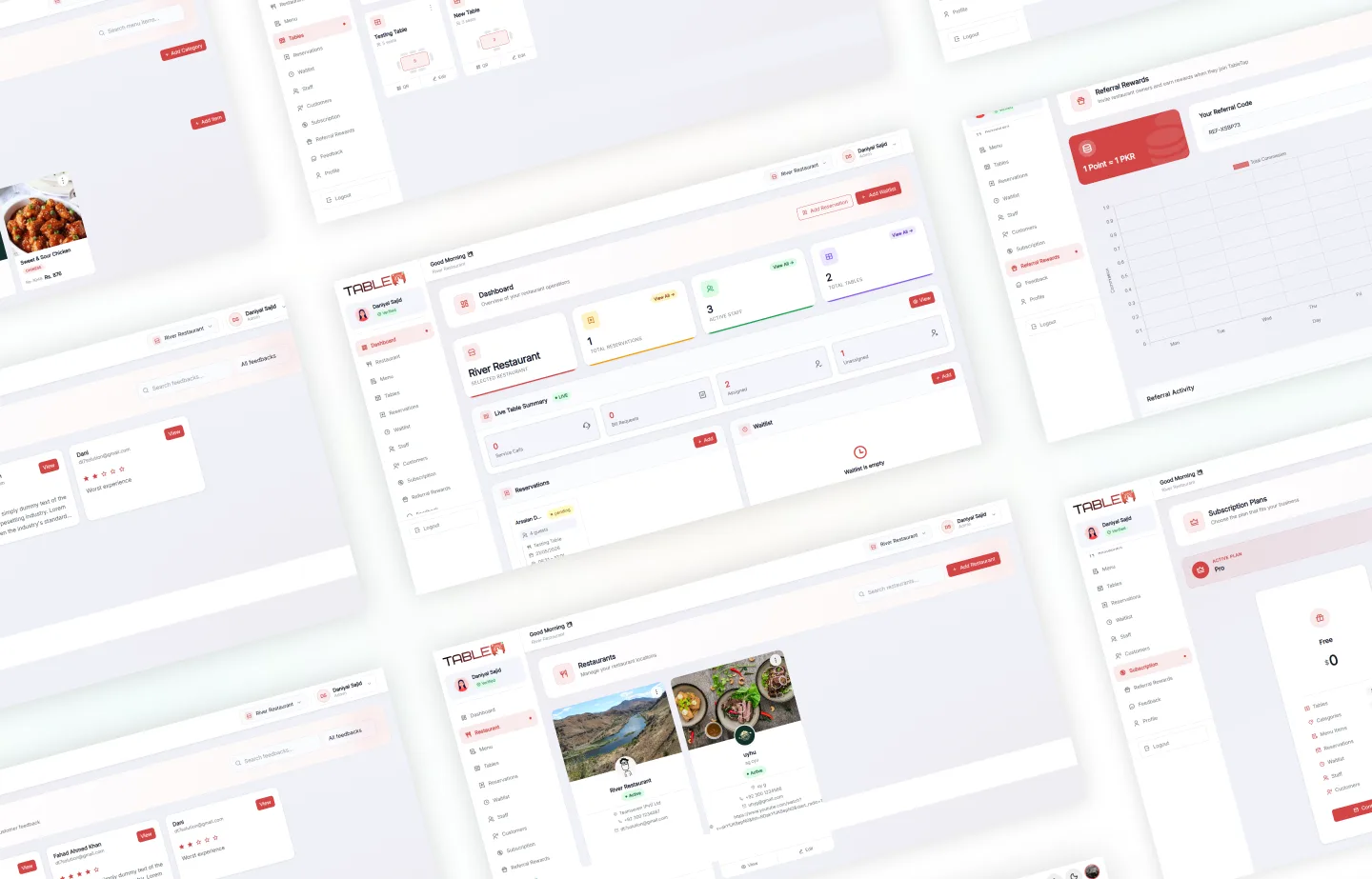
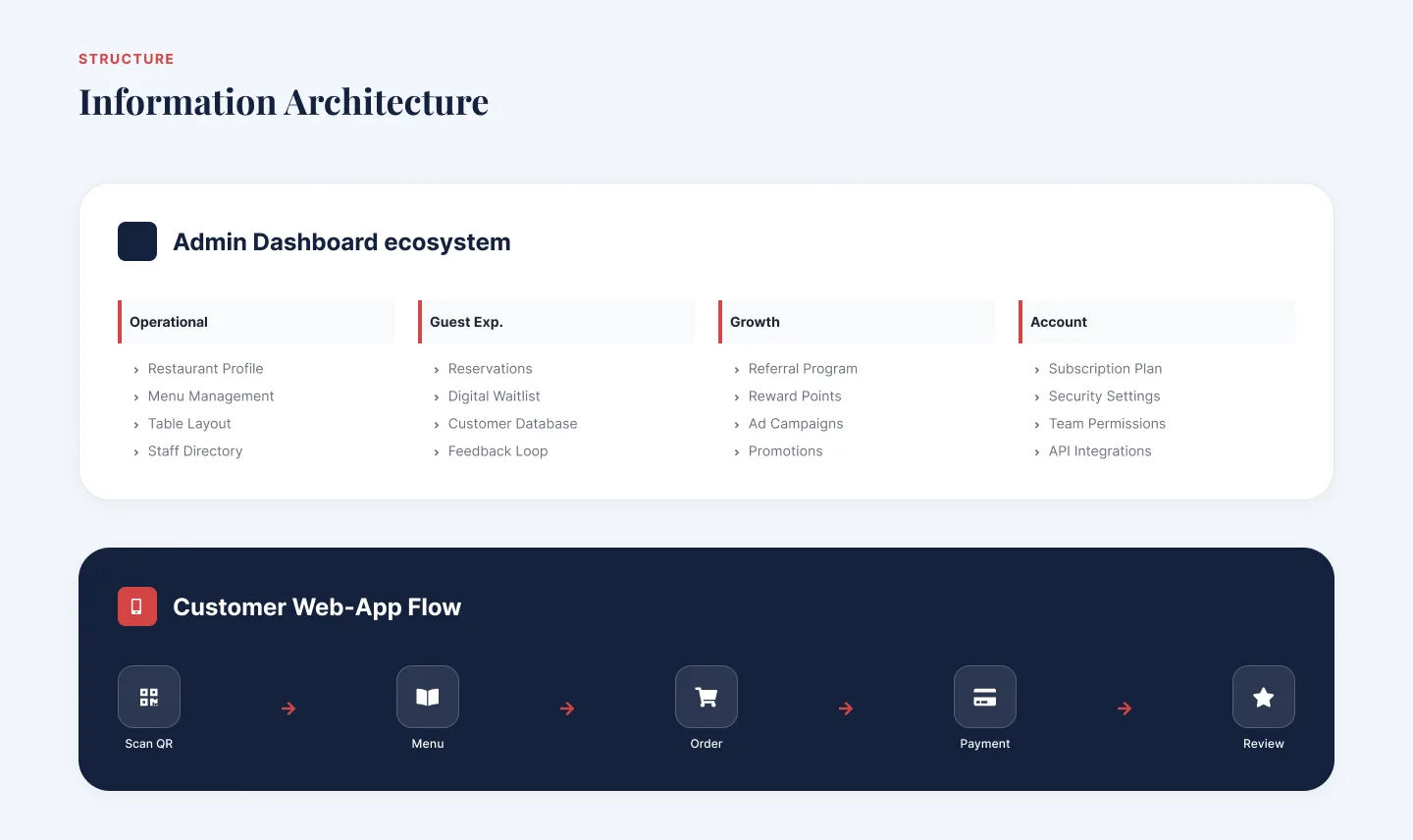
TableTap covers that middle layer and the edges around it: a live dashboard of reservations and table status, customer profiles with visit history, staff assignment, and an analytics view: all synced across every device the team has open. One source of truth, whether the host is on the front tablet or the manager is checking from the office.
Why do restaurants outgrow the paper diary?
Not because paper doesn't work. It does, up to a point. Restaurants outgrow the diary when the coordination cost of keeping everyone's mental model in sync starts eating covers.
The failure pattern is always the same, and we heard it repeatedly from restaurant operators before we wrote a line of TableTap:
- Double-seating. Two staff members promise the same table to different parties, because the diary was in one person's hand and the walk-in was at the door.
- Ghost tables. A table sits "reserved" for a no-show while walk-ins get turned away. Nobody owns the decision to release it.
- Lost regulars. The couple who've been in eleven times get treated like strangers, because their history lives in a server's memory, and that server left.
- Blind management. The owner finds out Tuesday was dead and Saturday was oversold a week later, from anecdotes, not numbers.
Every one of those is an information problem, not a hospitality problem. The staff are good. The information is stale. That framing, stale state, is also exactly how you have to think about it as an engineer, which brings me to the hard part.
The four systems that have to work together
Strip TableTap down and there are four connected systems. Each one is manageable alone; the product is making them agree with each other, instantly, on every device.
1. Live table state
The floor plan is a distributed state machine. A table is free, seated, reserved, or being turned, and that state changes from multiple devices at once. The host seats a party from the front tablet while the manager reassigns a section from the office. If those two writes conflict and the system resolves them wrong (or slowly), the software has just double-seated a table, the exact failure it exists to prevent.
We built TableTap around real-time synchronisation: a change made on any device propagates to every connected device immediately. That sounds like a feature bullet. In practice it's the product. The moment staff catch the dashboard being even slightly behind reality, they stop trusting it, and once they stop trusting it they go back to shouting across the room: now with an extra tablet to ignore.
2. Reservations
Bookings are the easy 80%: date, time, party size, contact. The hard 20% is everything that happens to a booking after it's made: the party that shrinks from six to four, the guest who's fifteen minutes late during peak turn time, the overlap between a long lunch and an early dinner booking on the same table. A reservation system that only handles the happy path creates work instead of removing it, because staff end up managing the exceptions around the software.
3. Customer records
This is the quiet one that operators end up valuing most. Every guest in TableTap has a profile: visit history, preferences, notes. It's a restaurant CRM, and it converts an anonymous Friday-night crowd into people you know: the regular who always books the corner table, the guest with the shellfish allergy, the birthday from last year. Chains and multi-branch operators feel this even more, because the customer who's a regular at one location shouldn't be a stranger at another. (This is the same pattern we see in CRM work for other industries, the value isn't the data model, it's that the data is there at the moment of service.)
4. Staff coordination
Who's covering which section? Which server owns table 14 tonight? Coverage sounds like an HR detail until you watch a table sit unserved for ten minutes because two servers each assumed the other had it. TableTap makes assignment explicit and visible: every table has an owner, and the dashboard shows coverage gaps before guests feel them.
The hard part: real-time state is unforgiving
If you're evaluating this kind of software (or thinking about building your own product) here's where the engineering difficulty lives, because it isn't where it looks like it is.
The dashboard UI is not the hard part. Any competent team can build a pretty floor plan. The hard part is that restaurant software runs in one of the most hostile environments there is for distributed systems:
- Multiple writers, one truth. Several devices mutate the same small dataset (tonight's tables) at the same moment, and conflicts must resolve in a way that matches what physically happened in the room.
- Wi-Fi that drops during the rush. The busiest hour is exactly when the network chokes. The software has to degrade gracefully and reconcile cleanly when the connection returns, not throw a sync error at a host with a queue at the door.
- Zero patience for latency. An office worker will tolerate a two-second spinner. A host with six people staring at them will not. State changes have to feel instant.
- Non-technical users under pressure. Nobody gets trained for an hour. The UI has to be learnable in one shift, because hospitality staff turnover is real and Friday doesn't wait.
We made an early architectural decision in TableTap that everything is a synchronised event (seat, move, release, book, cancel) rather than devices editing rows and hoping. That's what lets every screen agree, and it's what makes the analytics honest later, because the event log is the history of the night. If you're making similar decisions, our post on SaaS architecture choices that define your product goes deeper on why these calls are so expensive to reverse.
How does table management software reduce no-shows?
No-shows are the industry's quiet tax: hospitality studies consistently put the direct cost to UK restaurants alone in the billions annually, and a single empty four-top on a Saturday is revenue you never get back. Software attacks the problem from three angles.
First, friction and accountability: confirmed bookings with automatic reminders make it easy for guests to cancel instead of vanish. Most no-shows aren't malicious, they're forgetful. Second, data: when every booking and outcome is recorded, you learn your actual no-show pattern (which nights, which booking sources, which party sizes) instead of guessing. Third, recovery speed: when a no-show does happen, a live floor view means the table goes back into circulation in seconds, not whenever someone notices.
None of this eliminates no-shows. Anyone who promises that is selling something. What it does is convert an invisible loss into a measured, managed one, which in a business running on 5–10% margins is the difference that matters.
What we learned building TableTap
A few lessons from shipping it that I'd pass on to anyone building for hospitality:
The demo environment lies. Software that works beautifully with five test tables and one user falls apart with forty tables, seven devices, and a Saturday rush. We learned to test against the chaotic case first (concurrent edits, dropped connections, rapid-fire state changes) because for restaurants the chaotic case is just called service.
Features lose to reliability, every time. Operators didn't ask us for more features. They asked, in various forms, "will it be right when I look at it?" Real-time sync that never lies beats twenty menu options. This mirrors what we've seen across 600+ shipped projects: products fail on trust before they fail on functionality.
Design for the shift, not the sale. Buying decisions are made by owners in quiet offices; the software lives or dies with a 22-year-old host during the dinner rush. Every screen in TableTap got judged by one question: can someone use this correctly while four other things are happening?
Hospitality is an ecosystem, not an app. Table management sits next to QR menus, online ordering, delivery integrations, and POS systems. We built TableTap as its own focused product, but the hospitality software landscape rewards systems that play well with neighbours.
Should you buy restaurant software or build your own?
I'll give you the same honest answer we give consulting clients, even though we sell software in this category.
Buy off-the-shelf when you run one or a few locations and a product like TableTap already fits how you operate. Subscription software that solves the problem today beats a custom build that solves it in eight months. This is most restaurants, and pretending otherwise is how agencies sell projects that shouldn't exist.
Build custom when you're an operator whose workflow doesn't fit existing products (unusual service models, deep integration needs with existing systems) or when you're a founder building restaurant technology as the product, to sell to other operators. The build-vs-buy logic is the same as anywhere else, and we've written a fuller framework in custom software vs off-the-shelf.
If you do build, budget honestly: a production-grade platform with real-time sync, multi-device support, and a customer database is a serious build: our SaaS MVP cost breakdown gives real numbers, and real-time state management sits at the expensive end of it. The floor-plan UI you can see is maybe a third of the work; the synchronisation and edge-case handling you can't see is the rest.
The takeaway
Restaurant table management software is a real-time distributed systems problem wearing a hospitality costume. The winning products aren't the ones with the longest feature lists. They're the ones a stressed host still trusts at 8:45 on a Saturday.
We built TableTap because we wanted to own a product in this space end to end (design, engineering, and operations) and running it in production has taught us more about real-time systems than any client project could. You can see the product itself on its showcase page or at tabletap.net.
TableTap is live in production at tabletap.net: real-time table management, reservation tracking, customer profiles, and staff coordination synced instantly across every connected device. See the full product page →
Stay connected
Build notes, launches, and new articles from the Teamseven team.