AI Integration for B2B SaaS: A Practical Roadmap (Not a Hype Piece)
How to add AI features to a B2B platform in 2026, which features users pay for, the build sequence, and the real cost math for LLM APIs.

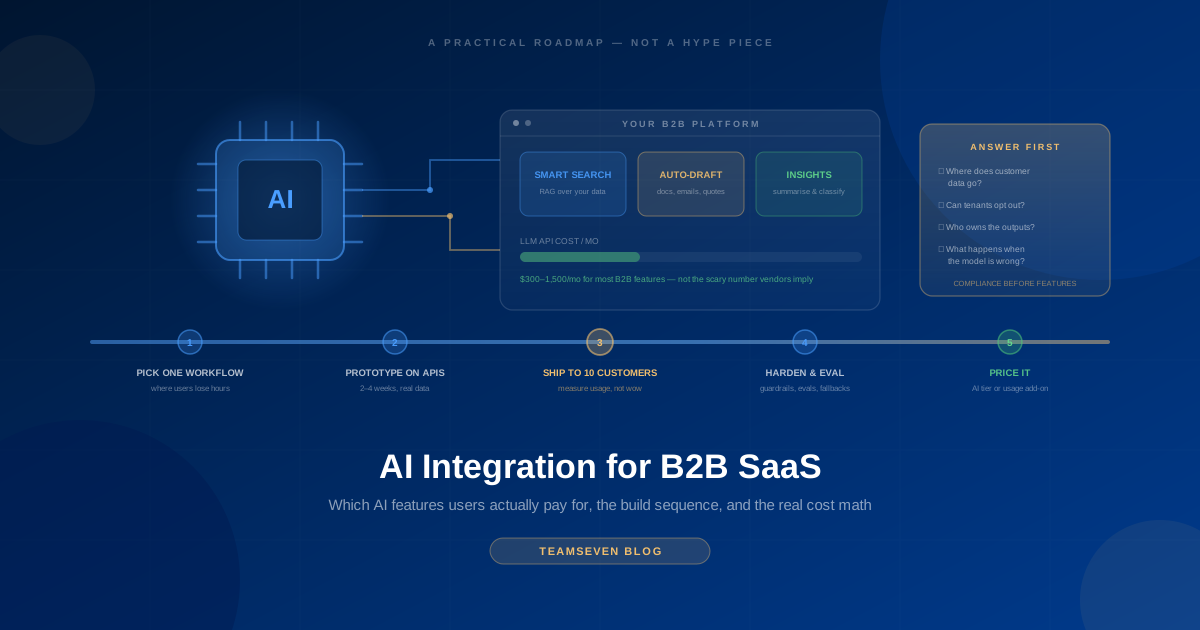
The AI features B2B users pay for in 2026 are boring: drafting things they already write, summarizing things they already read, extracting data they already retype, and answering questions about their own records. Start there, with a scoped API-first integration, measure usage ruthlessly, and treat fine-tuning and agents as year-two conversations.
At Teamseven we've been wiring LLMs into client platforms and our own internal systems, including the outbound personalization engine we run on Claude, long enough to have opinions formed by invoices rather than keynotes. Here's the roadmap I'd give a SaaS founder or ops leader who keeps hearing "you need AI" and wants to know what that means on a Gantt chart.
Step 0: Find the feature (one week, no code)
Skip "what can AI do?" and ask "where do my users currently type, read, or retype the most?" In every B2B product, the answers cluster into four buckets:
| Bucket | Examples | Why it converts |
|---|---|---|
| Drafting | Quote descriptions, follow-up emails, job notes, reports | Saves visible minutes per use, daily |
| Summarization | Long threads, call notes, case histories, documents | Removes reading, the most-hated work |
| Extraction | Invoices → fields, emails → structured enquiries, PDFs → records | Kills retyping; accuracy is measurable |
| Retrieval Q&A | "Which jobs this month had access issues?": answers grounded in their data | The feature demos sell enterprise deals on |
Rank candidates by frequency × pain × measurability. Build exactly one first.
Step 1: The architecture that doesn't paint you into a corner
The 2026 default for B2B is API-first: your backend calls a hosted model (Anthropic, OpenAI, Google), wrapped in your own thin abstraction layer so you can swap models per task and as pricing shifts, and pricing will shift. The pieces that matter:
- A model-agnostic service layer in your backend (we build these in NestJS): one place for prompts, retries, fallbacks, logging, and cost tracking per tenant.
- RAG over fine-tuning for "answers about your data." Retrieval-augmented generation (fetching the relevant customer records and feeding them to the model as context) covers the overwhelming majority of B2B retrieval needs without training anything. Fine-tuning is for narrow, high-volume, format-critical tasks, later, maybe.
- Human-in-the-loop by default. AI drafts, the user approves. This single design decision converts "scary AI feature" into "loved assistant," constrains failure cost, and, usefully, is what your enterprise customers' procurement teams want to hear. Our own outbound engine has an approval gate before anything sends; we practice this one.
- Async processing for anything heavy. Queue jobs (we use Bull on Node.js), stream results, never make a user watch a spinner for 20 seconds.
Step 2: The cost math founders skip (and regret)
LLM API pricing is per token: fractions of a cent that compound into real invoices at scale. The discipline that prevents the horror story:
- Model unit economics before building. Estimate tokens per operation × operations per user per month. If your token cost per seat starts eating a large share of what that seat pays you, redesign now: shorter prompts, smaller models for easy steps, caching.
- Route by difficulty. Use cheap fast models for classification and extraction, expensive ones only where reasoning quality is the product. This routing alone typically cuts AI costs 60–80%.
- Cap and log per tenant. Usage limits per plan tier, cost tracking per customer, alerts on anomalies. AI features without metering are an open bar with no till.
The budget for a first production AI feature (design, the service layer, the feature itself, evaluation, and metering) depends heavily on whether the service layer already exists. Subsequent features amortize the foundation and get cheaper. Worth scoping properly on a call rather than estimating from a blog post.
Step 3: The compliance questions to answer before launch
B2B customers will ask, in writing: Is our data used to train models? (Use API tiers with no-training guarantees and say so in your DPA.) Where does data go? (Document the subprocessor; some buyers need region guarantees.) What about hallucination liability? (Human-in-the-loop plus grounding answers in retrieved records, with sources shown.) GDPR implications? (AI features touch personal data; update your records of processing: for healthcare-adjacent platforms, the bar is higher still, as we learned building HIPAA-governed systems like COMPASS.) Having these answers is a sales asset; scrambling for them mid-procurement kills deals.
Step 4: Measure or it didn't happen
Define success before launch: adoption (% of active users touching the feature weekly), acceptance (% of AI drafts used with light or no edits), and time saved (instrument the workflow before and after). Sunset features that don't clear the bar within a quarter. An unused AI feature is pure token cost plus maintenance plus a misleading bullet on your pricing page.
The sequencing mistake to avoid
Don't lead with an agent. Autonomous multi-step agents are the most demo-friendly and least production-ready pattern in 2026: error compounding across steps is brutal in B2B, where a wrong action touches an invoice or a customer. The winning sequence is: assist (drafting/summarizing) → structured extraction → grounded Q&A → constrained automation with approval gates → agents, maybe. Each step earns the trust and the data that makes the next one safe. If you get to the "agents, maybe" stage, what is agentic AI covers where that pattern pays off versus where it just adds risk.
Which model provider should we use?
Behind an abstraction layer, the question becomes "which model per task", and that answer changes quarterly, which is exactly why the abstraction layer is non-negotiable. Lock-in at the code level is the only truly wrong choice.
Can we add AI to a legacy platform, or does it need a rebuild?
If the platform has an API layer, AI features integrate without a rebuild. They're consumers of your existing data. Legacy data quality is the real constraint; extraction features often come first precisely to fix it.
Do we need a data scientist on staff?
For API-first integration with hosted models: no. You need solid backend engineering and product discipline. ML hires make sense when you have proprietary data and a model-shaped moat, which is rarer than LinkedIn suggests.
How long does the first feature take?
4–8 weeks including the service layer, evaluation, and metering. Anyone quoting one week is shipping a prompt in a trench coat: fine for a demo, expensive in production.
Have a platform and a hunch about where AI fits? Book a free 30-minute scoping call: we'll find the one feature worth building first, and tell you what it costs to run, not just to build.
Stay connected
Build notes, launches, and new articles from the Teamseven team.