
Full-stack engineers
Angular, React or Vue front ends with Node.js, NestJS, .NET or Python behind them, working with AI assistants across the whole stack.
The stack behind i-mve and Sharewear.
Our AI-native engineers use AI assistants and agents every day to draft, test and refactor faster. They still read, run and own what they ship. Add one to your team, or have us run a dedicated team, in your stack and your industry.
01Problems we solve
Why teams ask us for AI-native engineers.
Your team has AI tools, but delivery is no faster.
Buying seats is the easy part. Our engineers already know where an assistant saves an hour (tests, boilerplate, refactors, documentation) and where it wastes one, and they keep their own hands on design and the hard decisions.
You are worried AI-written code is quietly breaking things.
We rescue AI-built apps for a living, so we know where they fail: authentication, the data model and billing. An engineer reviews and tests what an assistant writes, exactly as they would a colleague’s pull request.
You need senior judgement, not just more output.
Faster code needs a firmer structure. An architect sets the boundaries, the data model and the review standards, so speed does not turn into a codebase nobody understands.
Hiring locally takes months and the backlog keeps growing.
We match an engineer to your stack and time zone. They join your tools and start on your backlog. No recruitment fees.
02What we build
Full-time engineers, matched to your stack. Where a technology is not one we use daily, we say so before you commit.
Angular, React or Vue front ends with Node.js, NestJS, .NET or Python behind them, working with AI assistants across the whole stack.
The stack behind i-mve and Sharewear.
Node.js, NestJS, .NET, Python, Go and Rust services, integrations and databases.
Python, Go and Rust used on client work.
Flutter, React Native, Ionic and Kotlin apps for iOS and Android.
OpenAI and Claude features inside your product, and agents that act within limits you set.
TeckNow’s OpenAI API work.
AWS and Azure environments, pipelines, data pipelines and the monitoring that keeps them honest.
AI-enabled architects who set structure before the team builds on it, or review what is already there.
See the architects page.
03Proof
These clients still work with us month to month. Their teams use the same engineers, and the same review habits, we would put on yours.
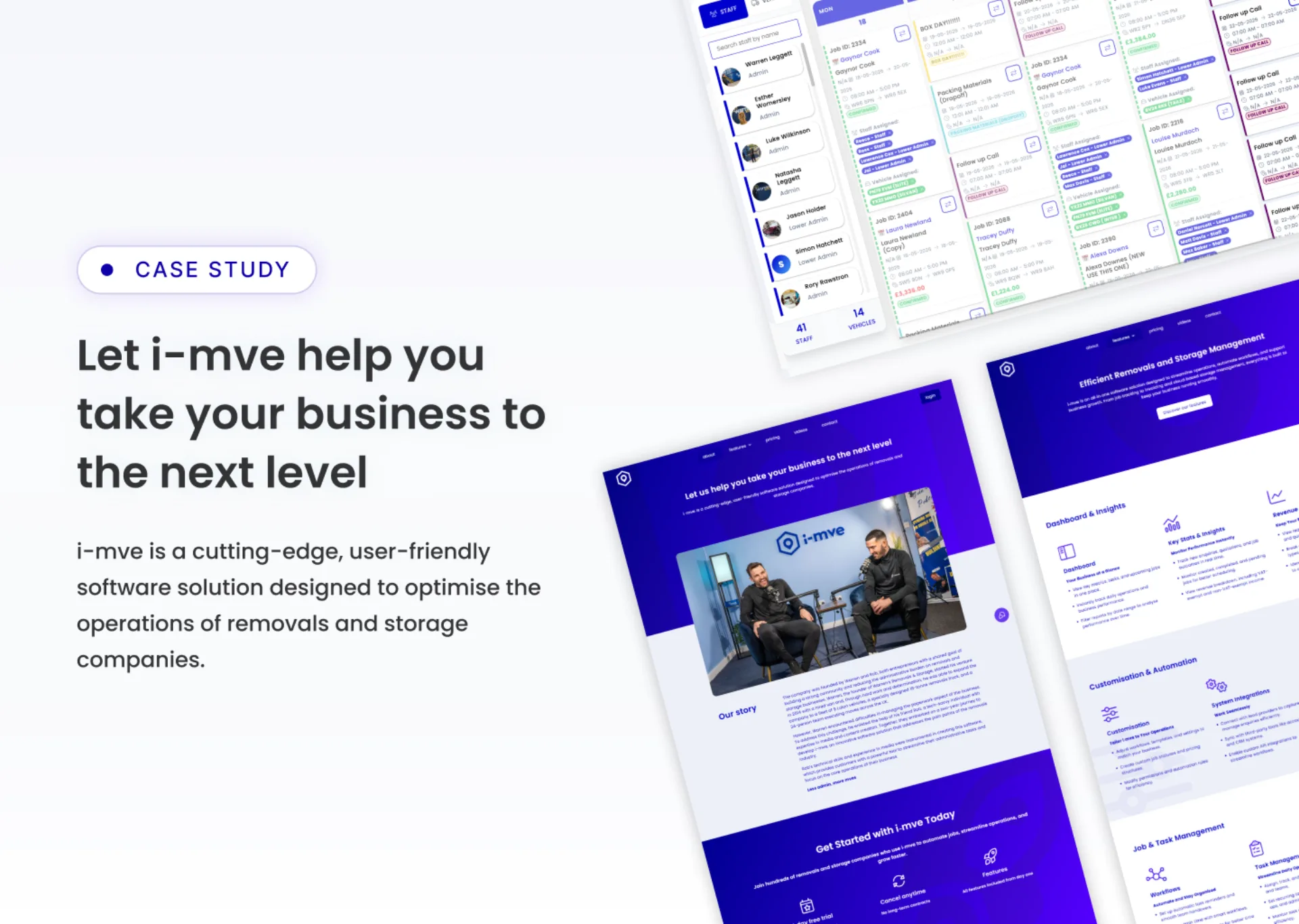
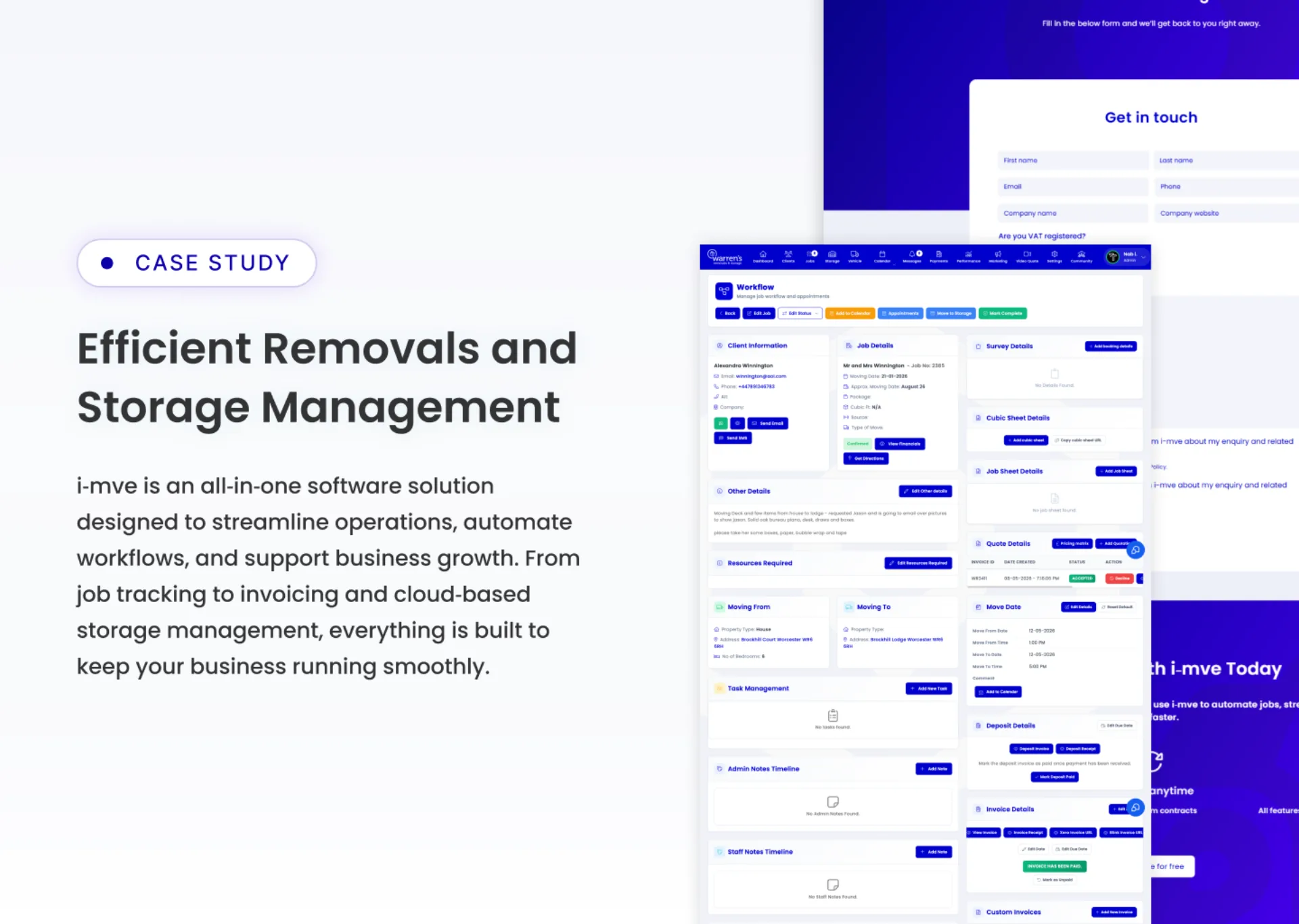
An all-in-one platform for UK removals and storage companies: enquiries, quotes, jobs, staff, invoices, storage and accounting in one place. It started as one removals firm’s system and is now sold on subscription.
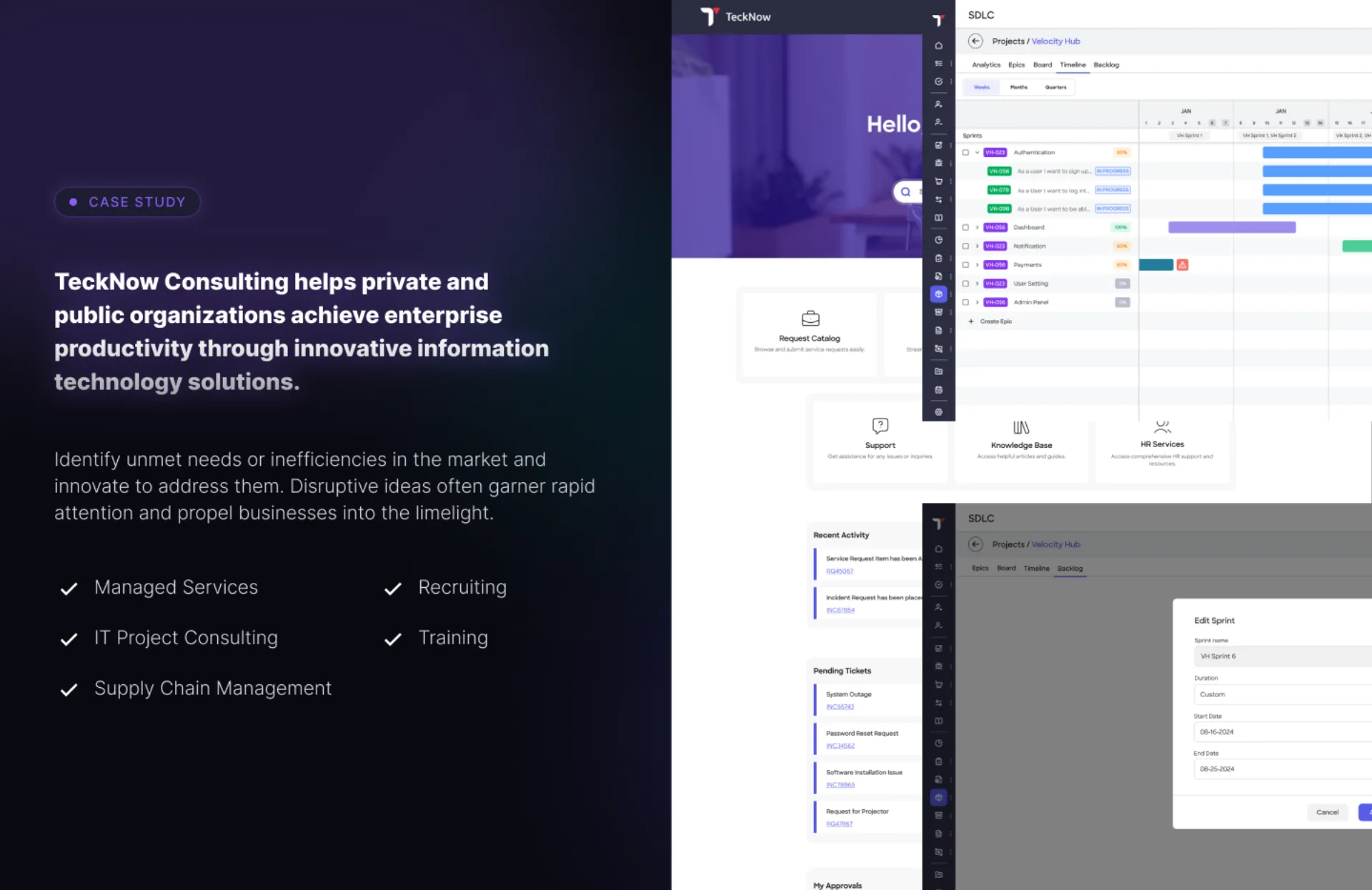
An IT service platform in the spirit of ServiceNow, with the OpenAI API in its stack alongside tickets, resolution tracking and service requests. Still developed with us every month.
A platform for a PhD-led autism programme. Trainers, consultants, teachers and parents follow each child’s plan through surveys, consultations and coaching over a year.
04Process
From first call to an engineer shipping on your product.
Tell us your stack, your backlog and how your team works today. We tell you honestly whether AI-native engineers would help.
One engineer or a small team, matched to your stack and time zone, introduced on a call before you commit.
Slack, your repository, your task board. You tell us which AI tools may see your code and which may not, and we follow that. The team reads the code before changing it.
Work through your backlog in your order, with updates on Slack twice a week. Rehan checks in with you regularly.
Add an engineer, swap a role or step back, with notice agreed up front.
Everything is committed to your repositories as it is written.
05How we price
A monthly rate per engineer, set on a call once we know the role, the stack and the seniority you need. No recruitment fees.
The rate is per engineer per month. Add or remove engineers with the notice we agree at the start. Book a call and we will price the team you describe.
Platform-level reviews of the agency, not cherry-picked project comments.
What I love about Team7 is that they always say: No worries, we can find a solution. This is the mindset of builders, creators, people who do not have fear, the partner you need if you want to excel.
Working with Mo and his team over the past year has been nothing short of exceptional. I was admittedly sceptical about investing such a large amount, but results exceeded every expectation.
Their responsiveness and willingness to take on our challenging task were impressive.
They are amazing and consistently exceed expectations. They go above and beyond what is asked of them and their communication is top notch, so much so that we joke that they never sleep. The best of the best.
06FAQ
Straight answers on quality, tools and cost.
Ask us something elseAn engineer who works with AI coding assistants and agents as a normal part of the day, for drafting code, writing tests, refactoring and documentation, and who still reads, runs and takes responsibility for everything that ships. The difference from a developer who occasionally pastes into a chatbot is habit and judgement: they know what to hand over, what to check and what never to delegate.
It can, when nobody reviews it. We have rebuilt AI-generated apps whose authentication, data model and billing could not survive real users. So our rule is simple: an assistant can write it, but an engineer reads it, tests it and owns it, and architecture and security decisions stay with people.
We work daily in Angular, TypeScript and Node.js on AWS, regularly in NestJS and PostgreSQL, and use React, .NET, Flutter, React Native, Python, Go and Rust where they fit the job. Each technology page says how often we reach for it. Our industry pages cover removals, parking, healthcare, education, aviation, legal, logistics, hospitality, proptech and more. If your stack or industry is outside that, we will tell you honestly before you commit.
That is your decision. In week one you tell us which AI tools may see your code and which may not, and whether any code or data must stay out of third-party tools entirely. We follow your rules, and we agree them in writing before work starts.
We do not quote a speed-up percentage, because it depends on the codebase, the task and how clear the requirements are. What we do is give them a real first task and let you judge the result, the review comments and the pace for yourself.
Each engineer has a monthly rate that depends on the role and the experience you need. We do not publish a price list. Book a 30-minute call, tell us who you need, and you get the number in writing. There are no recruitment fees.
Yes. Architects can join as part of a team, or work on a defined piece such as reviewing an existing system or designing a new one before your engineers build on it. See our software architects page for how that works.
Every build follows the OWASP Top 10, with encryption for sensitive data and two-factor login included as standard. We have built systems that follow GDPR and HIPAA data-handling rules. We hold no security certifications, and we will say so if an auditor asks.
You do. At handover you get the Git repositories and written documentation. There is nothing tying the software back to us, so you can take it to an in-house team whenever you like.
Rehan, one of our two founders, is your day-to-day contact. You get updates on Slack twice a week and can see the code in your repository at any time. We split working hours between us to cover US, UK and Australian time zones, and we usually reply within an hour, sometimes the next morning.
Start your project
A 30-minute call. We’ll tell you which role fits, who we can add, when they can start and what it costs.