The smallest production version of your product that lets real users do the one job it exists for. Not a prototype, not a clickable demo: real accounts, real data, deployed. Built by senior engineers on architecture that scales, so a validated MVP becomes version two instead of a rewrite. Fixed price, 8 to 16 weeks.
If AI is the core of the product, we build it in from day one with retrieval, prompt versioning, and evals. If it is a later feature, we design the data model so it drops in without a rewrite. Our own products, Tully AI and Mebag, are AI-native builds.
One fixed price for the MVP, then an optional monthly build-on retainer. Get your number →
If one of these is the fear, here is how we handle it.
You have a version two in your head and no idea how to get to a version one.
We scope it down with you. Every feature gets one test: does it help you learn whether the core idea works? What passes is the MVP. The rest is a backlog you keep.
A cheap build got you a demo that falls over the moment real users arrive.
Production architecture from the start. Sensible data model, clean API, automated deployment, a stack that scales. Small in scope, not cheap in ways that force a rewrite.
You are burning runway and cannot get a fixed number out of a dev shop.
One fixed price for the MVP. Scoped after a call, delivered in two-week sprints, with any scope change documented and priced before the work happens.
You worry that outsourcing v1 means you cannot bring it in-house later.
You own everything, documented. Standard codebase, architecture docs, no lock-in. If you raise and hire, your team inherits something they can run with.
SaaS, marketplaces, internal tools turned products, and AI-native apps. The kind of MVP that has real users, not a waitlist.
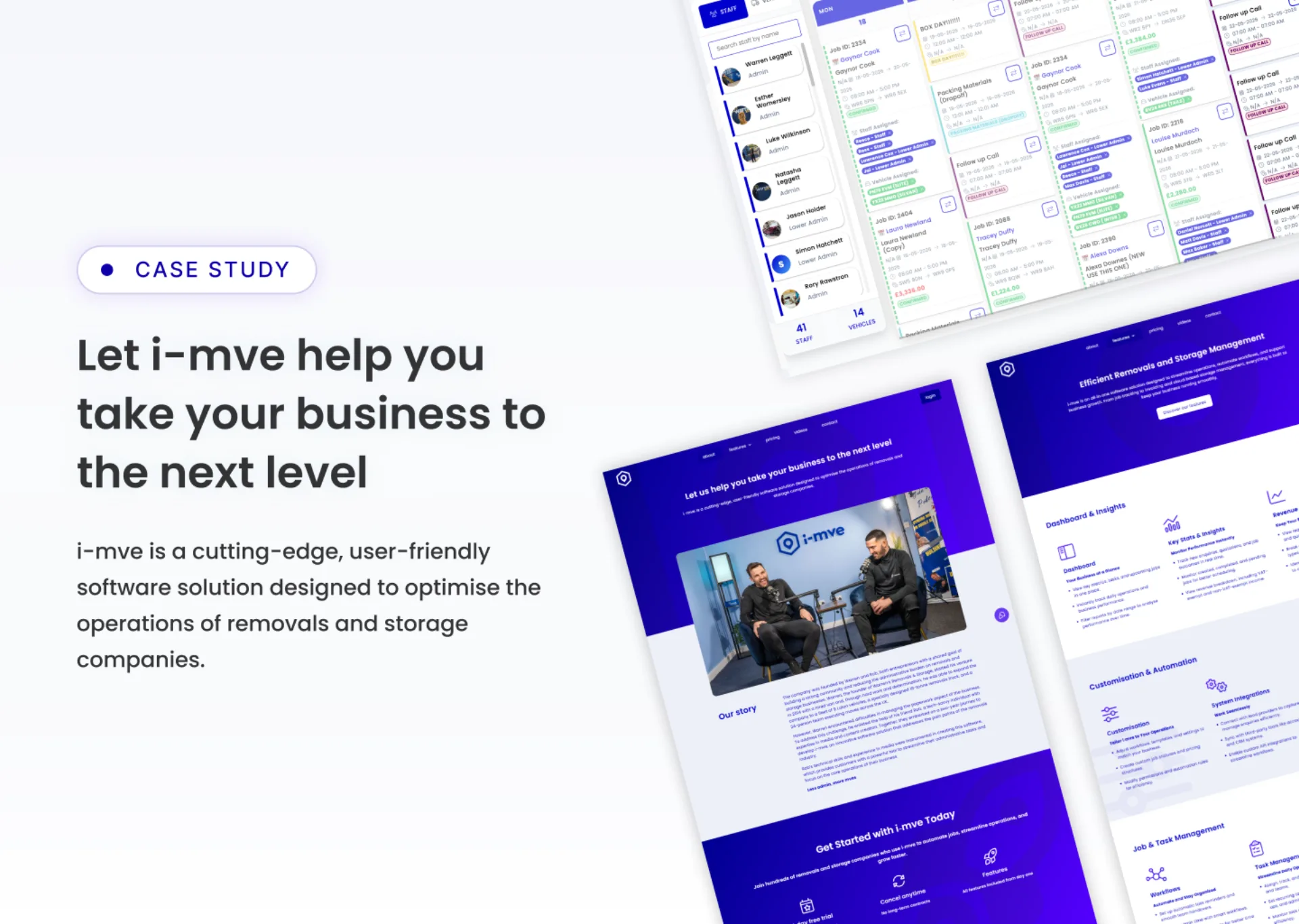
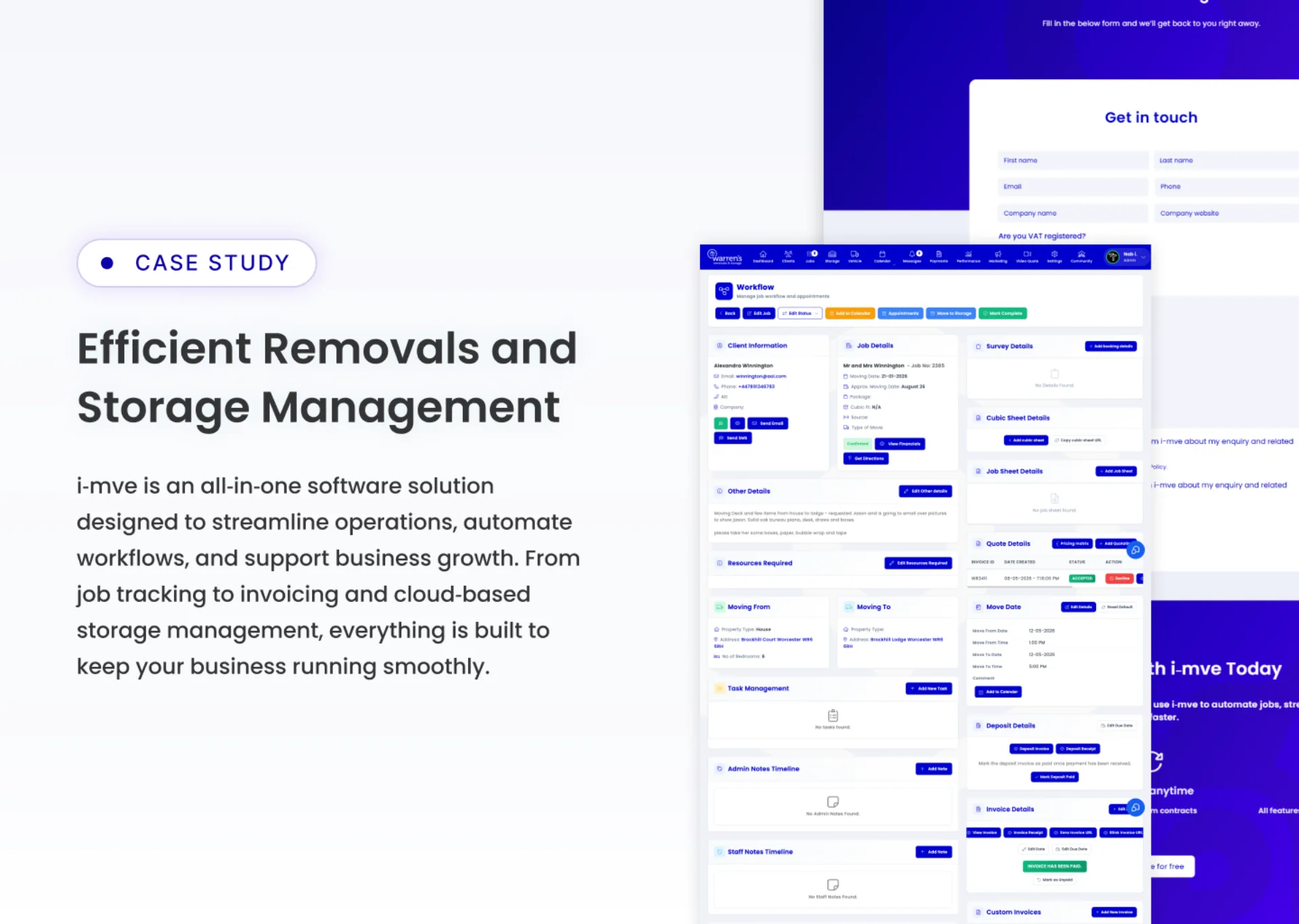
Accounts, the core workflow, subscription billing, and a clean interface, on multi-tenant architecture from day one so tenant isolation is not a rewrite later. The foundation i-mve was built on before it grew to 510 companies.
Two-sided products: supply onboarding, demand-side discovery, and the transaction in the middle. We build the smallest version that proves both sides show up and the match works.
Where AI is the core value, not a feature. Built on the model APIs with retrieval, prompt versioning, and evals, so the MVP is a real product you can put in front of users. Mebag is the reference.
You built something for your own operation and other people in your industry want it. We turn it into a product: multi-tenant, self-serve onboarding, and the rough edges smoothed for customers who are not you. This is the i-mve story.
When the product only makes sense on a phone. React Native or Flutter on a backend that a web app and future integrations can share, so you are not locked into one client.
Everything we cut from v1, written down and prioritised, so the next round of work after launch is informed by real user behaviour rather than guesses. This is the input to your build-on retainer.
The failure mode of an MVP is building too much. Every step here is about cutting to what tests the idea.
We work out what has to be true for the product to succeed, and which assumption is least proven. The MVP is designed to test that one first. Everything else is a backlog item. You leave scoping with a fixed price and a feature list you agreed to.
We design and prototype the main user journey before building it. Founders often realise here that a feature they were sure about is not needed for v1. Better to find that in Figma than in code.
Data model, API, auth, and deployment set up the way a full product would be. The MVP does less, but it is not built in a way that forces a rewrite when it works.
You see a deployable build at the end of every sprint, review it, and sign off. Scope changes are documented and priced before any extra work. Testing runs alongside every sprint.
Production deployment with a CI/CD pipeline, monitoring, and error tracking, so you can put it in front of users and see what actually happens. A 30-day support window is standard.
After launch, most founders move to a monthly retainer: a fixed amount of senior engineering per month for the next features, prioritised against what real users are doing. You can also take it in-house, or pause.
Scoped after a call. We push to keep v1 small, because a smaller MVP gets you real feedback sooner and cheaper.
Scoped to your build · 8 to 16 weeks
After launch: a monthly build-on retainer, a fixed amount of senior engineering per month for the next features, priced after the MVP ships. Or take the codebase in-house. Need a whole team instead? See Dedicated Development Team.
30 minutes. We will help you find the v1 that tests it fastest, and give you a fixed number.
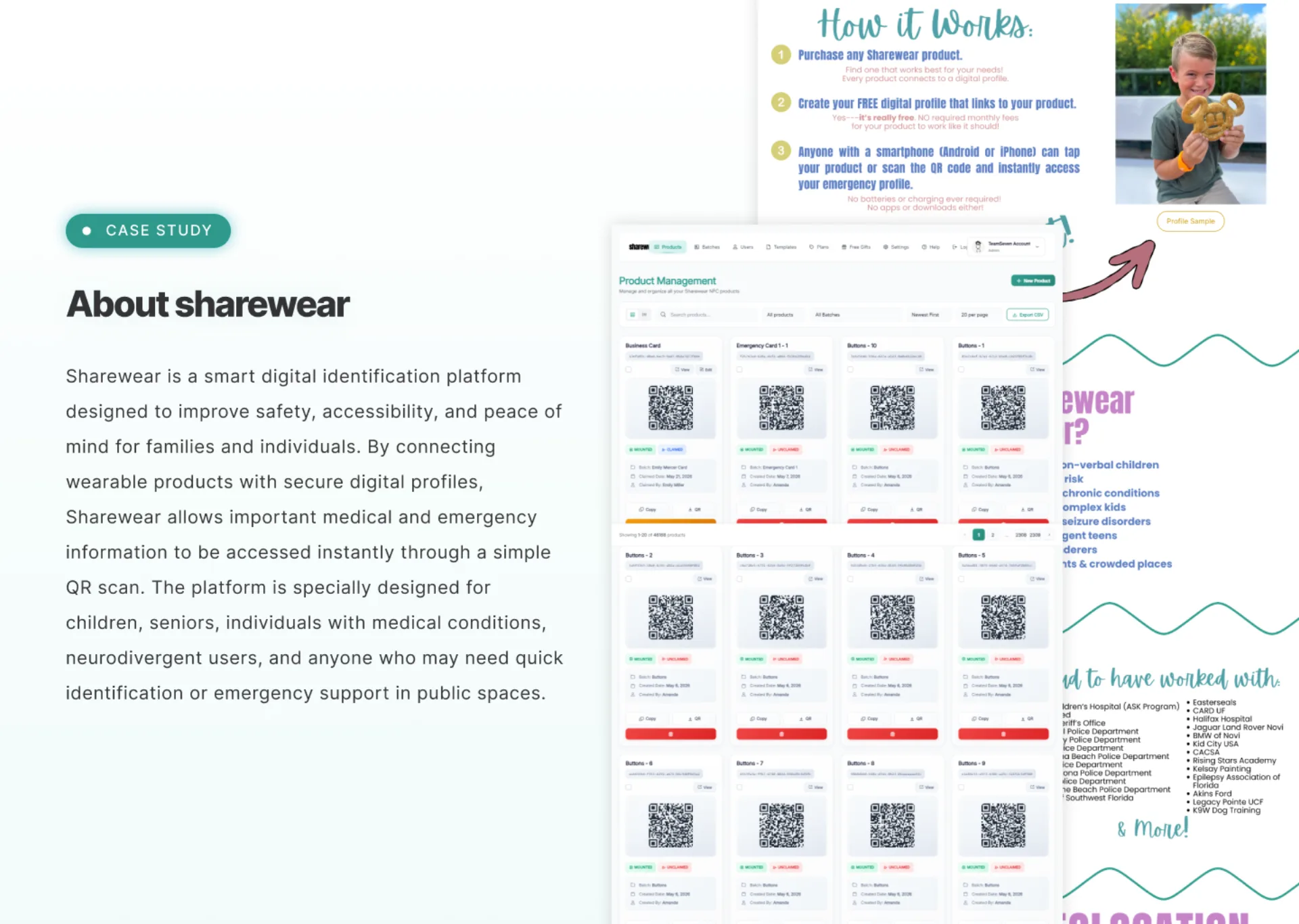
Founders have shipped first versions with us that are now real businesses. i-mve began as a focused operations tool and is now used by 510 UK removals firms with 314,500+ jobs processed, in continuous development since 2022. Mebag is an AI-native product we built end to end. Sharewear shipped an NFC wearable safety platform. We are a Fiverr Vetted Pro agency, 600+ projects, 5.0 across 353 reviews, senior engineers only. Read the SaaS MVP cost guide for how we think about scope and budget.
Straight answers on scope, timelines, cost, ownership, and what happens after launch.
MVP development is building the smallest version of a product that lets real users do the one job the product exists for, so you can learn whether the idea works before spending a full build budget. A good MVP is not a prototype or a demo. It is production software: real accounts, real data, deployed and usable. It just does less. We build MVPs on an architecture that can grow, so a successful MVP becomes version two rather than something you throw away.
A focused MVP covering one core workflow with authentication, a database, and a clean interface typically takes 8 to 12 weeks. If the product needs payments, multiple user roles, or a third-party integration from day one, it is closer to 12 to 16 weeks. We scope the MVP down to what actually tests the idea and cut everything else to the backlog, then deliver in two-week sprints so you see it come together.
It is a single fixed price, scoped after a call, not an hourly arrangement. The price depends on how many workflows the MVP genuinely needs and whether payments and integrations are in scope for launch. We push hard to keep the first version small, because a smaller MVP gets you real feedback sooner and cheaper. After launch, most founders move to a monthly build-on retainer for the next round of features.
To build on. We use the same architecture discipline as a full product build: a sensible data model, a clean API, automated deployment, and a stack that scales. The MVP is scoped small, but it is not built cheap in ways that force a rewrite later. When the idea is validated, you add features on top of what exists rather than starting again.
Yes, that is part of the engagement. In scoping we map every feature you have in mind against one question: does it help you learn whether the core idea works? The features that do are in the MVP. The rest go to a backlog you keep. Founders usually arrive with a version two in their head, and the main value of scoping is agreeing the version one that tests the riskiest assumption first.
Yes. If AI is the core of the product, we build it in from the start, using the Anthropic, OpenAI, or Gemini APIs with retrieval, prompt versioning, and evals rather than a prototype bolted on. If AI is a later feature, we design the data model and APIs so it drops in without a rewrite. Our own products, Tully AI and Mebag, are AI-native builds. Mebag runs an AI shopping assistant on custom retrieval with sub-800ms responses in production.
You do, completely. Source code, database, infrastructure configuration, and all associated IP transfer to you. There is no vendor lock-in and nothing that ties the product back to us. If you raise funding and build an in-house team, they inherit a documented, standard codebase they can run with.
Yes. Most founders move onto a monthly build-on retainer after launch: a predictable amount of senior engineering per month for the next features, informed by what real users are doing. You can also take the codebase in-house, or pause and come back. The MVP is documented so any of those paths works.
Yes. We work with startup founders across the United States, United Kingdom, and Australia, with agreed real-time overlap hours for each region and communication over video call and Slack. We have shipped SaaS platforms, marketplaces, and AI products for founders, several of which started as an MVP with us and are now in continuous development.
Two things. First, it is built by senior engineers on production-grade architecture, so a validated MVP scales instead of collapsing under its first hundred users. Second, the scoping is honest: we cut the MVP down to what tests the idea and tell you plainly which features can wait. We have delivered 600+ projects over eight years and we are a Fiverr Vetted Pro agency with a 5.0 rating across 353 reviews.
Platform-level reviews of the agency — not cherry-picked project comments.
What I love about Team7 is that they always say: No worries, we can find a solution. This is the mindset of builders, creators, people who do not have fear — the partner you need if you want to excel.
Working with Mo and his team over the past year has been nothing short of exceptional. I was admittedly sceptical about investing such a large amount — but results exceeded every expectation.
Team 7 is the best group of developers on Fiverr — and I promise it is not even close. The software they have developed has changed our company for the better.
30 minutes. No slides. We will help you find the smallest version that tests it, and give you a fixed price.