How to Choose a Software Development Company: A Founder's Checklist (From the Other Side of the Table)
The vetting checklist for hiring a dev agency in 2026: the questions that expose weak vendors and what predicts project success.

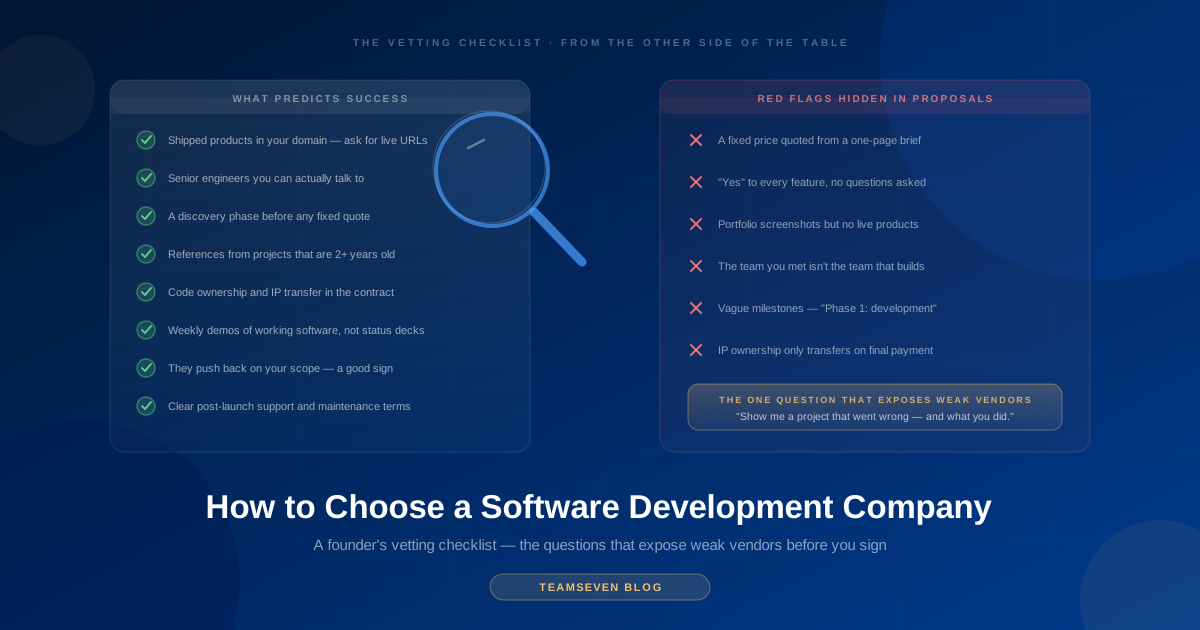
The agencies that will burn you are easy to detect if you know which questions they can't answer well. The five that matter most: Can I speak to a client from two years ago? Who exactly writes my code? What happens when we disagree on scope? Show me a project that went wrong: what did you do? And: will you put IP transfer and fixed pricing in the contract?
I run a development company, so read this knowing my bias, and knowing that I've spent eight years and 600+ projects watching founders arrive at Teamseven after a bad agency experience. The pattern of what went wrong is remarkably consistent. This checklist is that pattern, inverted.
This is the fast, scannable version: five steps, the interview questions, a red-flag table, done in one sitting. For the fuller process, including where to source agencies and what needs to be in the contract, see how to hire a software development company; for a longer checklist to run line-by-line against a shortlist, see how to vet a software development agency.
Step 1: Filter on evidence, not portfolios
Portfolio pages are marketing. Evidence is different:
- Live products you can touch. Not screenshots: URLs. Software that's been in production for years under real users tells you about code quality in a way no case study can. (Ours: i-mve runs 523 UK removals companies; our smart parking automation platform operates parking across Australia including at a national ambulance service. Click them. That's the standard you should hold everyone to.)
- Review platforms with verification. Clutch and GoodFirms verify clients by interview. A 5.0 across 350+ verified reviews is hard to fake; a testimonial wall on the agency's own site is not.
- Longevity with clients. Ask: "What's your longest ongoing client relationship?" Agencies that ship and vanish can't answer with years.
Step 2: The interview questions that separate vendors
"Who exactly will work on my project?" The bait-and-switch (senior people in the sales call, juniors in your repo) is the industry's most common scam. Ask for the actual team's names and experience, and whether work is subcontracted.
"Walk me through a project that went badly." Every honest agency has one. You're not evaluating the failure; you're evaluating whether they blame the client. Agencies that have never had a difficult project are either new or lying: both expensive.
"How do you handle scope changes mid-project?" The right answer has a process: documented change requests, impact on price and timeline stated before work continues. The wrong answer is "we're flexible," which means "we'll bill you for the ambiguity later."
"What do I own at the end?" The only acceptable answer: source code, repositories, infrastructure accounts, and IP: transferred, in the contract. Agencies that keep the repo or the servers are building a hostage situation, not a product.
"Can I speak to two clients: one current, one from 2+ years ago?" The old client tells you what the code was like to live with after the agency left the room.
Step 3: Read the proposal like a lawyer
| Red flag | What it means |
|---|---|
| Hourly billing with no cap or estimate range | Your risk, their upside |
| "Maintenance" required through them exclusively | Lock-in disguised as service |
| No discovery phase, instant quote | They priced your one-pager, not your product |
| Vague milestones ("Phase 2: Development") | No demo checkpoints = no leverage |
| IP clause missing or "upon final payment" with fuzzy terms | Read it twice, then have someone else read it |
| Price wildly below the others | You'll pay the difference in the rebuild: the math is in our MVP cost guide |
A good proposal has: fixed price (or tightly capped range), named milestones each ending in a demo of working software, payment tied to those demos, explicit IP transfer, and a list of what's excluded: exclusions are a sign of honest scoping, not stinginess.
Step 4: Weigh geography honestly
Offshore (Pakistan, Eastern Europe, Latin America) gives you senior engineering at a fraction of the domestic hourly rate: the entire reason the model exists. The legitimate concerns are timezone, communication, and accountability, and they're solved by process, not passports: daily overlap hours with your timezone in writing, a single English-fluent point of contact, demos every one to two weeks, and contracts under terms you can enforce. Judge the specific team's communication during the sales process, how they handle your questions now is the best preview of how they'll handle your bugs later.
Step 5: Run a paid pilot if you're unsure
For larger engagements, a small paid discovery phase or a small first milestone is the cheapest insurance available. You'll learn more from two weeks of real collaboration than from twenty reference calls. Any agency that refuses paid discovery because they "only take full projects" has told you about their pipeline, not their quality.
What predicts success (after the contract)
Having sat on my side of 600+ of these: the projects that succeed share three traits, and only one involves the agency. A decisive product owner on the client side. Scope discipline in version one. And a partner that demos working software every two weeks instead of narrating progress. Choose for those, structure for those, and most of the horror stories become impossible.
FAQ
Freelancer vs agency vs in-house, which should I pick first? For a product business, agency or strong freelancer first; in-house once the product earns revenue. The full math is in our build-stage guides, but the short version: payroll before product-market fit is how runways end.
How many proposals should I collect? Three to five. Fewer gives you no price discovery; more gives you analysis paralysis and identical sales decks.
Does Fiverr Vetted Pro / Clutch verification mean anything? They're filters, not guarantees. Vetted Pro means the platform manually reviewed the business; Clutch reviews are client-interview-verified. Use them to build the shortlist, then run this checklist on the shortlist.
What size project is too small for an agency? For a small task, a vetted freelancer is usually the better economics. Agencies carry coordination overhead that small tasks can't amortize.
Run this checklist on us. Book a free 30-minute scoping call: ask the hard questions, get a fixed-price proposal within 48 hours, and talk to our 2-years-ago clients.
Stay connected
Build notes, launches, and new articles from the Teamseven team.