No-Code vs Custom Development in 2026: An Honest Guide From a Custom Dev Shop
When Bubble, Webflow, or Glide is the right answer, and the four ceilings where no-code quietly becomes the expensive option.

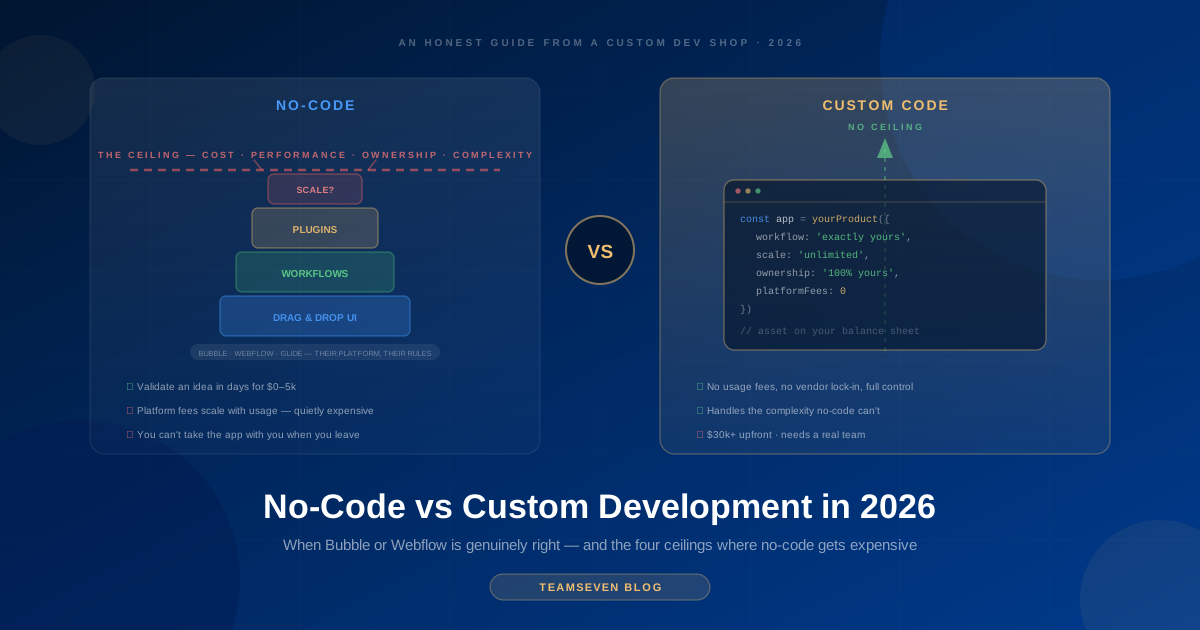
Use no-code to validate demand, automate internal workflows, and ship marketing sites. Go custom when the product is the business: when you need real performance, real data ownership, complex logic, or unit economics that survive scale. I run a custom development company, and I still tell a meaningful share of founders on scoping calls to go build their first version in Bubble. This post is that call, written down, including the part where no-code stops being cheap.
Where no-code wins (and we say so)
- Validation. You have an idea and zero evidence anyone will pay. A weekend in Bubble, Glide, or Softr plus a Stripe payment link beats three months of anything. The most expensive software is well-built software nobody wanted.
- Internal tools with small audiences. A 10-person approval workflow doesn't need engineering. Airtable + Make/Zapier and move on.
- Marketing sites and content. Webflow ate this category fairly.
- Founder skill-building. Building your own v1, even badly, makes you a 10x better client for whoever builds v2. You'll know what you need. Most founders don't until they've shipped something.
If your situation is on this list, stop reading and go build.
The four ceilings
Every no-code success story that turns into our scoping call hit one of these:
1. The economics ceiling. No-code pricing scales with usage: workflows, rows, app users. A Bubble app at real traffic, plus the plugin stack, plus Zapier/Make tasks holding it together, adds up to a real monthly bill fast. Run that forward three years and it's a large sum spent in rent, for an asset you can't sell, on a platform that can reprice you whenever it likes, and platform repricing events are no longer hypothetical; ask anyone who lived through one. Custom has a build cost and modest hosting; the lines cross earlier than the no-code marketing suggests.
2. The complexity ceiling. No-code is brilliant for CRUD: forms, lists, records. It buckles at the logic that makes vertical software valuable: the quoting engine with thirty interacting rules, the dispatch optimization, the multi-step state machine of an operations platform like a removals CRM. Past a point, you're not configuring anymore, you're programming in a tool designed to prevent programming, and every workaround compounds.
3. The performance and platform ceiling. Page loads, database query limits, API rate caps, no real background jobs: fine at 100 users, visible at 1,000, fatal in a sales demo to an enterprise buyer. And you can't fix it, because you don't control the stack. When the platform deprecates a feature your product depends on, your roadmap becomes their changelog.
4. The ownership ceiling. This is the one buyers and investors ask about. You can't export a Bubble app's code. Your "asset" is a configuration inside someone else's product. Due-diligence questions, Who owns the IP? Can we self-host? What's the migration path?, have uncomfortable answers. We make IP transfer contractual by default because acquirers ask.
The migration math (the part nobody budgets)
Here's the honest part most agencies soften: there is no "export from no-code to custom". It's a rebuild. The no-code version serves as a living specification (a valuable one: it's the best requirements document that exists), but the code is written fresh. So the realistic lifecycle cost of "validate in no-code, then go custom" is the no-code spend plus a full build: the tiers are in our MVP cost guide. That's still often the right path! Validation is worth paying for. The mistake isn't the rebuild, it's not knowing it's coming, and discovering it the month an enterprise prospect asks for SSO, audit logs, and a security questionnaire.
The decision in one table
| Your situation | Answer |
|---|---|
| Unvalidated idea, no budget, need signal | No-code, this weekend |
| Internal tool, <20 users, standard workflow | No-code |
| Validated demand, charging customers, B2B product | Custom: see the MVP cost tiers |
| Complex domain logic (quoting, dispatch, compliance) | Custom from day one: the no-code version won't validate anything real |
| Revenue-generating no-code app hitting any ceiling above | Custom rebuild, using the no-code app as your spec |
| Enterprise buyers in your pipeline | Custom: procurement will ask questions no-code can't answer |
A middle path worth knowing: low-code + custom
Some of the best-budget projects we've shipped are hybrids: a custom NestJS backend owning the data and the hard logic, with off-the-shelf or low-code front layers where they're good enough: admin panels, dashboards, content. You own the asset where ownership matters and rent convenience where it doesn't. If your quotes are all-or-nothing, ask why.
FAQ
Can AI app builders (v0, Lovable, Bolt) replace custom development now? They've gotten good at generating first drafts and prototypes, and they've moved the validation ceiling up. They have not changed who debugs the architecture at 3am when real customers hit the edge cases. Treat them as the new no-code tier: superb for validation, same four ceilings.
My no-code app is making real revenue. When do I rebuild? The trigger isn't revenue. It's the first ceiling. Performance complaints, a platform price change, an enterprise lead, or logic you can't express. Start the rebuild before the ceiling becomes the crisis; parallel-run, then switch.
How long does a no-code → custom rebuild take? Usually 10–14 weeks: faster than greenfield, because your no-code app already answered every requirements question.
Will you tell me if no-code is right for my idea? On the first call, yes. It costs us a project and saves us a bad-fit client. Both halves of that trade are good for us.
Hit a ceiling, or not sure if you will? Book a free 30-minute scoping call. If the answer is "stay in Bubble," that's what we'll tell you.
Stay connected
Build notes, launches, and new articles from the Teamseven team.