
The recruitment software market is enormous and crowded, which makes it tempting and dangerous in equal measure. Tempting because hiring is a universal problem with real budget behind it. Dangerous because "build a job board" sounds simple and almost never is.
We've built recruitment platforms — including FlyHire, an aviation hiring platform we built and shipped to both app stores, with AI matching and verified credentials. So this is a practical guide to what actually makes hiring software work, written from having built it rather than from having read about it.
First, decide what kind of recruitment platform you're building
"Recruitment platform" covers several genuinely different products, and confusing them is the first mistake:
A job board — employers post jobs, candidates browse and apply. The simplest model. Revenue from job posting fees or featured listings. The challenge is the cold-start problem and standing out in a crowded market.
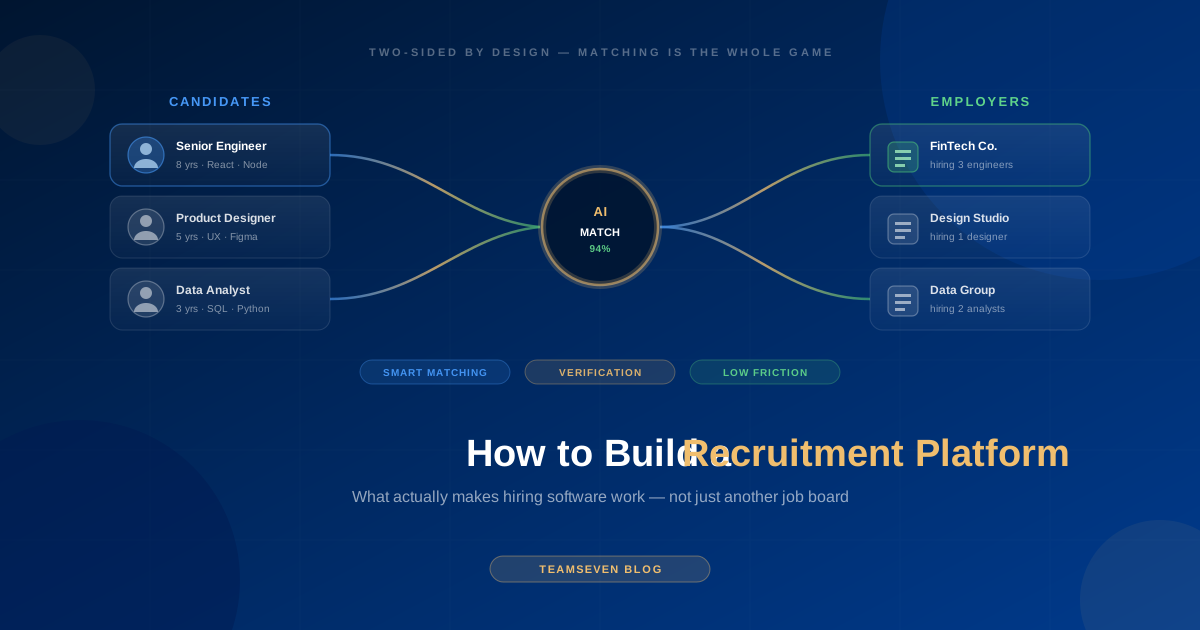
A two-sided hiring marketplace — like a job board but with intelligent matching, profiles on both sides, and a curated experience rather than open browsing. More sophisticated, more defensible, harder to build. (FlyHire is this.)
An applicant tracking system (ATS) — software for employers to manage their hiring pipeline, not a marketplace. Candidates come from elsewhere; the ATS manages them through stages. A workflow tool, not a marketplace.
A niche/vertical recruitment platform — hiring software for one specific industry (aviation, healthcare, tech, trades) where domain-specific requirements make generic platforms inadequate. Often the most defensible because the domain expertise is a moat.
These need different architectures, different features, and different go-to-market. Be clear which one you're building before you write a line of code, because the decisions cascade from there.
Why niche beats general (usually)
If I were advising a founder entering recruitment software today, my honest advice would usually be: go niche.
The general job board market is dominated by giants — Indeed, LinkedIn — with resources you can't match and network effects you can't easily break. Competing head-on is brutal.
But vertical recruitment platforms win by understanding a specific industry deeply. FlyHire works because it understands aviation — type ratings, flight hours, certifications, currency — in ways a general platform never could. A healthcare hiring platform that understands licensing, specialties, and credentialing beats a general board for healthcare hiring. A platform for trades that understands certifications and local licensing beats general boards for trades.
The domain expertise is the moat. A generic competitor can copy your features, but they can't easily replicate deep understanding of an industry's specific hiring requirements. That's the defensible position, and it's why vertical recruitment platforms are usually the smarter build.
What actually makes hiring software work
Matching quality is the whole game
The difference between a recruitment platform people love and one they abandon is matching quality. Candidates want to see jobs they're actually right for. Employers want applicants who actually meet their requirements. A platform that floods both sides with irrelevant matches is worse than useless — it wastes everyone's time.
Good matching means understanding what actually matters for the roles you serve. For aviation in FlyHire, that's aircraft type, hours, currency, location. For another vertical, it's different specifics. The matching has to weight hard requirements (must-haves) differently from soft preferences (nice-to-haves), and it has to be tuned to the real hiring logic of your domain. This is where the genuine engineering and product value lives.
Reducing friction on both sides
Hiring is full of friction — long application forms, repetitive data entry, endless back-and-forth scheduling, chasing documents. Every point of friction loses users.
The platforms that win remove friction systematically. One-click apply that sends a complete, formatted application. Profiles that auto-populate applications. Interview scheduling that doesn't require email tennis. Document handling that centralizes everything instead of scattering it across emails and PDFs. In FlyHire, a pilot's verified logbook and résumé mean one tap sends an employer everything they need — that's friction removed through good data design. Each friction point you eliminate is a measurable improvement in how much people actually use the product.
Trust and verification
Hiring runs on trust, and trust requires verification. Can the employer trust that the candidate's claimed experience is real? Can the candidate trust that the job and company are legitimate?
The more your platform can verify — credentials, experience, identity, company legitimacy — the more both sides trust it, and trust is what makes a hiring marketplace function. We built verified logbooks into FlyHire precisely because in aviation, verified hours are everything. Whatever your vertical, identifying what needs to be trustworthy and building verification for it is core, not optional.
The two-sided cold start
Every marketplace faces it: employers won't come without candidates, candidates won't come without jobs. Recruitment platforms live or die on solving this.
Common approaches: seed one side first (often aggregate jobs to attract candidates, or recruit candidates manually to attract employers), focus narrowly on one niche or region to reach critical mass in a small pond before expanding, or provide standalone value to one side even before the marketplace is liquid. This is a product and go-to-market problem as much as an engineering one, and it shapes what you build first. Plan for it deliberately — it's the single most common reason recruitment platforms fail.
What a recruitment platform costs to build
| Platform type | Realistic cost | Timeline |
|---|---|---|
| Basic job board (web, posting, applying) | Scoped after a call | 16–24 weeks |
| Two-sided marketplace with matching | Scoped after a call | 24–40 weeks |
| Vertical platform (domain-specific matching, verification, mobile) | Scoped after a call | 36+ weeks |
| ATS (employer workflow tool) | Scoped after a call | 20–36 weeks |
The cost drivers: matching sophistication, verification systems, whether you need mobile apps, the number of integrations (job boards, calendars, HR systems, background checks), and how domain-specific the requirements are. Vertical platforms cost more because the domain logic is real engineering — but that's also what makes them defensible. Book a call and we'll give you a real number against your scope.
What I'd tell someone building recruitment software
Go niche unless you have a strong reason not to. The general market is a war against giants. A specific vertical you understand deeply is a fight you can win.
Obsess over matching quality. It's the entire value proposition. A platform that matches well is loved; one that matches badly is abandoned, regardless of how nice it looks.
Plan the cold start before you build. The two-sided chicken-and-egg problem kills more recruitment platforms than bad code does. Know how you'll get the first users on each side before you start.
Build verification for what matters in your domain. Trust is the foundation of hiring. Figure out what needs to be trustworthy and build that in from the start.
We built FlyHire as a vertical aviation platform precisely because vertical is where the defensibility is. The aviation domain knowledge baked into it — the thing a generic competitor can't easily copy — is exactly what makes it work. If you're building recruitment software, that's the lesson worth taking: depth in a specific domain beats breadth across all of them.
FAQ
What kind of recruitment platform should I build? Decide first whether you're building a job board, an applicant tracking system, a marketplace, or a matching platform for a specific sector. They look similar from outside and are very different builds, and being vague about which one you're making is the most common early mistake.
Why do niche recruitment platforms usually beat general ones? Because the value is in understanding constraints that generic platforms can't model. Sector-specific hiring has real eligibility rules — credentials, hours, certifications, jurisdictions — and matching precisely on those beats keyword search. A general board competes with enormous incumbents on their own terms; a niche platform competes on domain understanding.
What actually makes hiring software work? Reducing noise on both sides. Candidates should see roles they're genuinely eligible for and employers should see applicants who meet non-negotiable requirements. Everything else — messaging, dashboards, analytics — is secondary to whether the matching is trustworthy.
How much does a recruitment platform cost to build? It depends primarily on how much domain logic you model in version one. A focused platform serving one role type with its real constraints costs a fraction of one covering every category, and narrowing the first release is the most effective cost control available.
Do I need to build both the employer and candidate sides at launch? Usually not fully. Marketplaces frequently succeed by serving one side with software while handling the other manually at first, which is far cheaper and teaches you what the second side actually needs.
Stay connected
Build notes, launches, and new articles from the Teamseven team.