Home
Legacy Software Modernization

Legacy software modernization
without stopping the business

The system still runs the business, but it is slow to change, expensive to maintain, and nobody wants to touch it. We modernize business-critical software incrementally: a stable interface in front, functionality replaced one slice at a time, old and new running in parallel until you trust the switch. Cloud migration, re-platforming, refactoring, or a phased rebuild, whichever the assessment says is right.

Every modernized system we build is AI-ready by design. We fix the data model and APIs on the way through, so LLM features, retrieval, and workflow automation drop in later as a feature ticket, not another modernization project.

600+Projects delivered
8 yrsReplacing legacy systems
5.0★353 Fiverr reviews
US/UK/AUClients worldwide

Priced in two stages: a fixed-price assessment, then phase by phase. Get your number →

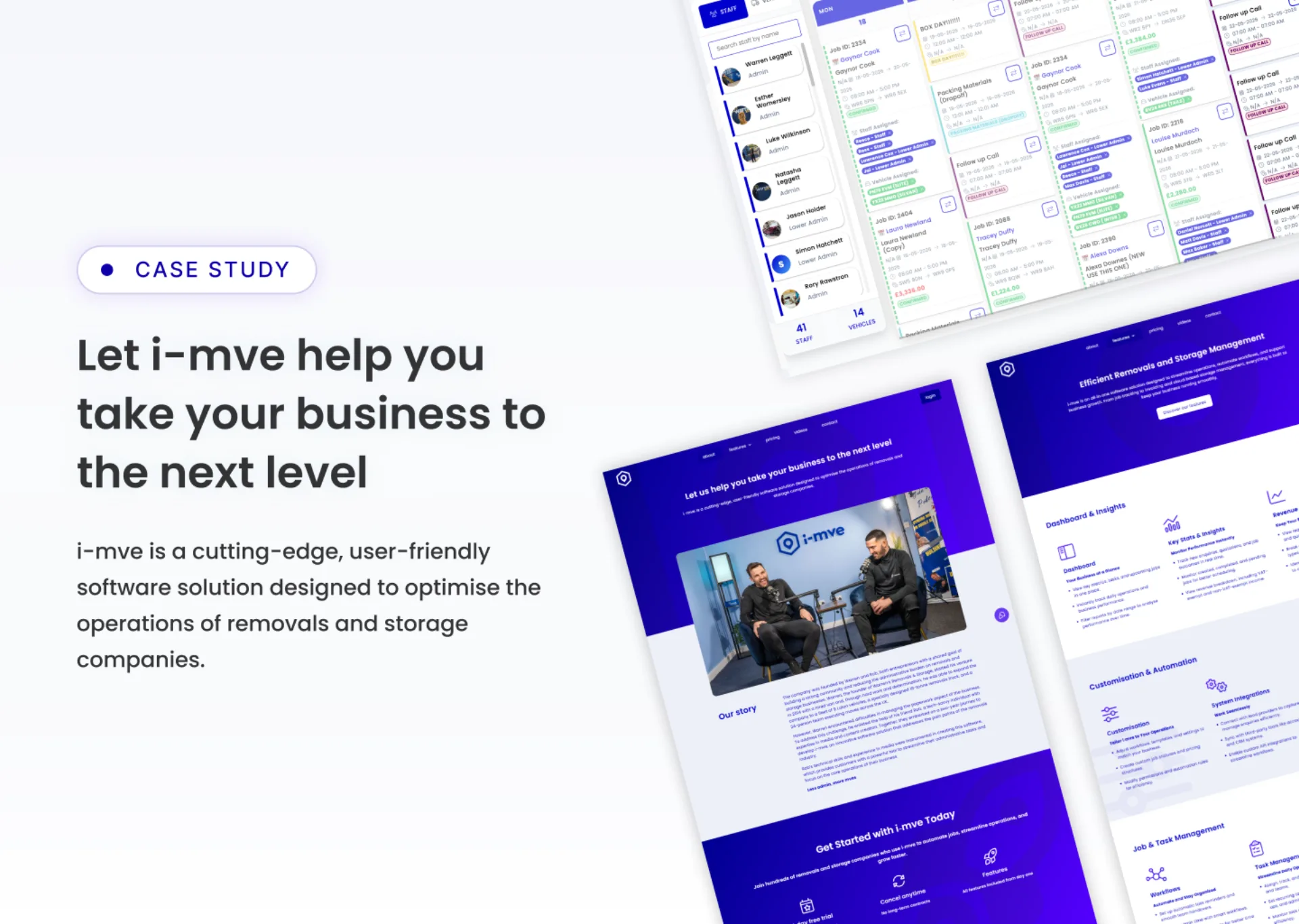
510UK firms moved onto i-mve from older tools
314,500+Jobs migrated and processed through i-mve
Since 2017Replacing legacy and off-the-shelf systems
PhasedFixed-price, approved one phase at a time
Sound familiar?

Signs the system has become the bottleneck

If two or three of these are true, modernization is worth an assessment. Here is what we do about each.

A small change takes weeks, and every release risks breaking something unrelated.

We refactor the parts that fight change. The assessment names the real bottleneck, then we re-platform or restructure it so the next change is a normal ticket, not a project.

The system runs on a server under someone's desk, or a framework that is out of support.

We move it to the cloud, cleanly. Containerised, on AWS or Azure, with CI/CD and monitoring. Re-host first if the code is sound, re-platform where it is not.

The people who built it have left, and the logic lives in their heads.

We reverse-engineer the behaviour first. We read the code, map the data model, and document the load-bearing logic before we touch anything. We do not need the original team.

You are quoted a two-year rebuild with a big-bang cutover at the end.

We deliver in reversible phases. A stable interface in front, one module replaced at a time, old and new in parallel. Users keep working the entire time and you can pause between phases.

What We Do

Modernization is a spectrum, not one move

The assessment tells us which of these your system needs. Most projects use two or three.

Cloud Migration & Re-Hosting

Move a system off aging on-premise hardware to AWS or Azure with minimal code change: containerise it, add CI/CD, monitoring, and backups. The fastest way to cut hosting risk and maintenance cost when the application itself is still fit for purpose.

Re-Platforming

Lift the application onto a supported framework and runtime without changing what it does for users. An out-of-support .NET, PHP, or JavaScript stack becomes a current one, so security patches, hiring, and future work stop being a problem.

Targeted Refactoring

Restructure the specific parts of the codebase that block change: a tangled data-access layer, a god class, a missing service boundary. We do not rewrite what works. We fix what stops you shipping.

Incremental Rebuild (Strangler Pattern)

Put a stable interface in front of the old system, then replace it one module at a time behind that interface. Each slice is a small release, old and new run in parallel, and the risky all-at-once cutover never happens.

Legacy Data Migration

Years of customers, jobs, invoices, and history moved without losing a record. We profile the source, write repeatable scripts, run dry-runs against production copies, and reconcile counts and financial totals before any cutover.

Integration & API Layer

A clean API in front of the modernized system so other software can talk to it without reaching into the database. This is also what makes the system AI-ready: structured access that an LLM feature or agent can use later.

How We Work

Why modernization projects fail, and how we avoid it

They fail when nobody understood the old system before replacing it, when data migration was an afterthought, and when the plan required everything to change at once. We fix these deliberately.

01

Assessment: read the system, name the real problem

We audit the codebase and infrastructure, map the data model, identify the load-bearing logic, and interview the people who use it. The output is a documented recommendation: what to re-host, what to re-platform, what to refactor, what to rebuild, and in what order. You own this document.

02

Roadmap: sequence the phases by value and risk

We break the work into phases small enough to deliver and reverse, ordered so the highest-value or highest-risk piece comes first. Each phase is scoped and fixed-priced on its own, so you commit incrementally and can stop between phases.

03

Stable interface first

Before replacing anything, we put an API facade in front of the old system. From then on, new components talk to the facade, not the legacy internals, so we can swap what is behind it without the rest of the system noticing.

04

Replace a slice, run in parallel, reconcile

We rebuild one module on the new stack, run it alongside the old one, and compare outputs and data until they match. Only then does traffic move over. If anything is wrong, we switch back. Repeat per module.

05

Migrate the data with dry-runs

Each phase that moves data gets full dry-runs against production copies, reconciliation of counts and totals, and a reversible cutover window. We do not migrate live data we have not rehearsed.

06

Retire the legacy system, hand over the new one

Once every slice is replaced, the old system is decommissioned. You get architecture and deployment documentation written to a standard your team can maintain, plus a 30-day support window and optional retainer.

Pricing

Priced in two stages, so you commit incrementally

You are never asked to sign off a full modernization budget before anyone has read the code.

Stage 1

Modernization Assessment

Fixed-price · 2 to 4 weeks

A senior engineer reads your system and produces a plan. You own the output whether or not you build with us.

  • Codebase and infrastructure audit
  • Data model and dependency map
  • Re-host, re-platform, refactor, or rebuild recommendation
  • Phased roadmap with scope per phase
  • Risk register and compliance gap list
Stage 2

Phased Delivery

Fixed-price per phase · 8 to 16 weeks each

We deliver the roadmap one phase at a time. Each is scoped, priced, and approved on its own before it starts.

  • Stable interface built first
  • One module replaced at a time, run in parallel
  • Data migration with dry-runs and reconciliation
  • Two-week sprints with working, deployable builds
  • Pause between phases at no penalty
  • Documentation and 30-day support on handover

If the system is not just old but stalled, over budget, or abandoned by its last team, that is a different starting point. See Software Project Rescue.

Not sure whether to modernize or replace?

That is exactly what the assessment answers. 30 minutes to scope it, then a straight recommendation.

Book an assessment →
Experience behind this

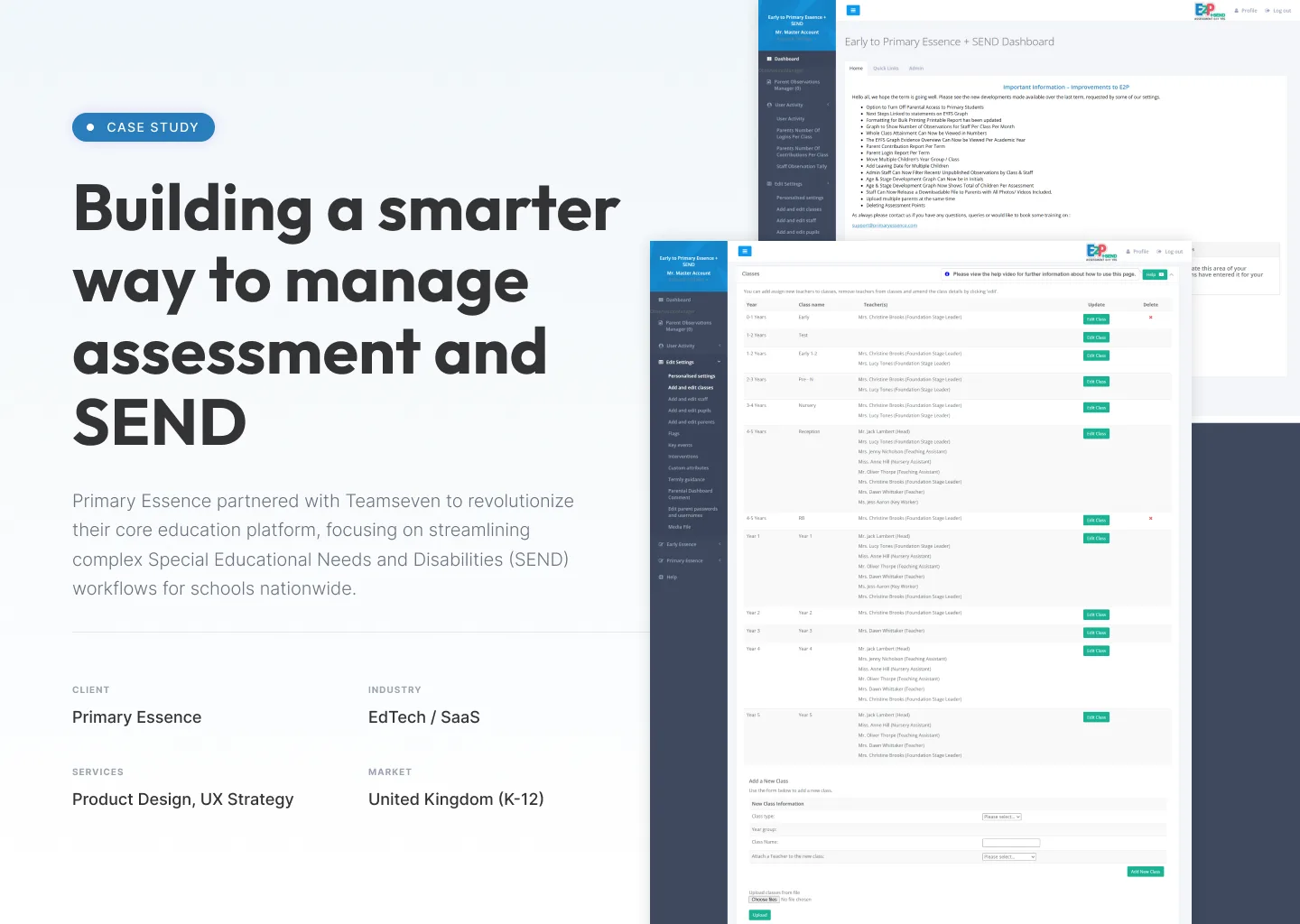
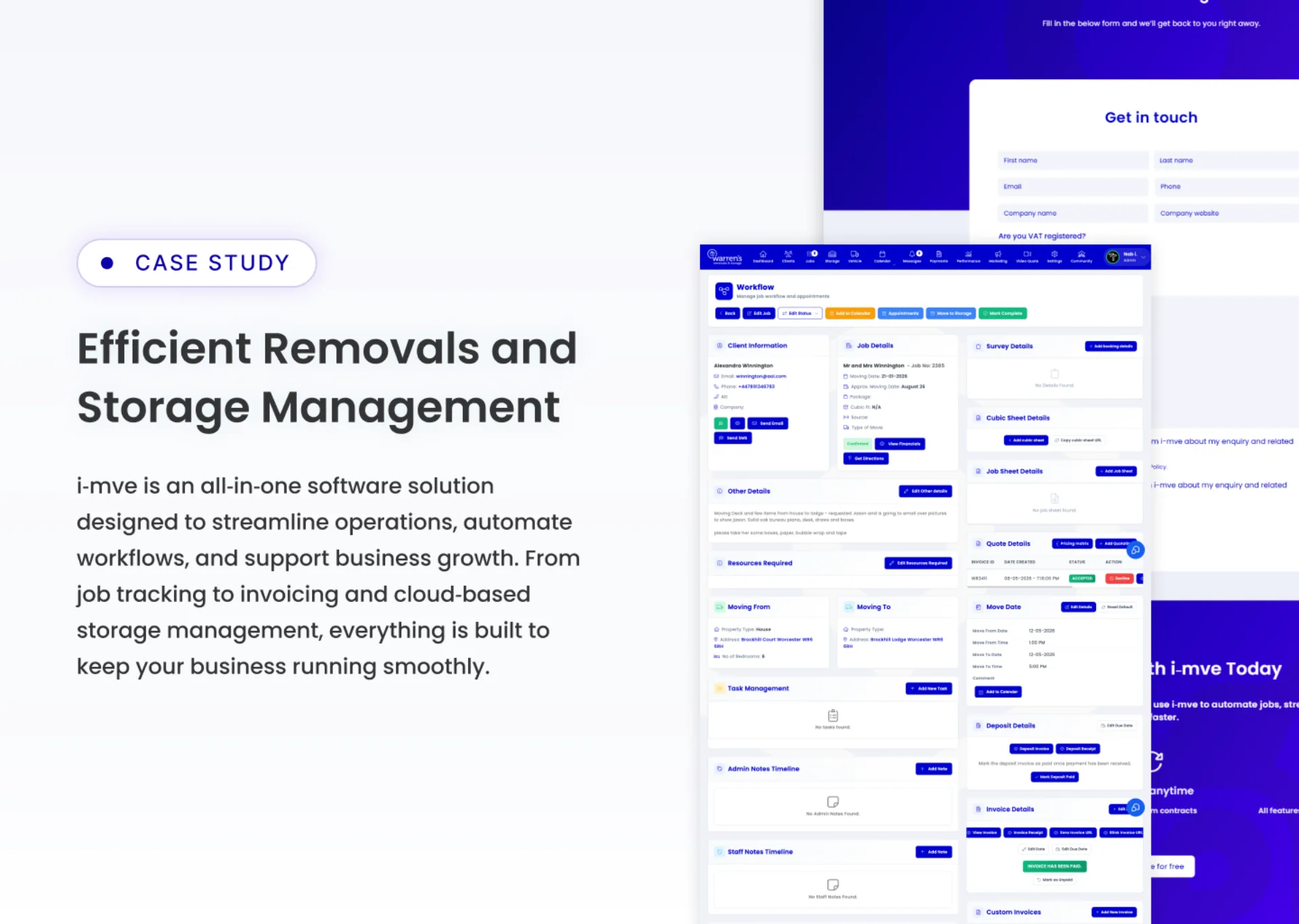
We have replaced heavily-modified off-the-shelf software and dated custom applications since 2017, across logistics, healthcare research, property, and professional services. i-mve replaced the tools 510 UK removals firms were running on, migrating 314,500+ jobs of history without a lost record. COMPASS replaced paper-based clinical data collection at Ball State University. The Employment Law Alliance platform was re-architected for scale the old information architecture could not support. The same engineers who did that work run your assessment and deliver your phases.

FAQ

Common questions

Straight answers on approach, risk, data, timelines, cost, and ownership.

What is legacy software modernization?

Legacy software modernization is the process of updating an old but business-critical system so it can keep evolving, without stopping the business that runs on it. It covers a spectrum: re-hosting a system to the cloud, re-platforming onto a supported framework, refactoring the parts that block change, replacing a module at a time behind a stable interface, or a full rebuild where the old system is beyond economic repair. The right option depends on how bad the code is, how much institutional knowledge is trapped in it, and what the business needs it to do next. We assess that first and give you a straight recommendation.

How do you modernize a system without breaking the business that depends on it?

We do it incrementally. Rather than a big-bang cutover, we put a stable interface in front of the old system, then replace functionality behind it one slice at a time, running old and new in parallel and reconciling data at each step. This is often called the strangler pattern. Users keep working throughout, each release is small enough to reverse, and the risky all-at-once switch never happens. It is how we moved UK removals firms onto i-mve and how COMPASS replaced paper-based clinical data collection at Ball State University.

Should we modernize the existing system or rebuild from scratch?

It depends on three things: how much of the current code is salvageable, how much business logic is understood versus trapped in undocumented behaviour, and how different the future requirements are from what exists. If the architecture is sound and the problem is age and tech debt, targeted refactoring and re-platforming is cheaper and lower risk. If the system fights every change, the original team is gone, and the business has outgrown its shape, a phased rebuild behind a stable interface is usually the honest answer. We give you the assessment before you commit budget to either direction.

How long does a legacy modernization project take?

It is phased, so there is no single number. A modernization assessment producing a documented recommendation and roadmap is typically 2 to 4 weeks. The first delivery phase, usually re-platforming or replacing the highest-value module, runs 8 to 16 weeks. From there each phase is scoped and priced on its own, and you can pause between phases. Most full modernizations run 6 to 18 months of active development with the business fully operational the entire time.

Can you modernize a system built in an old framework or language we no longer support?

Yes. We have taken over heavily-modified off-the-shelf systems and dated custom applications across .NET, PHP, and older JavaScript stacks. The first step is always an audit: we read the codebase, map the data model, identify the load-bearing logic, and document what is safe to change. We do not need the original developers, though we will interview them if they are available. What matters is understanding the behaviour the business relies on before we touch it.

What happens to our data during modernization?

It is treated as the highest-risk part of the project, because it is. We profile the source data early, write repeatable migration scripts, run full dry-runs against production copies, and reconcile record counts and financial totals before any cutover. Where it helps, we run the old and new systems in parallel so the switch is reversible and the team can trust the numbers before they rely on them.

Who owns the modernized system and its code?

You do, completely. Source code, architecture documentation, deployment configuration, and all associated IP transfer to you as part of every engagement. We document the new system to a standard your own team can maintain against, including the decisions and tradeoffs made during modernization, so you are never dependent on us to keep it running.

How do you handle compliance and security in a modernization project?

Modernization is often the moment to fix security and compliance gaps that accumulated in the old system. We follow OWASP Top 10 practices as a baseline: parameterised queries, encoded output, encryption in transit and at rest, role-based access control, and audit logging. During the assessment we map your specific obligations, such as GDPR, HIPAA-aligned handling, or the Australian Privacy Act, and design data residency, access control, and retention into the new architecture rather than retrofitting them after an audit. Rezi24, a German healthcare SaaS we built, runs GDPR-compliant on German data centres.

Do you work with clients in the US, UK, and Australia?

Yes. Most of our clients are in the United States, United Kingdom, and Australia. We are an offshore team based in Pakistan with agreed real-time overlap hours for each region, communicating over video call and Slack. We have modernized and replaced systems for clients in logistics, healthcare research, property, and professional services across all three regions.

What does legacy modernization cost?

It is priced in two stages. First, a fixed-price modernization assessment that produces a documented recommendation, architecture direction, and phased roadmap: this is a real deliverable you own whether you continue with us or not. Then each delivery phase is scoped and fixed-priced on its own, so you are never committing the full budget up front. You approve each phase before it starts.

CLIENT RESULTS

353 reviews. 5.0 average.

Platform-level reviews of the agency — not cherry-picked project comments.

What I love about Team7 is that they always say: No worries, we can find a solution. This is the mindset of builders, creators, people who do not have fear — the partner you need if you want to excel.
Alfonso G.Founder, Mebag · 🇮🇹 Italy★★★★★
Working with Mo and his team over the past year has been nothing short of exceptional. I was admittedly sceptical about investing such a large amount — but results exceeded every expectation.
Alex M.Product Owner, SaaS Platform · 🇬🇧 UK★★★★★
Team 7 is the best group of developers on Fiverr — and I promise it is not even close. The software they have developed has changed our company for the better.
James B.CEO, Storage Solutions · 🇺🇸 United States★★★★★
START YOUR PROJECT

Ready to find out whether to modernize or replace?
Book the assessment.

30 minutes. No slides. We will look at the system and tell you honestly what it needs, and what each phase will cost.

We usually reply within an hour NDA available before we talk
⭐ 5.0 · 353 reviewsFiverr Vetted Pro8 years · 600+ projects
What happens next
  1. 01
    Book a 30-minute slotPick a time that works. No prep needed.
  2. 02
    We have a real conversationYou explain what you're building. We ask the hard questions.
  3. 03
    You get a scoped proposalFixed price. Fixed timeline. Within 48 hours — or we tell you why it's not a fit.