
You have an idea for a marketplace and don’t know what to build first.
Start with the side that’s hardest to get.
We scope a first version that proves both sides show up, and cut everything else to the backlog.
We have built a hiring marketplace (FlyHire, live in 60 days), a multi-language merchant marketplace (JBUJB) and a universal shopping cart across stores (Mebag). The hard part is always the same: getting both sides onto the platform and the transaction right.
A marketplace has two customers. Build for one and the other never arrives.
Buyers come when there is supply; sellers come when there are buyers. The first version should make it as easy as possible for one side to join, then prove the other side turns up.
Payments are the other trap. Taking money from one side and paying the other, with your fee in the middle, needs care from the start rather than a plugin later.
The problems businesses in this industry bring to us most.
You have an idea for a marketplace and don’t know what to build first.
We scope a first version that proves both sides show up, and cut everything else to the backlog.
Your sellers speak different languages.
JBUJB brought merchants into one place in every language they sell in.
Paying the other side is manual and error-prone.
Charge buyers, pay sellers and keep your fee through Stripe’s marketplace tools.
Your platform needs to scale parts independently.
JBUJB was built as microservices so each part could grow on its own. Most marketplaces start simpler, and we will say which you need.
The pieces every marketplace needs.
Sign-up, profiles and verification for buyers and sellers.
FlyHire and JBUJB.
Help each side find the right match quickly.
Take payment, pay out and keep your fee.
Listings and interfaces in the languages your users speak.
JBUJB.
Moderate listings, handle disputes and see the numbers.
Numbers are as reported by the clients. We say plainly which ones we still work with.
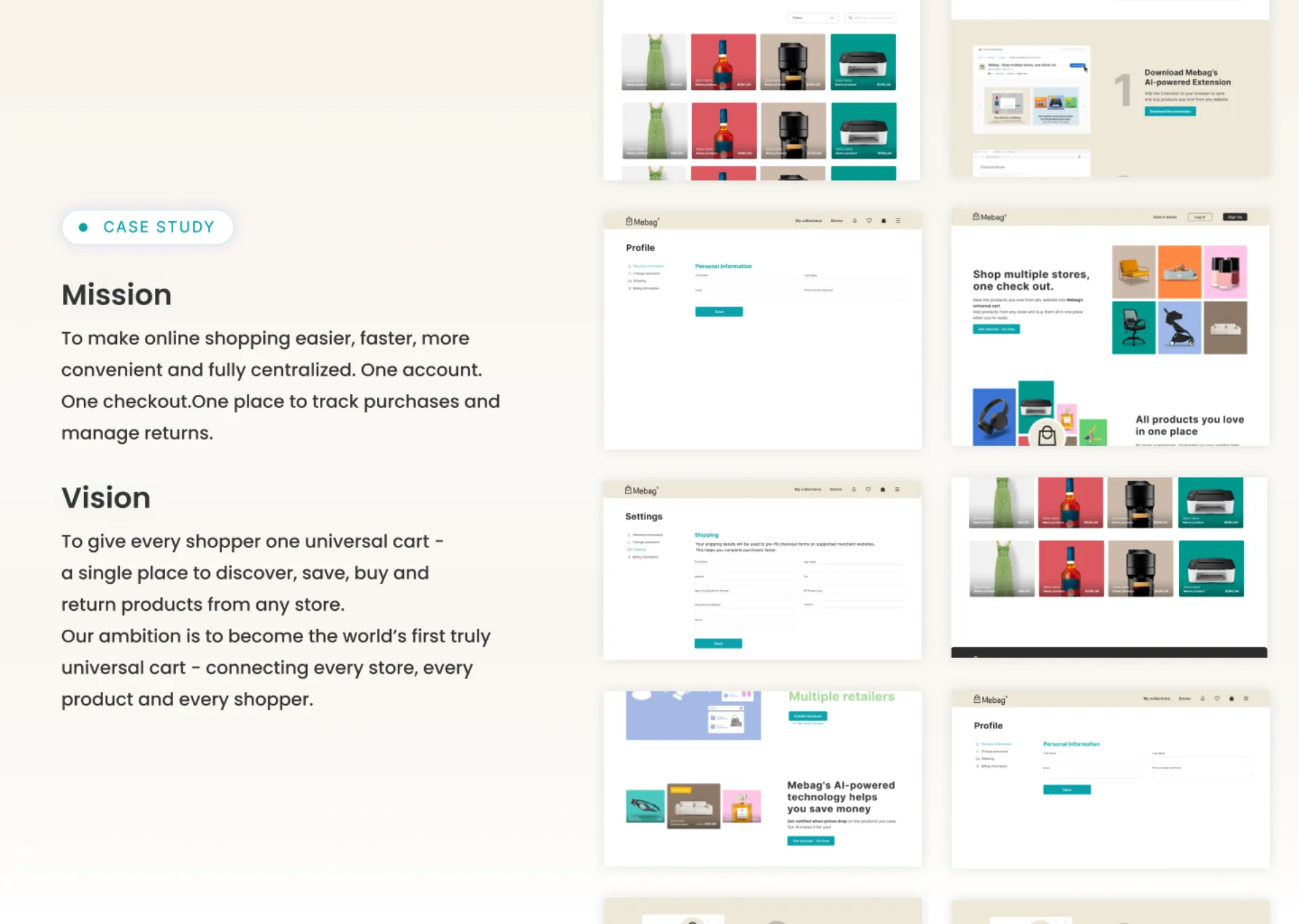
One cart for every online shop: save products from any store, track prices and check out in one place, with AI helping shoppers find and compare. Built on Shopify app development.
A hiring platform connecting pilots, mechanics, instructors and dispatchers with employers, with Stripe payments. Our fastest MVP: kick-off to live in 60 days, and still in production.
A marketplace that brings merchants into one place in every language they sell in, built as microservices so each part can scale on its own.
The same steps on every project. You approve designs before we write code.
Bring the problem and how you handle it today. We ask questions and tell you honestly what we would build first. We won’t pitch at you.
What is in scope, what goes on the backlog, the stack we’d use and why, the timeline and one price.
A kick-off meeting, a shared Slack channel and access to the repository. Rehan is your day-to-day contact.
We design the main screens and journeys first. Nothing gets coded until you have signed the designs off.
We agree the architecture before writing code, then build with updates twice a week on Slack. Any new request is logged as extra hours and reported weekly.
Deployed to production with your Git repositories and documentation handed over. Bug fixes are free for the first two months.
It depends on scope, so we do not publish a price list. Every project is a fixed quote, in writing, after a 30-minute call.
After the free two months, monthly maintenance is available. New features are quoted as you need them, or you can add a dedicated engineer. Book a call and we will price both.
Platform-level reviews of the agency — not cherry-picked project comments.
What I love about Team7 is that they always say: No worries, we can find a solution. This is the mindset of builders, creators, people who do not have fear, the partner you need if you want to excel.
Working with Mo and his team over the past year has been nothing short of exceptional. I was admittedly sceptical about investing such a large amount, but results exceeded every expectation.
Their responsiveness and willingness to take on our challenging task were impressive.
They are amazing and consistently exceed expectations. They go above and beyond what is asked of them and their communication is top notch, so much so that we joke that they never sleep. The best of the best.
Straight answers on experience, cost and how we work.
Ask us something elseFlyHire and JBUJB now run with their own teams, and Mebag is on hold on the client’s side. We say so because the experience is real even where the relationship has moved on.
We give you a fixed quote after a 30-minute call, once we have seen what you need.
Bug fixes are free for two months. After that, monthly maintenance is available. New features are quoted as you need them, or you can add a dedicated engineer. We price both on a call.
You do. At handover you get the Git repositories and written documentation. There is nothing tying the software back to us, so you can take it to an in-house team whenever you like.
Rehan, one of our two founders, is your day-to-day contact. You get updates on Slack twice a week and can see the code in your repository at any time. We split working hours between us to cover US, UK and Australian time zones, and we usually reply within an hour, sometimes the next morning.
A 30-minute call. We’ll tell you which side to start with and what version one costs.