Fintech & Payments Software Development
Payments, Billing, Reconciliation. In Production.
We build payment, billing, and financial software for fintech startups and product companies across the US, UK, and Australia. We integrated a payment terminal with session-based charging on a national parking platform, built billing and accounting sync on i-mve for 510 companies, and a multi-retailer checkout orchestration layer on Mebag. Payments are an area we have real production scars in, not a tutorial we followed.
No commitment. Response within 24 hours.
Why Fintech Software Is Unforgiving
In most software, a bug is an inconvenience. In fintech, a bug moves the wrong amount of money, and the network will fail mid-transaction whether you planned for it or not.
Payments fail halfway through
A charge succeeds but the confirmation never arrives. Without idempotency keys and reconciliation against the processor, you either double-charge the customer or lose the money entirely.
Billing edge cases multiply
Proration, plan changes, dunning, tax, partial refunds, per-account billing dates: recurring billing is always two or three times more complex than the first estimate, and generic tools break on the edges.
Reconciliation is where money hides
If your platform's numbers and your processor's numbers aren't reconciled automatically, discrepancies accumulate silently until an audit or a customer complaint surfaces them.
Compliance is not optional
PCI-DSS, data residency, audit logging, and access controls all have to be designed in. Retrofitting them after a security review is expensive, and a generalist agency often discovers them the hard way.
Fintech Software Development Services
Each block: the problem in your words, what we build, and the outcome.
Payment Integration & Checkout
"We need payments that don't drop money when the network hiccups." We build gateway and terminal integrations, checkout flows, and orchestration across multiple providers, with idempotency and reconciliation, the way we built it for smart parking and Mebag.
Billing & Subscription Systems
"Our billing logic is a pile of special cases nobody wants to touch." We build recurring billing, plans, proration, dunning, invoicing, and tax as a proper workstream, like the per-account storage billing in i-mve.
Ledgers, Reconciliation & Reporting
"Finance spends days reconciling and still doesn't trust the numbers." We build double-entry ledgers, automatic reconciliation against the processor, and the financial reporting a finance team can actually rely on.
Accounting & Banking Integrations
"Everything gets typed into the accounting system twice." We build two-way sync to Xero, QuickBooks, and Sage, plus bank-feed and open-banking integrations where the provider exposes an API.
How a Fintech Build Actually Runs
Drawn from building payment and billing systems that handle real money, not a generic diagram.
Money Model & Compliance Discovery
We model every entity that touches money (account, transaction, ledger entry, payout, refund) and identify which compliance framework applies, before any screen is designed.
Transaction State Machine Design
Every payment gets an explicit state machine and an idempotency strategy, so a failure mid-transaction has a defined, testable outcome instead of a guess.
Keep Card Data Off Your Servers
We architect so sensitive data flows through a compliant processor, not your infrastructure, which shrinks your PCI scope from the start.
Staged, Fixed-Price Build
We build in stages with a working demo every week, with reconciliation and audit logging as acceptance criteria. Fixed price means scope surprises are our problem.
Reconciliation Testing
We test that the platform's ledger and the processor's records agree under failure conditions, partial refunds, and retries, because that is where real systems drift.
Launch & Monitoring
After launch we watch for reconciliation drift, failed-payment rates, and webhook gaps, because in fintech the problems that matter are the quiet ones.
Payment & Billing Software We've Built
Three production systems where getting the money movement exactly right was the whole job.
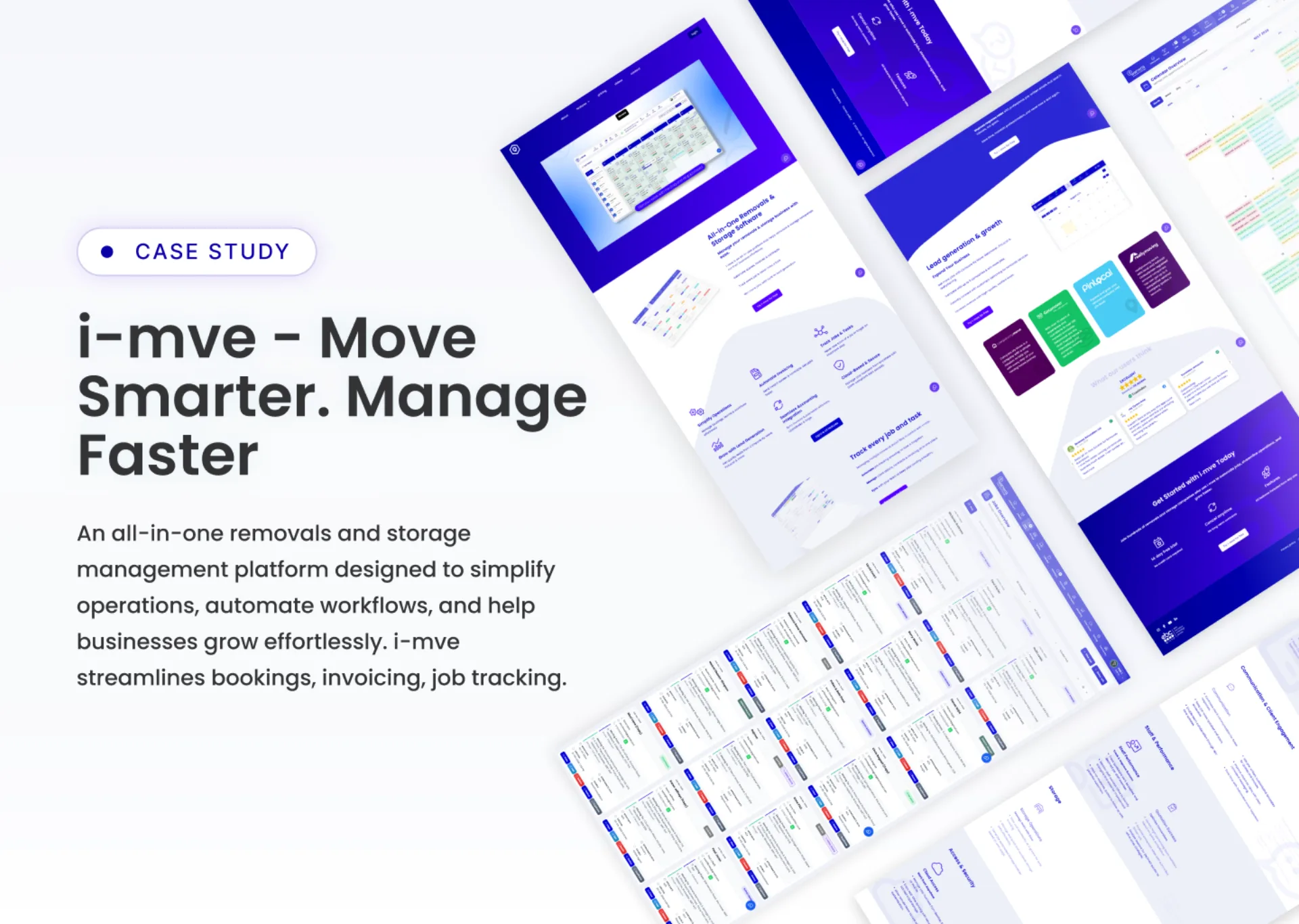
i-mve: Billing and Reconciliation for 510 Companies
i-mve is a multi-tenant operations SaaS we built and run for the UK removals and storage industry. The financial side covers automated quoting and invoicing, recurring storage billing with per-account billing dates, payment capture through Blink Payments, and automatic two-way sync to Xero, QuickBooks, and Sage.
Reconciliation that used to take a bookkeeper hours now happens in real time, with the same data visible to the ops team and the finance team. That's the unglamorous core of fintech done properly.
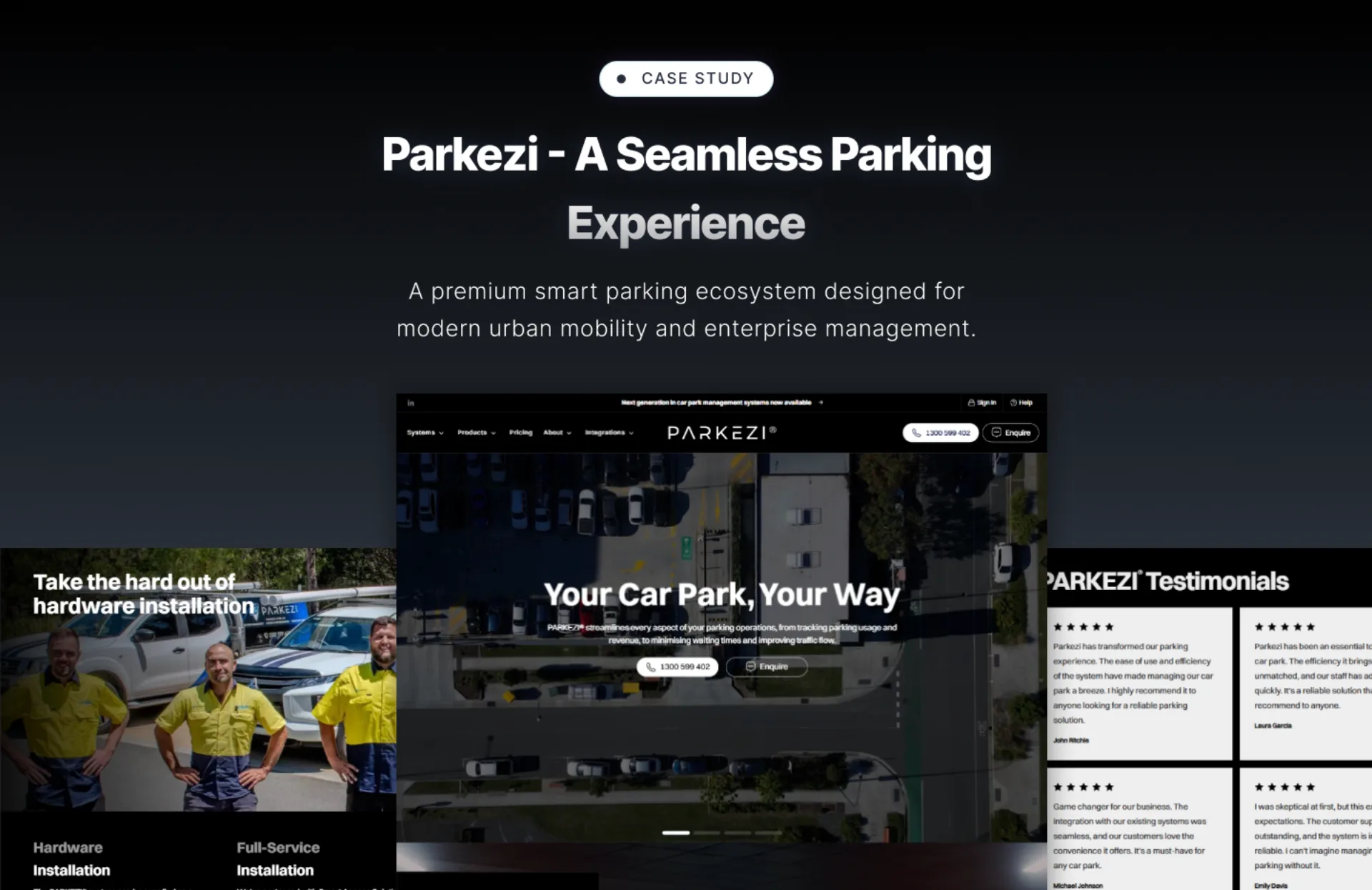
Smart Parking: A Payment Confirmation That Opens a Gate
On the Australian smart parking platform, a session starts when a plate is read and closes only when payment clears. We integrated a Wind Cave payment terminal with session lookup, duration-and-zone rate calculation, terminal handshake, and receipt delivery. The payment confirmation is what triggers the gate to open, so the transaction state machine had to be exactly right.
Read the smart parking case studyMebag: One Checkout, Payments Across Many Retailers
Mebag lets a shopper buy from multiple online stores in a single checkout. We built a checkout orchestration layer that holds payment and delivery details centrally, then executes separate purchases at each retailer, handling per-retailer session management, payment submission, and order-confirmation parsing. One payment to the user; many transactions behind the scenes. The engagement is currently on hold, resuming September 2026.
Read the Mebag case studyBuilding payment or billing software?
The next step is a call. We'll ask about your money model, your failure modes, and your compliance requirements before we quote anything, and tell you honestly which parts sit inside our experience.
Book a scoping callThree Ways to Engage Us
A fintech startup, a product team adding payments, and a team stuck with a fragile ledger need different things. Pick the one that sounds like you.
Technologies We Use for Fintech Software
Chosen for correctness, auditability, and integration reach. In fintech, boring and predictable is the right choice.
Questions About Fintech Software Development
Have you actually built payment processing, or just integrated Stripe once?
We have built payment and billing into several production platforms. On the Australian smart parking platform we integrated a Wind Cave payment terminal with session-based charge calculation and gate control. On i-mve we built billing with Blink Payments plus two-way sync to Xero, QuickBooks, and Sage. On Mebag we built a checkout orchestration layer that executes payments across multiple retailers in one flow. Payments are an area we have real production scars in, not a tutorial we followed.
Are you a payments compliance or PCI consultant?
No. We are a development agency, not a compliance firm. We build to PCI-DSS technical requirements (tokenisation, no card data at rest, TLS, access controls, audit logging) and we design so that card data flows through a compliant processor rather than your servers. For formal PCI attestation, a QSA audit, or regulatory licensing advice, we recommend engaging a specialist alongside us and we build to their requirements.
Can you integrate with our payment provider and banking APIs?
Yes. We have integrated card terminals, payment gateways, and accounting APIs. Open banking and bank-feed integrations are possible where the provider exposes an API, and the effort depends heavily on which provider and which product. We assess each integration for API quality and edge cases before it goes into an estimate.
Do you build recurring billing and subscription logic?
Yes. Recurring billing is one of the hardest parts of any product to get right: proration, plan changes, dunning, failed payments, tax, invoicing, and reconciliation. We scope it as its own workstream. On i-mve we built recurring storage billing with per-account billing dates, which is exactly the kind of edge-case-heavy billing that breaks generic tools.
How do you handle reconciliation and financial reporting?
Reconciliation is where money quietly goes missing, so we design for it. On i-mve, invoices and payment records sync to the accounting system automatically and reconciliation that used to take hours happens in real time. We build the reporting finance teams actually need, with an audit trail behind every number.
Can you take over a fintech platform another team built?
Yes. We offer Legacy Software Modernization and Software Project Rescue. In fintech, a common finding is that the ledger model, the reconciliation logic, or the idempotency handling around payments was never built properly. We audit what exists and tell you honestly whether to extend, refactor, or rebuild the parts that cannot be trusted.
How do you make payment flows reliable?
Payment code has to assume the network will fail mid-transaction. We build with idempotency keys, explicit state machines for each transaction, webhook reconciliation against the processor as source of truth, and clear handling for the case where a charge succeeds but the confirmation never arrives. On the parking platform a payment confirmation is what closes a session and opens a gate, so getting that exactly right was not optional.
How much does a fintech build cost, and how long?
Scope drives it. A payment integration on an existing product, a billing and subscription system, and a full financial platform with a ledger and reporting are different projects. Everything is fixed-price after a scoping call, and you can get a rough range from our cost calculator first. We give realistic timelines, because in fintech an optimistic one is a liability.
Will you tell us if part of this is outside your experience?
Yes. We have built payments, billing, reconciliation, and checkout orchestration. We have not built a card-issuing programme, a lending underwriting engine, or a regulated e-money platform from scratch. If your project needs one of those, we will say so on the call and tell you which parts we can genuinely help with.
Building payment software?
We've shipped the hard parts.
We've built payment integrations, recurring billing, reconciliation, and multi-retailer checkout for production platforms. If you're building fintech and you want the money movement done properly, we'd like to hear about it.