Custom CRM Development Cost in 2026: A Line-by-Line Breakdown
What a custom CRM actually costs in 2026 — by company size, feature set, and complexity tier, compared against 3 years of Salesforce.
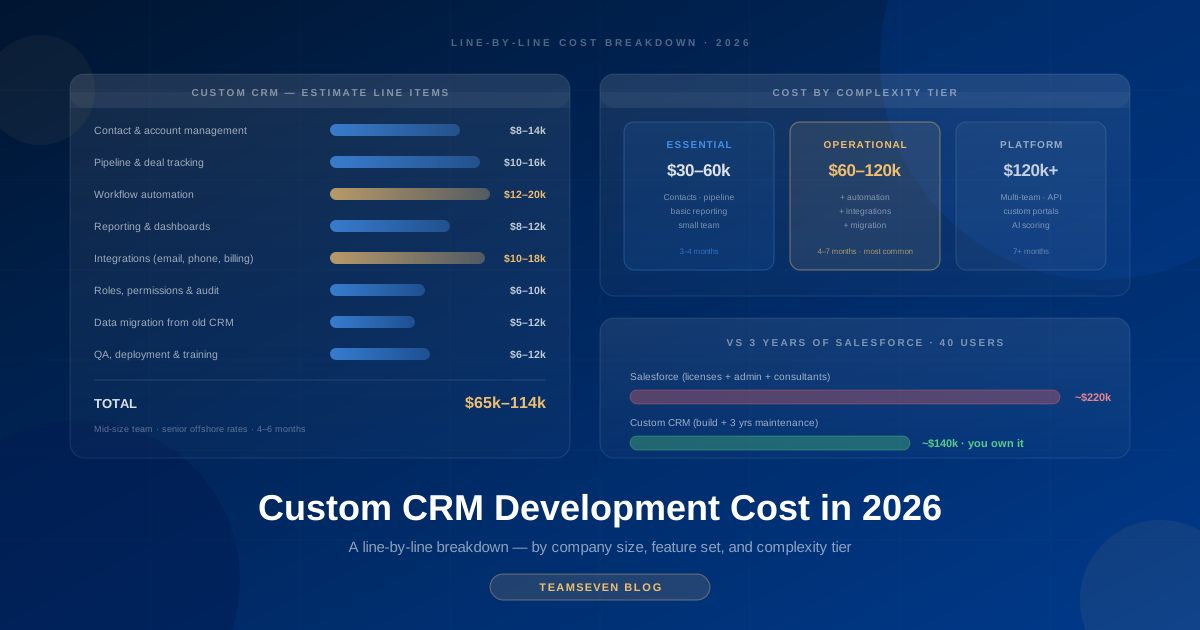
A custom CRM's cost scales in three broad tiers: a focused single-team system, a multi-department platform with integrations, and a full ecosystem with mobile apps, AI, or heavy compliance layered on. Offshore senior teams cost meaningfully less than US/UK agency rates for the same scope — the gap is geography, not seniority.
This is the pricing conversation we have on scoping calls at Teamseven, written out with the actual line items — because "it depends" is true but useless, and you deserve clarity on what drives the number before you book a call with anyone.
This post breaks the build cost down line by line. If you're weighing a custom build against staying on Salesforce or HubSpot, our custom CRM cost guide with the 5-year build-vs-subscribe maths is the better starting point.
Cost by tier
| Tier | Timeline | What's inside |
|---|---|---|
| Core CRM | 12–16 weeks | One primary workflow (e.g., enquiry → quote → job → invoice), contact & company records, pipeline views, role-based access, activity history, email notifications, admin panel, reporting basics |
| Operations platform | 16–26 weeks | Above + 2–4 integrations (accounting, telephony, forms, calendars), document generation, customer portal, automation rules, dashboards per role, audit logs |
| Full ecosystem | 6+ months | Above + native mobile apps for field teams, AI features (lead scoring, drafting, summarization), advanced compliance, multi-region |
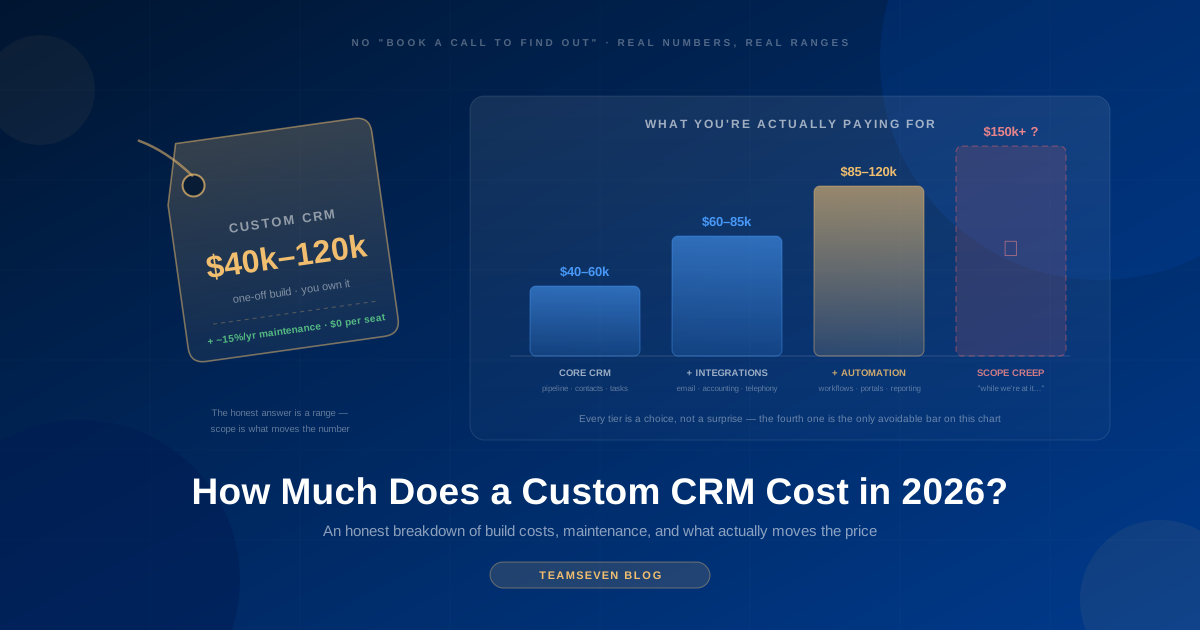
Each tier up isn't just "more of the same" — it adds a step-change in cost because integrations, extra roles, and compliance work don't scale linearly with the core build. Most companies should start at tier one even if they'll end at tier two. Shipping the core workflow first means the expensive features get scoped with real usage data instead of guesses.
Where the money actually goes (tier-one example)
| Line item | Share of budget | Why it exists |
|---|---|---|
| Discovery & process mapping | Smaller, upfront | We map your actual process — including the parts that live in Saima's head and a spreadsheet called FINAL-v7 |
| UX design & prototype | Moderate | Clickable prototype your team reacts to before code exists |
| Data model & architecture | Moderate | The decisions that determine whether year-three features take days or rewrites |
| Core workflow engineering | The largest line item | Pipeline, records, views, permissions — the product itself |
| Admin panel | Smaller | User management, configuration, the controls you'll use weekly |
| Integrations (1 included, e.g. Xero) | Smaller, scales with each addition | Each additional integration adds cost proportional to how well-documented its API is |
| QA & test automation | Moderate | Regression suite so future changes don't break old features |
| Deployment, CI/CD, monitoring, handover | Smaller | Staging + production, error tracking, documentation, your keys to everything |
What's deliberately not in the build price: hosting (a modest recurring cost at this scale), data migration from your old system (scales with how messy the source data is), and post-launch iteration (budget 15–20% of build cost for the first quarter — the reasoning is in our hidden-costs breakdown).
The 3-year comparison that decides most deals
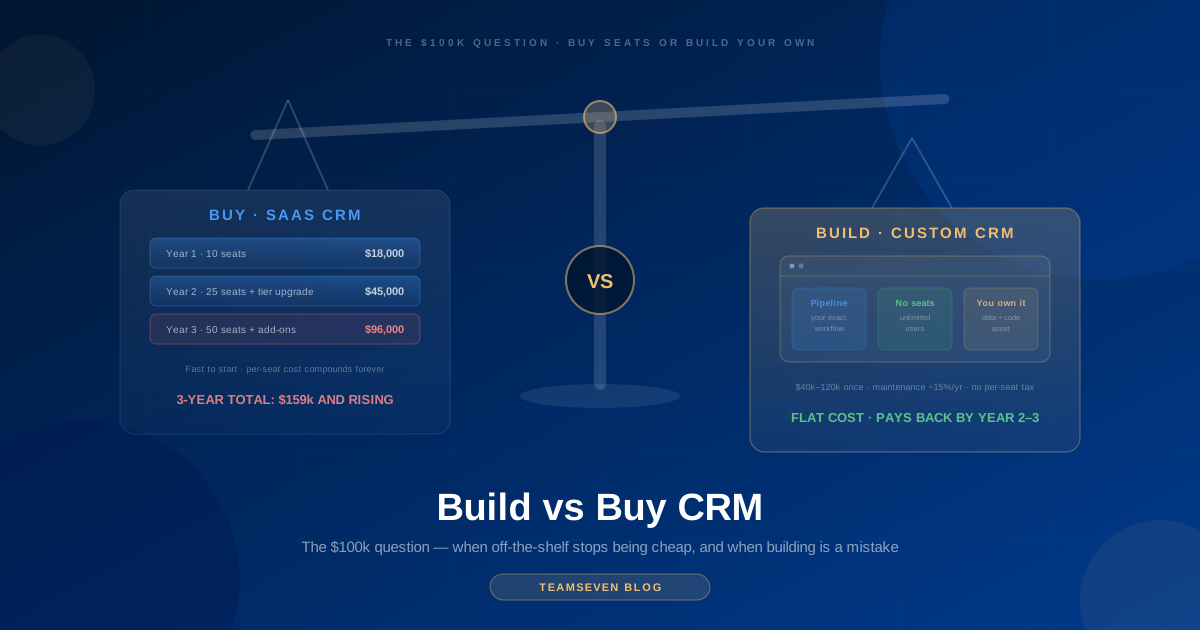
For a 15-seat team, a mid-tier off-the-shelf CRM's per-seat pricing compounds over three years of subscription, implementation, and add-ons — and at the end you own nothing and your seats keep billing. A tier-one custom build plus a modest care retainer over the same period tends to land in a comparable total-cost range — but at the end you own an asset shaped exactly like your business instead of a rental. The crossover point arrives faster the more seats you add. Full decision framework, including the cases where you should absolutely just buy HubSpot: Build vs Buy CRM.
Three levers that move your price most
- Integration count. Each external system adds cost and permanent maintenance surface. Rank them; build the top one; defer the rest.
- Number of user roles. Every role multiplies permission logic and screens. Start with two (team + admin), add the client portal in phase two.
- Custom reporting ambition. "A dashboard" is cheap. "Any user can build any report on any field" is a product category. Start with the five reports you check weekly.
A note on quality floors
What we built for the UK removals industry with i-mve — quoting, job management, customer comms for hundreds of companies — survives at scale because the data model was designed for multi-company use from day one. A CRM is the system of record for your revenue. The cheapest quote you receive will treat it like a contact list with extra steps. The gap between those two things shows up in month eight, when you ask for the first feature the data model can't express.
FAQ
Why is this cheaper than the quotes I got from UK/US agencies? Geography, not corners. Senior engineers in Pakistan cost a fraction of London payroll. Same stack (Angular, NestJS, Node.js), same code review standards, your timezone overlap, and you own all the IP — it's in our contracts by default.
Can you give a fixed price, really? Yes — after a free 30-minute scoping call and a short discovery, we commit to a number. Fixed pricing forces us to scope honestly, which is exactly the incentive you want your vendor to have.
What if we already use Salesforce/HubSpot and just hate parts of it? Sometimes the answer is a custom layer on top, not a replacement — a portal, an automation service, an integration bridge. That's a smaller, more contained scope than a full CRM rebuild, and we'll tell you if it's the better path.
How do payments work? Milestone-based: discovery, design approval, mid-build demo, launch. You see working software before each payment, not after the last one.
Related reading
- How Much Does a Custom CRM Cost? (Build vs Subscribe, 5-Year Maths)
- Build vs Buy CRM: A Decision Framework
- Custom vs Off-the-Shelf Software: A Decision Framework
- How Much Does a SaaS MVP Cost in 2026?
Want a fixed price for your CRM instead of a "it depends"? Book a free 30-minute scoping call — proposal within 48 hours.