
HIPAA Access Controls, Explained for Engineering Teams
What HIPAA's access-control rules mean in code: role-based permissions, audit trails and minimum-necessary data, explained from a real build.

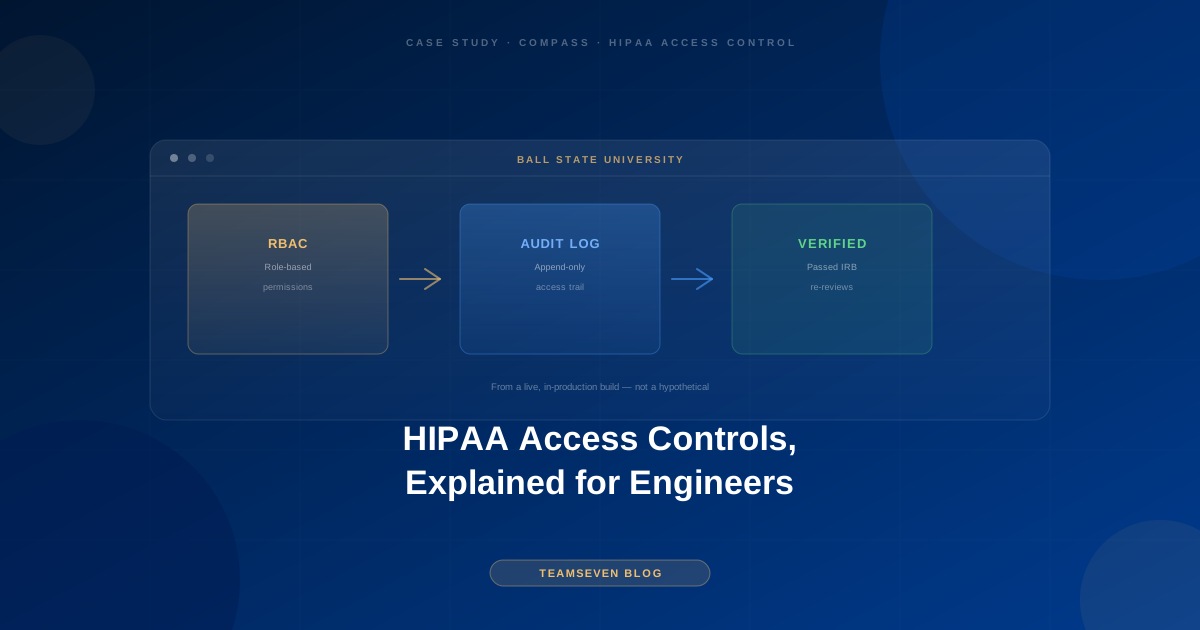
Most articles about HIPAA are written for compliance officers. This one is written for the engineers who have to implement it, because "make it HIPAA compliant" is not a specification, and a lot of expensive rework happens when that gap isn't closed before anyone writes code.
We learned this building COMPASS, a clinical research platform for Ball State University tracking autism intervention data. We're not a compliance consultancy, and we don't certify anything. That's a job for a specialist compliance firm working alongside the engineering team. What we can talk about is the part that's ours: what HIPAA's access-control principle requires at the architecture and code level, and how to build it in from the start instead of retrofitting it later.
What "access control" means under HIPAA
The HIPAA Security Rule's access-control standard boils down to a simple idea with a lot of engineering weight behind it: a person or system should be able to see only the data they need for their specific role, and every time they see it, that access should be recorded.
That single sentence implies several concrete things a codebase has to do:
- Authentication: proving who's making the request, not just trusting a session token forever.
- Authorization: checking what that authenticated identity is allowed to do, on a per-resource basis, not just per-route.
- Audit logging: recording who accessed what, when, and (ideally) why, in a way that can't be quietly edited after the fact.
- Minimum necessary access: the principle that a user's permissions should be scoped to exactly what their role needs, not "give them admin because it's easier."
None of this is exotic software engineering. It's disciplined software engineering, applied consistently, with no exceptions carved out for convenience.
Role-based access control, done properly
The naive version of RBAC is a role column on the users table and a handful of if (user.role === 'admin') checks scattered through the code. That version fails a HIPAA-context audit, and more importantly, it fails in production the first time someone needs a role the original developer didn't anticipate.
What holds up:
Permissions as data, not code. Roles map to a defined set of permissions, and permissions are checked against a central authorization layer, not reimplemented at every controller. When a new role shows up (a research assistant who needs read access to de-identified data but not raw clinical notes, say), it's a data change, not a redeploy.
Resource-level, not just route-level, checks. /api/patients/:id being behind a login check is not the same as verifying that the logged-in user is authorized to see that specific patient's record. On COMPASS, a clinician or researcher's access is scoped to the participants and studies they're assigned to: the API layer enforces that on every request, not just at the UI level where it's trivially bypassed.
Deny by default. New endpoints, new fields, new report types should require an explicit permission grant to be visible, not be visible by default until someone remembers to lock them down. This inverts the instinct of "build the feature, restrict it later," and it's the single highest-leverage decision an engineering team makes on a HIPAA-adjacent project.
Audit trails that hold up
An audit log that can be edited by the same people it's supposed to be watching isn't an audit log. The practical requirements:
- Append-only storage. Access records get written once and never updated or deleted through normal application code paths.
- Who, what, when: and enough context to matter. Not just "user 44 accessed record 812" but which fields were viewed, what action was taken, and from where. A generic "logged in" event is nearly useless during an actual review.
- Separate from the operational database in practice, if not in schema. Audit data shouldn't share write-permission boundaries with the application data it's watching, so a compromised application credential can't erase its own trail.
On COMPASS, this is what let the platform pass IRB re-reviews without remediation: reviewers could see exactly who touched what data and when, without us having to reconstruct it after the fact from scattered logs.
Minimum necessary access, as an engineering default
"Minimum necessary" sounds like a compliance phrase, but it's really an argument for narrower interfaces. Concretely:
- De-identify at the query level where possible, not by trusting the frontend to hide a field. If a report doesn't need a participant's name, the API response shouldn't include it, full stop.
- Time-bound elevated access. A researcher who needs temporary access to raw data for a specific analysis gets a scoped, expiring grant, not a permanent permission bump that outlives the reason it was given.
- Separate read and export permissions. Being able to view a record in the UI and being able to pull it into a CSV are different capabilities with different risk profiles, and they should be gated independently.
Where this saves you money, not just risk
The honest engineering argument for building access control this way from day one: retrofitting it is dramatically more expensive than building it in. A permissions model bolted onto a system that was designed assuming "everyone with a login sees everything" usually means rewriting the data access layer, not just adding a middleware check. On COMPASS, the access-control model was part of the initial architecture, which is exactly why it survived multiple IRB re-reviews without a scramble to patch gaps under deadline pressure.
It's the same principle behind all of our secure software development work: security is an architecture decision, not a checklist for the final sprint.
What we don't claim
To be direct about scope: Teamseven builds software with HIPAA's access-control principles as an architectural requirement, and we've done it on a real, in-production research platform. We do not issue HIPAA certifications, execute Business Associate Agreements on a client's behalf, or replace a compliance audit. If formal certification is part of your requirement, that's a parallel engagement with a specialist firm, and a good engineering team should be able to talk to that firm's requirements fluently, which is a different (and lower) bar than being one ourselves.
Stay connected
Build notes, launches, and new articles from the Teamseven team.