
From One Practice to Many: Turning a Clinic App Into SaaS
A UK dentist built a practice app with Claude. We turned it into a multi-tenant SaaS other practices now buy.

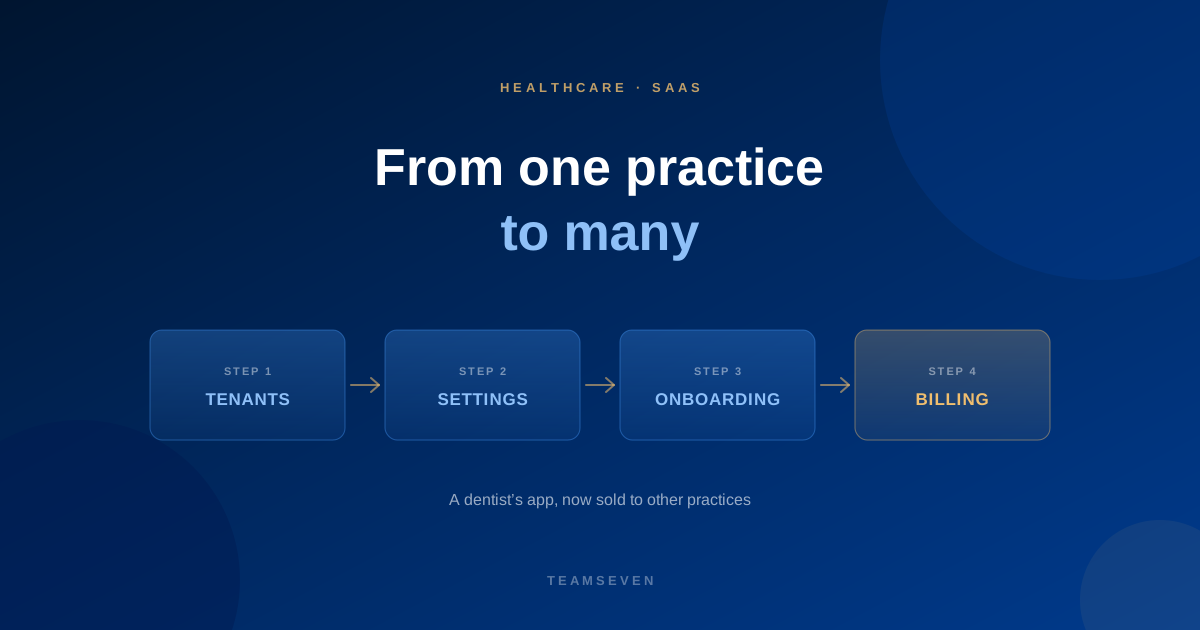
Some of the best software products start inside one business. The owner builds a tool for their own problems, it works, and other businesses in the same field ask to use it.
That's what happened with a UK dentist. They used Claude to build an app for appointments, patient handling and pharmacy in their own practice. Other dentists wanted it. We turned it into a multi-tenant SaaS that is now sold to other practices.
It's the same path i-mve took in removals, and it's more involved than adding a sign-up page.
Step 1: make it safe for more than one practice
A single-practice app keeps all its data in one pot. A SaaS keeps each customer's data strictly apart. That means:
- Every record tagged with the practice it belongs to
- Access rules that stop any user seeing another practice's data
- Testing that proves it, by trying to cross the line
For an app first built with an AI tool, this is where most of the work is. See five security holes in AI-built apps and Supabase row-level security explained.
Step 2: separate the product from the practice
Things that were hard-coded for the first practice, like opening hours, appointment types, prices, branding and letter templates, become settings each practice controls.
Step 3: onboarding
New practices need to sign up, add their team, set up their diary and import their patients without a developer. If onboarding needs your time, growth stalls. We wrote about this in onboarding 523 companies onto one platform.
Step 4: billing
Plans, trials, renewals and failed payments need to run themselves. See Stripe subscriptions: trials, upgrades and failed payments.
Step 5: support and updates
With many practices on one system, every change affects all of them. You need a way to release updates safely, fix issues without downtime, and answer support questions without the original founder doing it all.
Step 6: handle health data properly
Patient data needs careful handling: access controls, encryption and audit logs, built to the rules that apply where your customers are, such as GDPR in the UK and EU or HIPAA in the US. We cover the engineering in client-side vs server-side encryption for patient data.
Is it worth it?
It can be, when other practices want the tool and you're prepared to run it as a product: support, updates and sales. Our internal tool to SaaS service covers the whole journey, and vibe-coded app rescue covers apps first built with AI tools.
Do I need to rebuild my clinic app to sell it?
Not usually. We keep what works and rebuild the parts that must change for SaaS: data separation, settings, onboarding and billing.
How long does it take to turn a clinic app into SaaS?
It depends on how the app was built and how much needs reworking. After reviewing the code we give a fixed quote and timeline. Most full SaaS platforms land between $10,000 and $30,000.
Who owns the software after it becomes a product?
You do. All code, designs and IP are yours from the first commit.
Stay connected
Build notes, launches, and new articles from the Teamseven team.