Revenue Leakage in B2B: Where Money Slips Between Quote and Invoice
Revenue leakage is money you earned but never collected. Where it slips through in B2B firms, from forgotten extras to unsent invoices, and how to close it.

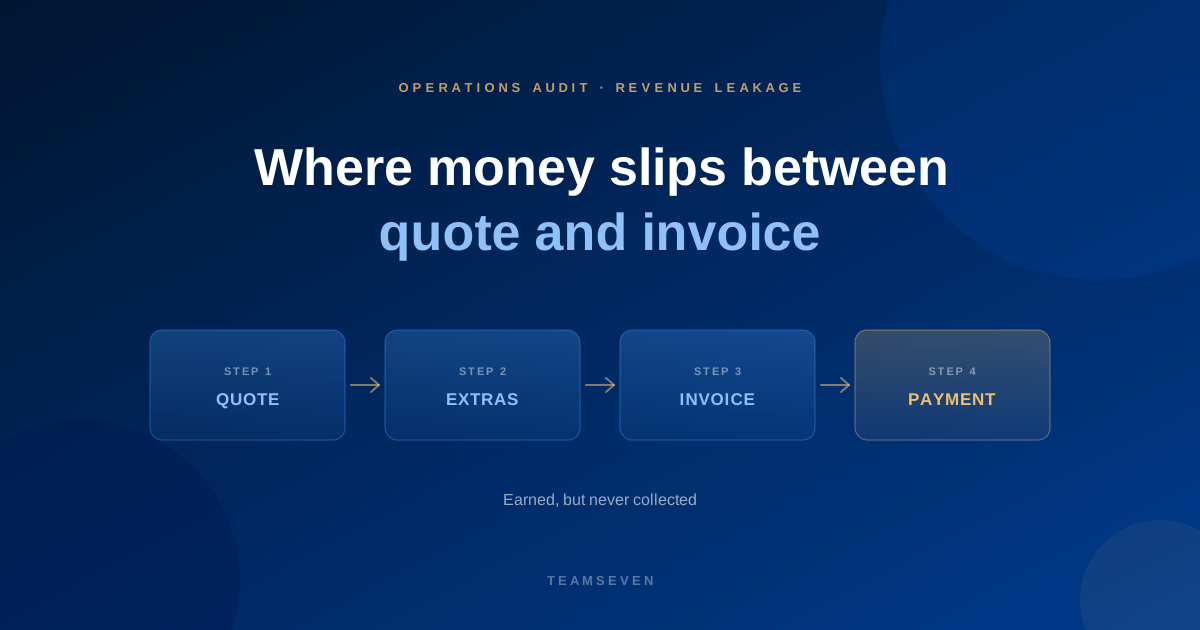
Revenue leakage is money your business earned but never collected. The work was done. The customer was happy. The money just didn't arrive, or arrived late, or arrived short.
It is different from losing a sale. A lost sale is visible. Leakage is quiet. It hides in the gaps between the quote, the job and the invoice, where information is carried by people instead of systems.
This post walks through where it happens in B2B businesses and how to check your own.
Why leakage is hard to see
Most businesses look at revenue from the top down: total invoiced this month against last month. Leakage doesn't show up there, because the missing money was never invoiced in the first place. You can't see a gap in a report that only counts what exists.
To find leakage you have to work the other way: start from the work that was done and check that each piece became money in the bank.
Where it happens
1. The quote doesn't match the work
The customer agrees a price. Then the job changes: an extra room, an extra hour, a different product. The change is agreed on the phone or on site, but the quote isn't updated. The invoice goes out at the original price.
Check: take a handful of recent jobs and compare the final invoice with what was delivered.
2. Extras are agreed and forgotten
Closely related. Small additions, like an extra visit, materials or a rush fee, are the easiest to lose, because each one feels too small to write down properly. Across a year they add up.
Check: ask the people doing the work what extras they agreed last month, then look for them on invoices.
3. Work is finished but never invoiced
It sounds impossible, and it happens more than people admit. The job is complete, but the invoice depends on someone noticing and raising it. Busy week, person on holiday, invoice never sent.
Check: list every job marked complete in the last quarter and match each one to an invoice.
4. Invoices go out late
Every day between finishing the work and sending the invoice is a day added to your cash cycle. Late invoices are also paid later and disputed more, because the customer has half forgotten the job.
Check: measure the gap between job completion and invoice date for recent work.
5. Discounts and terms are applied wrongly
A discount agreed for one job is applied to the next three. Or a negotiated rate is forgotten and the customer is overcharged, then credited, then annoyed. Both cost money.
Check: where are special terms recorded, and does the person raising the invoice see them?
6. Payments never reach the books
The customer paid, but the payment wasn't matched to the invoice, so it sits unreconciled. Meanwhile someone chases a customer who has already paid, which costs goodwill.
Check: how long does month-end reconciliation take, and how many unmatched payments are there?
7. Nobody chases overdue invoices
Chasing is uncomfortable and easy to postpone. Without reminders that happen automatically, overdue invoices drift.
Check: what is overdue right now, and when was each one last chased?
Why it keeps happening
Almost every leak above has the same cause: the quote, the job and the invoice live in different places, and a person carries the information between them. Every hand-off is a chance to lose something.
That is exactly what we saw in removals before i-mve. Enquiries, quotes, jobs, emails and invoices lived in separate tools and spreadsheets. Building the whole journey in one system meant the invoice came from the job, and the job came from the quote, so nothing had to be carried across. Invoices then go straight to Xero, QuickBooks or Sage.
How to close the gaps
Work through the leaks in order of cost. For most businesses the fixes are:
- One record from quote to invoice. Changes to the job update what will be invoiced.
- Capture extras where they happen. On the job sheet or mobile app, not in someone's memory.
- Invoice on completion. Marking a job complete raises or queues the invoice.
- Terms stored against the customer. So they apply automatically, every time.
- Accounting sync. Invoices and payments flow to your accounting package without re-entry. See accounting integration.
- Automatic reminders. Overdue invoices are chased on a schedule, not when someone remembers.
- Payments tied to the work. Where it fits, take payment at booking or completion. See payment integration.
Some of these are settings in tools you already have. Some need tools connected. Some need a system built around how your business works. The audit tells you which.
How do I know if my business has revenue leakage?
Pick twenty recent completed jobs and trace each one from quote to payment. If any were under-billed, invoiced late, missing extras or not paid and reconciled, you have leakage. Most businesses find at least one gap in the first twenty.
Is revenue leakage only a problem for big companies?
No. Smaller businesses are often more exposed, because the steps depend on a few busy people and a handful of disconnected tools. The amounts are smaller, but so are the margins.
Where should I start fixing it?
With the leak that costs the most and is easiest to close. For many B2B firms that is invoicing on completion and syncing invoices to the accounts. If you'd like a second pair of eyes, our business process audit is free.
Stay connected
Build notes, launches, and new articles from the Teamseven team.