
Business Process Audit Checklist: 40 Questions to Find Where Work Leaks
A business process audit checklist: 40 questions across enquiries, quoting, delivery, invoicing, tools and reporting to find where time and money slip away.

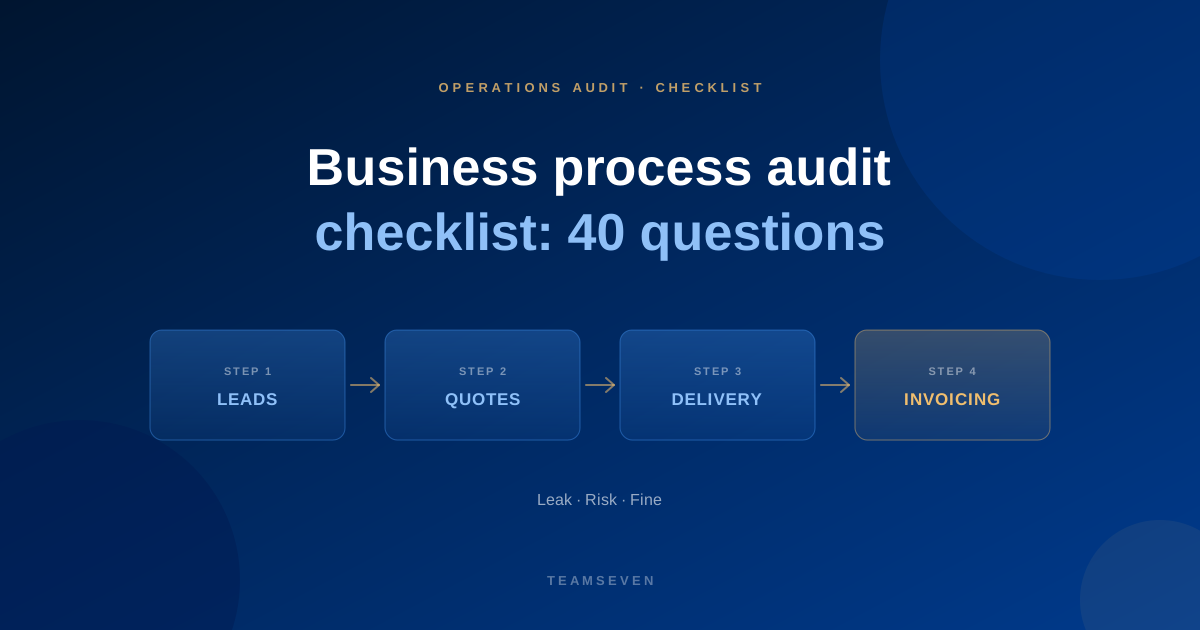
This is the checklist we work through when a business asks us to find where its time and money go. It follows the same order as the work itself, from the first enquiry to the numbers you look at each week.
Use it with the people who do the work, not just the people who manage it. The most useful answers are usually "it depends who's in", "I just remember" and "we sort it out at month end". Each of those is a leak.
If you haven't mapped the process yet, read how to audit a B2B business for time and money leaks first. This checklist is the question bank for that audit.
Enquiries and leads
- Where do enquiries come from: web form, phone, email, referrals, partners, lead platforms?
- Do all of them land in one place, or in several inboxes and phones?
- How quickly is a new enquiry answered, and does anyone measure it?
- What happens to an enquiry that arrives out of hours?
- Do you know which source brings the most won work, not just the most enquiries?
- How many enquiries are lost without a reply? How would you know?
In removals, for example, most good work comes through referrals and estate agents, not paid leads. If your system only tracks one channel, the best customers are invisible.
Quoting and sales
- How long does it take to produce a quote, and who can do it?
- Is pricing in a system, a spreadsheet or someone's head?
- How many times is customer information typed before the quote goes out?
- Is every quote followed up, and on a schedule?
- When a quote changes, is the old version clearly replaced everywhere?
- Can you see how many quotes are open, won and lost this month?
- Are discounts and special terms recorded where the invoice will see them?
Scheduling and delivery
- How is work scheduled: a system, a whiteboard, a shared calendar, a group chat?
- Has the same slot, person or vehicle ever been booked twice?
- How do the people doing the work get their instructions?
- When plans change on the day, how does everyone find out?
- Is the work signed off, and where is that recorded?
- Are extras and changes captured at the time, or remembered later?
- Could someone new run tomorrow's schedule if the usual person were ill?
Invoicing and payment
- How long after the work is finished is the invoice sent?
- Is every piece of finished work invoiced? How do you check?
- Is invoice data typed from the job, or created from it automatically?
- Do invoices reach your accounting package without being re-entered?
- How are overdue invoices chased, and by whom?
- How long does month-end reconciliation take?
- Have you ever found work that was done but never billed?
Questions 22 and 27 are where most revenue leakage hides.
Tools and data
- List every tool the process touches. Who uses each one daily?
- Where does the same customer or job record live in more than one place?
- Which tools talk to each other, and which rely on a person to carry data across?
- Are you paying for tools, seats or features nobody uses?
- Which spreadsheets does the business depend on? Who understands them?
- If a key spreadsheet broke tomorrow, what would stop?
Spreadsheets are fine until they aren't. See signs your business has outgrown spreadsheets and the SaaS tool sprawl audit.
Reporting and decisions
- What numbers do you look at every week?
- How long does it take to pull them together, and who does it?
- Which decisions are made on gut feel because the data takes too long?
- Do sales, operations and finance agree on the same numbers?
People and knowledge
- Which steps only one person knows how to do?
- Is the process written down anywhere that matches how it really runs?
- What would your team fix first if they could change one thing?
Always ask question 40. The people doing the work usually know exactly where the biggest leak is. They have just never been asked in a way that leads to a fix.
How to score the answers
Don't try to score every question. Go through the answers and mark each one:
- Leak. Time or money is being lost here today.
- Risk. Fine now, but it breaks when someone leaves or volume grows.
- Fine. Works well, leave it alone.
Then put a rough cost on the leaks: how often they happen, how long they take, and what goes wrong when they fail. Our guide to the hidden cost of manual processes shows how.
Fix the biggest leak first. That might be a setting, an off-the-shelf tool, a process change or an integration. Custom software comes in only when the work is specific to how you compete and nothing else fits.
Can I use this checklist for any industry?
Yes. The stages (enquiry, quote, delivery, invoice, reporting) fit most B2B businesses that sell jobs, projects, bookings or services. Rename the stages to match your work. A clinic has appointments instead of jobs; a logistics firm has consignments.
Who should answer the checklist questions?
The people who do the work every day, with a manager in the room to listen, not to answer. Managers describe how the process should run. The team describes how it really runs, and that is where the leaks are.
What if we find more leaks than we can fix?
That is normal. Rank them by cost and fix one at a time. If you want a second opinion on what to fix first, our business process audit is free and ends with a written proposal.
Stay connected
Build notes, launches, and new articles from the Teamseven team.