The business runs on an Access database or a spreadsheet that has grown for years.
We design the tables around how your records actually relate, move the existing data across, and check the totals against the old file with your team.
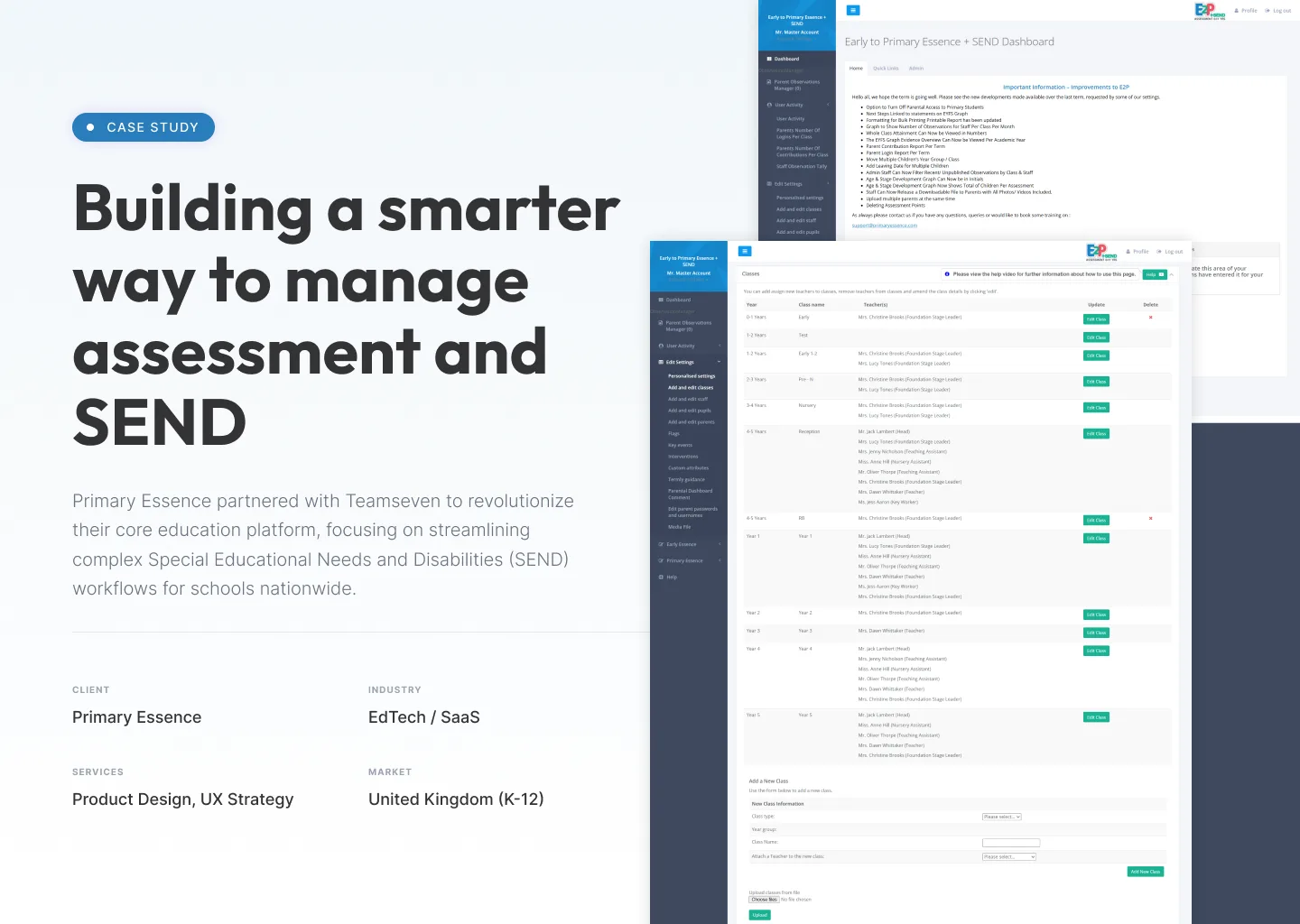
If the business runs on an Access file, a shared spreadsheet or a database only one person understands, we design a proper one and build the screens on top. E2P+SEND ran 352 UK schools on the SQL Server database we designed.
The database problems we are asked about most.
The business runs on an Access database or a spreadsheet that has grown for years.
We design the tables around how your records actually relate, move the existing data across, and check the totals against the old file with your team.
Only one person knows how the database works.
You get the schema, the documentation and full access to the code and the database. Nobody is a single point of failure any more, including us.
Everyone can see and edit everything.
Role-based access, audit trails and encryption are designed in. E2P+SEND kept children’s SEND and medical records visible only to the right staff and parents.
Screens and reports have become slow as the data grew.
We measure before changing anything: indexes, query shape and data model. Often the fix is a handful of queries, not a rebuild.
The database and the software that uses it, designed together.
A data model built around your real records and how they relate, so year-three features don’t need a rewrite.
E2P+SEND: SQL Server, 100,000+ students.
Forms, searches, dashboards and permissions, so staff work in screens built for them instead of in tables.
Existing data cleaned, de-duplicated and moved across, checked against numbers your team already trusts.
Role-based access at the data layer, encryption at rest and in transit, and an audit trail of who changed what.
Indexing, query tuning and data-model changes for databases that have slowed down as they grew.
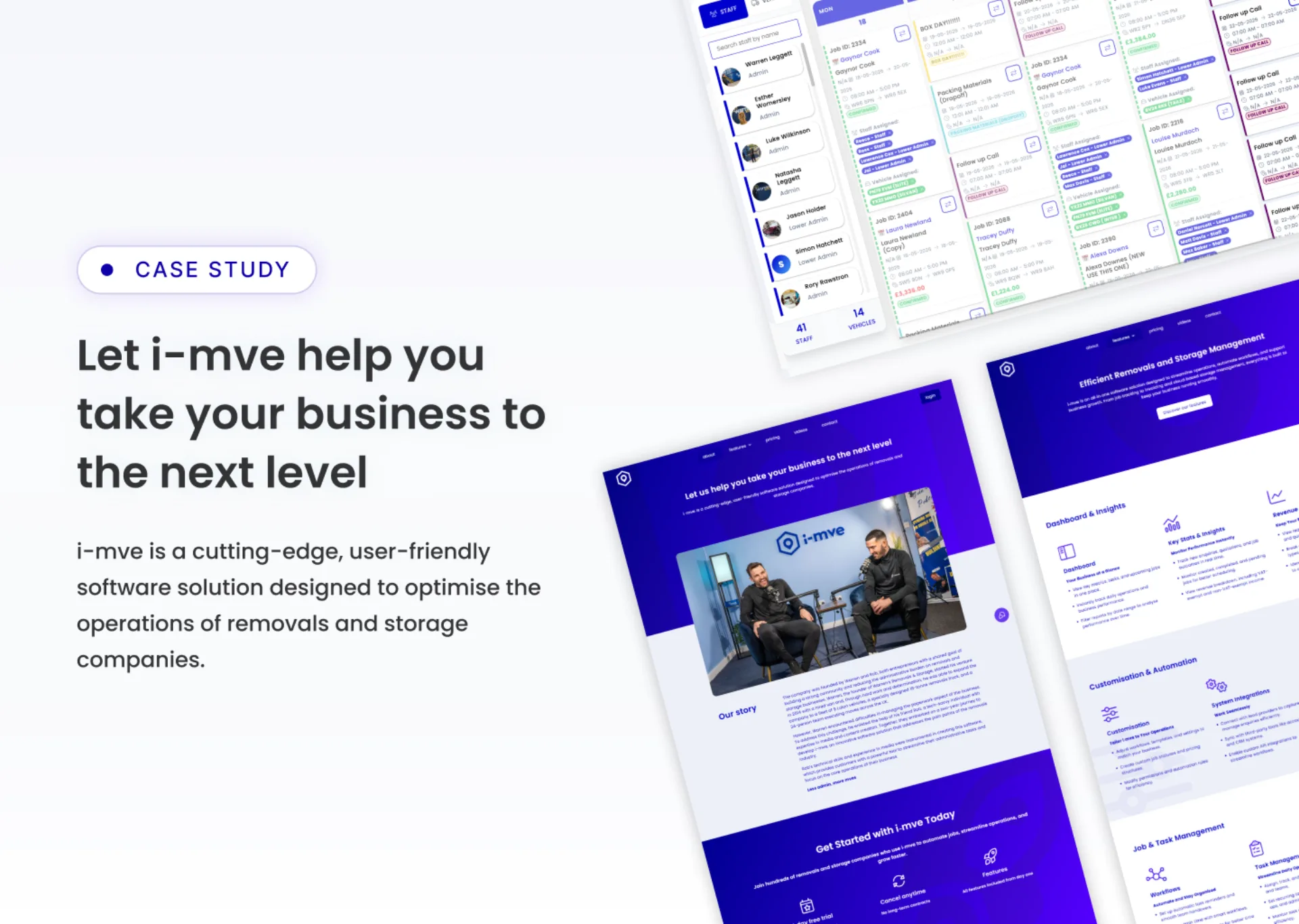
i-mve: 352,506 jobs across 523 companies.
Numbers are as reported by the clients. We say plainly which ones we still work with.

Schools track what each child learns from early years through primary, with observations, photos and SEND records that staff and parents can both see.

An all-in-one platform for UK removals and storage companies: enquiries, quotes, jobs, staff, invoices, storage and accounting in one place. It started as one removals firm’s system and is now sold on subscription.

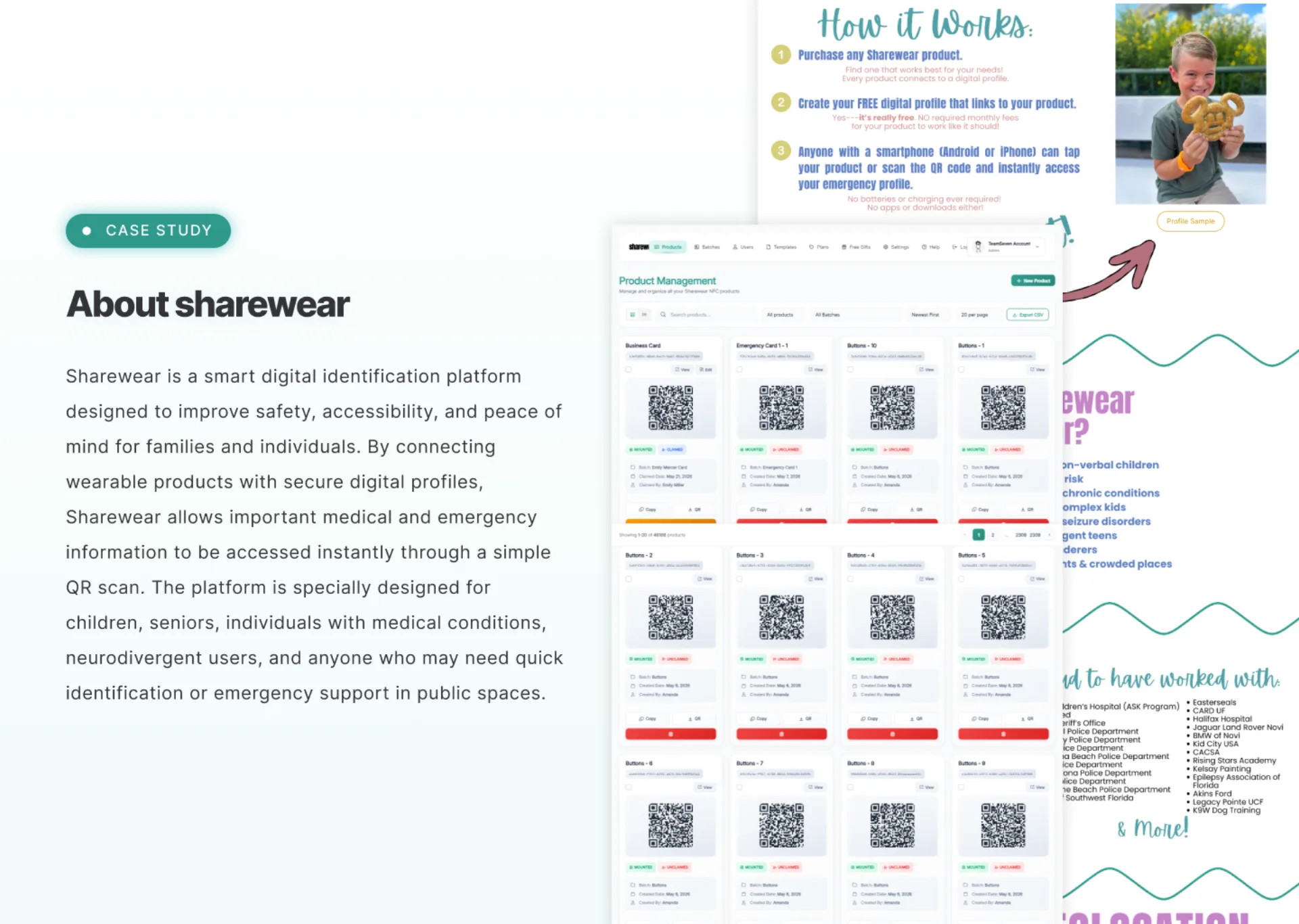
Bands, watches and rings with NFC tags that let a stranger reach family or services if the wearer is lost or hurt. We built the platform behind them from scratch.
The same steps every time. The data model is agreed before we build screens on it.
Bring the problem and how you handle it today. We ask questions and tell you honestly what we would build first. We won’t pitch at you.
What is in scope, what goes on the backlog, the stack we’d use and why, the timeline and one price.
A kick-off meeting, a shared Slack channel and access to the repository. Rehan is your day-to-day contact.
We design the main screens and journeys first. Nothing gets coded until you have signed the designs off.
We agree the architecture before writing code, then build with updates twice a week on Slack. Any new request is logged as extra hours and reported weekly.
Deployed to production with your Git repositories and documentation handed over. Bug fixes are free for the first two months.
It depends on scope, so we do not publish a price list. Every project is a fixed quote, in writing, after a 30-minute call.
Bugs in what we built are fixed free for two months. After that, monthly maintenance covers backups, updates and monitoring.
Platform-level reviews of the agency, not cherry-picked project comments.
What I love about Team7 is that they always say: No worries, we can find a solution. This is the mindset of builders, creators, people who do not have fear, the partner you need if you want to excel.
Working with Mo and his team over the past year has been nothing short of exceptional. I was admittedly sceptical about investing such a large amount, but results exceeded every expectation.
Their responsiveness and willingness to take on our challenging task were impressive.
They are amazing and consistently exceed expectations. They go above and beyond what is asked of them and their communication is top notch, so much so that we joke that they never sleep. The best of the best.
Straight answers on engines, migration and ownership.
Ask us something elseIt depends on your data and what you already run. We use SQL Server where a business is on the Microsoft stack (E2P+SEND ran on SQL Server on Azure), PostgreSQL as our default relational database, and MongoDB where records vary a lot in shape (i-mve runs on it). We explain the choice in the proposal.
Yes. We clean and de-duplicate the data, move it across and check the totals against the old file with your team before anyone switches over. How long it takes depends mostly on how messy the source data is, so we look at it before we quote.
Often, yes. Slow screens and reports usually come from a handful of queries or a missing index. We measure first and tell you honestly whether it needs fixes, a clean-up or a rebuild.
You get a fixed quote after the scoping call, once we have seen your current data. For typical market ranges by region, see our web application cost guide.
You do. At handover you get the Git repositories and written documentation. There is nothing tying the software back to us, so you can take it to an in-house team whenever you like.
Rehan, one of our two founders, is your day-to-day contact. You get updates on Slack twice a week and can see the code in your repository at any time. We split working hours between us to cover US, UK and Australian time zones, and we usually reply within an hour, sometimes the next morning.
A 30-minute call. Show us what you use today and we’ll tell you what a proper database would change, and what it involves.