
Your Developer Disappeared: What to Do in the First 72 Hours
When a developer or agency stops responding, the first days matter. A checklist to secure your accounts, code and data, then find out where the project stands.

It happens more often than anyone admits. The freelancer stops replying. The agency goes quiet. The one person who understood the system has left. Meanwhile customers are using the app, or you were weeks from launch.
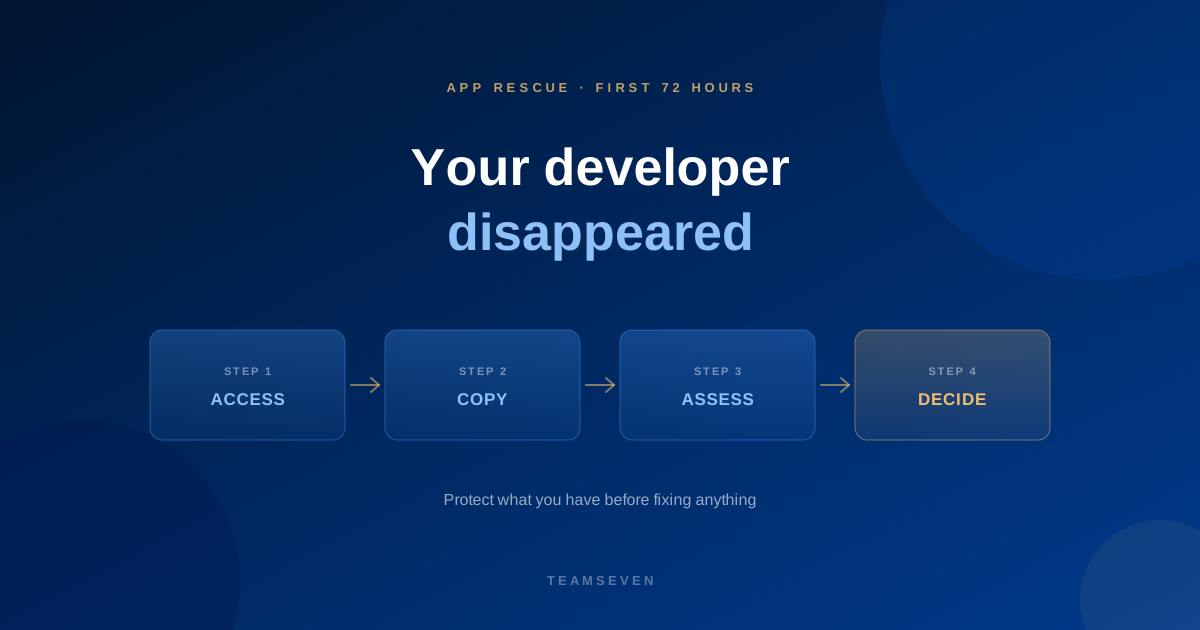
The first few days are about protecting what you have, not about fixing the code. Here's the order we'd work in.
Hours 0–24: secure access
Before anything else, make sure you control the accounts your product depends on. Work through this list and write down who owns each one today:
- Domain name and DNS
- Hosting or cloud account (AWS, Azure, Vercel, Supabase and so on)
- Code repository (GitHub, GitLab, Bitbucket)
- Database and its backups
- App store accounts, if you have a mobile app
- Payment provider (Stripe or similar)
- Email sending and any third-party APIs
If any of these are in the developer's personal name, ask politely and in writing for them to be transferred. If there's no reply, contact the provider: most have a process for proving business ownership.
Change passwords and remove the developer's access only once you're sure you hold the admin account yourself. Locking yourself out is worse than waiting a day.
Hours 24–48: take a copy of everything
- Download the code from the repository, including every branch.
- Take a fresh database backup and store it somewhere you control.
- Export any files users have uploaded.
- Save the configuration: environment variables, API keys and settings. Keep them private.
- Collect the paperwork: contracts, specs, invoices, messages and any documentation.
If the code isn't in a repository you can reach, that's your most urgent problem. Without the source code you can run the app but not change it.
Hours 48–72: understand the state of the project
Now, calmly, find out what you have:
- Does the live app work? What's broken?
- Is the code in the repository the same as what's running live?
- What was finished, what was half-built and what was never started?
- Are there bills or renewals coming up that could take the app offline?
This is where an outside review helps. A team that reads code for a living can tell you in days what's solid, what's risky and what it would take to finish. See what a code audit should tell you.
Then decide: fix, finish or rebuild
With the facts in hand, the options are usually:
- Stabilise and maintain: the app works, it needs a new owner. Maintenance starts from $700 a month.
- Finish it: a fixed quote to complete what was started.
- Rebuild parts of it: when some of the code can't be trusted. Our rewrite or refactor guide explains how to choose.
Our software project rescue service starts by reading the code and giving you an honest assessment before quoting anything.
Who owns the code if my developer disappears?
Check your contract. Many say the client owns the code, but that only helps if you can get hold of it. That's why securing the repository comes first.
Can a new team take over code they didn't write?
Yes. It starts with reading and documenting the code, then fixing anything urgent. Most projects can be picked up; the question is how much needs to change.
How do I stop this happening again?
Keep every account in the business's name, make sure the code lives in a repository you own, and ask for documentation as part of the work. We hand over Git repositories and written documentation on every project.
Stay connected
Build notes, launches, and new articles from the Teamseven team.