
Pricing a Removals Job: Surveys, Volume and Storage Billing
How removals firms turn a survey into a price: rooms and items to volume, volume to crew and vehicles, extras and access, and recurring storage billing.

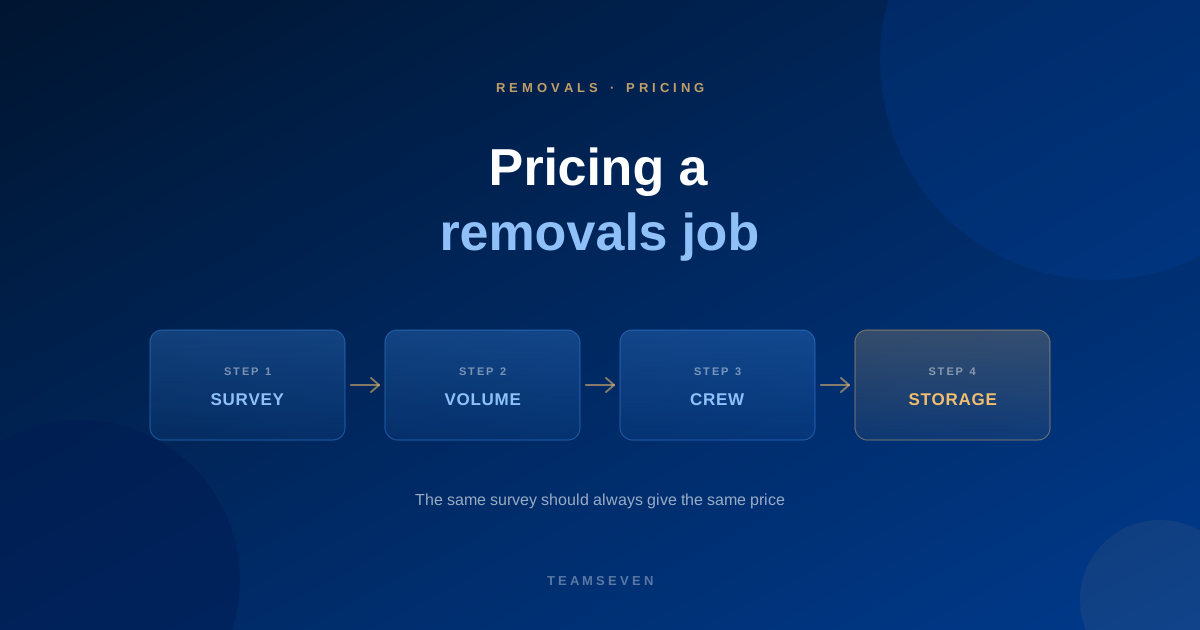
Two estimators in the same firm can price the same move differently. One remembers the awkward staircase, the other doesn't. One adds packing materials, the other forgets. Neither is wrong; the pricing just lives in their heads.
Consistent pricing is one of the quickest wins in a removals business, and it starts with the survey.
From survey to volume
Most removals pricing rests on how much there is to move. The survey records it room by room: furniture, boxes, appliances, items needing dismantling, and anything fragile or unusual.
Each item has a typical volume, usually in cubic feet or cubic metres. Add them up and you have the load. From the load you can work out how many vehicles and how many people the job needs, and roughly how long it will take.
The survey should also record what affects the work but isn't furniture:
- Access: stairs, lifts, narrow hallways, long carries
- Parking: permits, distance from the door, restrictions
- Distance between addresses
- Timing: weekends, end of month, key-release deadlines
From volume to price
With the load and the conditions known, the price usually combines:
- Crew time, based on the number of people and hours
- Vehicles, based on size and how many
- Mileage or travel time
- Extras: packing, materials, dismantling and reassembly, specialist items
- Access and parking adjustments
- Storage, if goods are held between moves
The rates are yours. What matters is that the same survey always produces the same price, whoever writes the quote.
Storage billing
Storage turns a one-off job into recurring revenue, and it's where many firms leak money. Containers or units, the contents of each, the start date and the billing cycle all need to be tracked. When this runs on a spreadsheet, missed invoices and wrong contents lists are common. We cover the storage side in more depth on our self-storage software page.
Where software helps
In i-mve the survey and the quote live in the same place. Surveyors record rooms and items, volumes are calculated, and the quote is built from the firm's own rates. Extras and access notes carry through to the job sheet, so the crew knows what was promised. When the job is done, the invoice comes from the same record and goes to the firm's accounting package.
That consistency does three things: quotes go out faster, the crew turns up with the right vehicle, and the invoice matches what was agreed. It also removes a common source of revenue leakage: extras agreed on the day and never billed.
Should removals firms price by volume or by hours?
Most use volume to size the job and then price the crew, vehicle and time it needs. Whichever you use, the key is consistency: the same survey should always give the same quote.
Can customers do their own survey online?
Some firms offer a self-survey for smaller moves, where the customer lists items room by room. It speeds up quoting, but a proper survey is still safer for larger or complicated moves.
How do I stop extras being forgotten on the invoice?
Record them against the job when they're agreed, on the job sheet or a mobile app, so the invoice picks them up. See how removals companies lose jobs between enquiry and quote for the earlier part of the flow.
Stay connected
Build notes, launches, and new articles from the Teamseven team.