
Onboarding a Remote Developer: The First Two Weeks
A remote developer's first two weeks decide how fast they become useful. A plan for access, context, a first small task and a working rhythm.

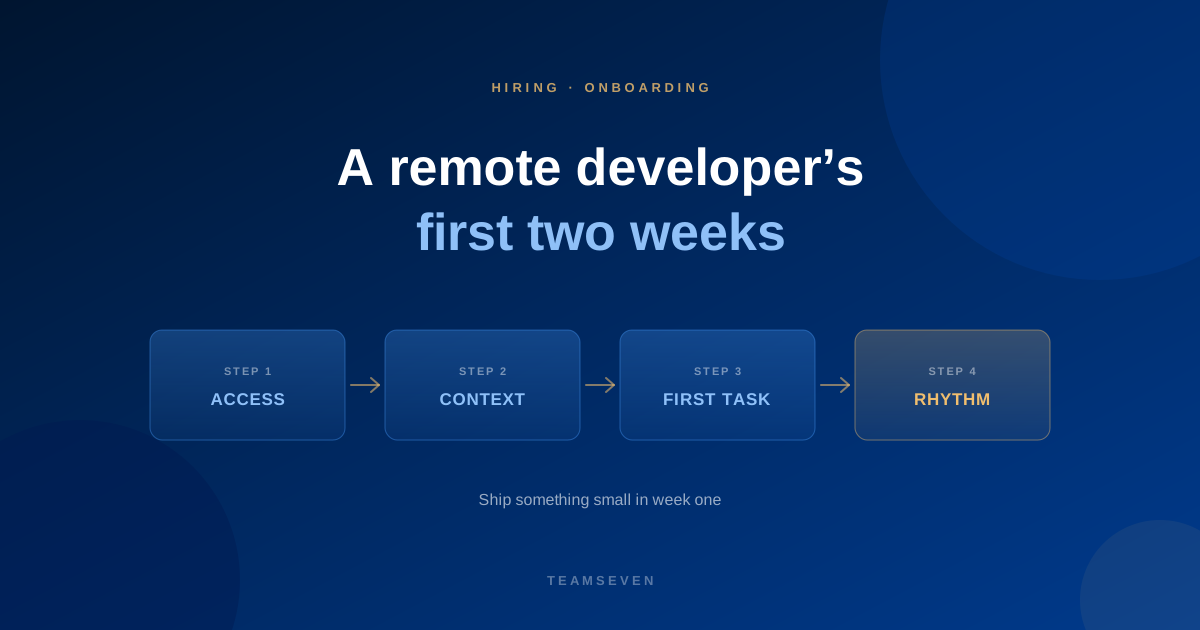
When a developer joins your team through staff augmentation, the first two weeks set the pace for everything after. Get them right and the developer is contributing quickly. Get them wrong and you pay for weeks of waiting on access and guessing at context.
This is the plan we follow when our engineers join a client's team.
Before day one
- Accounts ready: repository, Slack, the ticket board, email, and any staging environments
- A short brief: what the product does, who uses it, and what the next month's priorities are
- A named contact on your side for questions
Missing access is the single most common reason a first week is wasted.
Week one: context and a first small task
Day 1: meet the team
A welcome call with the people they'll work with, a walk through the product as a user sees it, and agreement on how and when you'll talk.
Days 2–3: read and run
The developer gets the project running locally, reads the code around the areas they'll work on, and asks questions. Good questions this week save weeks later.
Days 3–5: ship something small
A small, real task, like a bug fix or a minor improvement, taken all the way to production. It tests the whole path: code, review, deployment, and the people involved.
Week two: a real piece of work and a rhythm
- A proper task from the backlog, sized to finish within the week
- Code review from someone on your team, both ways if possible
- A working rhythm: our clients hear from us on Slack twice a week at least, with what's done, what's next and what's blocked
- Documentation: anything the developer had to figure out gets written down for the next person
What we do on our side
Our engineers join your stand-ups, work in your repository and follow your conventions. Our co-founders stay involved: Rehan handles day-to-day client contact, and we check in on how the placement is going. We hire engineers for strong fundamentals and curiosity, and give them time to learn a stack properly.
Signs onboarding is going well
- The first small change is live by the end of week one
- Questions shift from "where is this?" to "should we do it this way?"
- You're spending less time explaining and more time reviewing
Read more
- How time-zone overlap works with a team in Lahore
- What a $2,500-a-month developer gets you
- Hire a dedicated development team: a complete guide
How long before a remote developer is productive?
With access ready on day one and a small first task, many developers ship something real in their first week. Full productivity on a complex codebase takes longer, depending on its size.
What do we need to prepare before the developer starts?
Access to the repository, communication tools and ticket board, a short product brief and a named contact. That's most of it.
Who manages the developer day to day?
You set the priorities and review the work. We stay involved on our side, handle any issues with the placement and make sure the rhythm of updates holds.
Stay connected
Build notes, launches, and new articles from the Teamseven team.