Replacing REDCap Forms and Spreadsheets With a Research Platform
When a research programme outgrows REDCap forms, spreadsheets and paper logs, a purpose-built platform can help.

REDCap is a capable tool for research data collection. Many programmes start there, add a few spreadsheets for the things REDCap doesn't do, and keep paper logs for sessions. For a while it works.
That was the position of the autism research team at Ball State University before we built COMPASS. Their programme ran on a mix of REDCap forms, spreadsheets and paper session logs. COMPASS replaced all three with one platform shared by trainers, consultants, teachers and parents.
When forms and spreadsheets stop being enough
The programme has many roles
Researchers, trainers, consultants, teachers and families all need to see and add different things. General-purpose forms and shared spreadsheets make it hard to give each role the right view without giving everyone everything.
The work is ongoing, not a single survey
COMPASS supports plans and coaching over year-long and quarterly cycles, with surveys and consultations along the way. When a programme is a relationship over time, not a one-off data collection, tracking it across disconnected tools gets painful.
Data lives in too many places
When some data is in forms, some in spreadsheets and some on paper, analysis starts with someone reconciling it all by hand. Mistakes creep in, and the latest picture is always a few days old.
Participants need to see progress
Parents in COMPASS relate to their child's progress through surveys and updates. Forms built for researchers aren't designed for that.
What a research platform should do
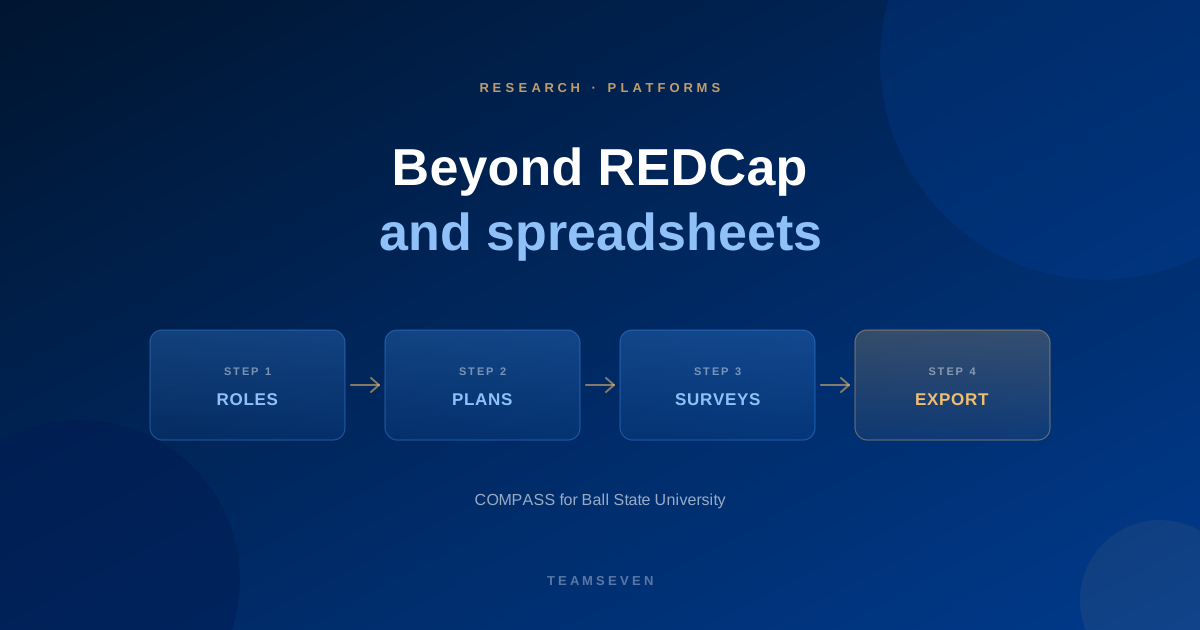
- Role-based access, so each person sees what they should and nothing more
- Structured plans and cycles, matching how the programme runs
- Surveys and session records in one place, linked to the right participant
- Progress views for participants and families, where appropriate
- Export for analysis, so researchers can still use their preferred tools
- Careful handling of sensitive data, with access controls and audit trails, built to the rules that apply, such as HIPAA
Should you replace REDCap?
Not always. REDCap is excellent at what it's designed for. A custom platform makes sense when the programme's workflow, roles and ongoing relationships don't fit a forms-based tool, and the workarounds are costing time and data quality.
Our write-up of the build is in how we built a clinical research platform. For the wider sector, see our autism and behavioural health software page.
Is a custom research platform built to HIPAA rules?
It can be. COMPASS was built to HIPAA rules, with access controls and careful data handling. We don't hold certifications ourselves; we build to the rules your institution requires.
Can researchers still export data for analysis?
Yes. A good platform exports clean data for statistical tools, so researchers keep their existing analysis workflow.
How long does it take to build a research platform?
It depends on the programme's roles and workflows. We map the programme first and give a fixed quote. Most full platforms land between $10,000 and $30,000.
Stay connected
Build notes, launches, and new articles from the Teamseven team.