
Running Car Parks With No Staff at the Gate: What Has to Be True
Automated car parks only work when plate reading, permissions, payments and gates work as one, and keep working when things fail.

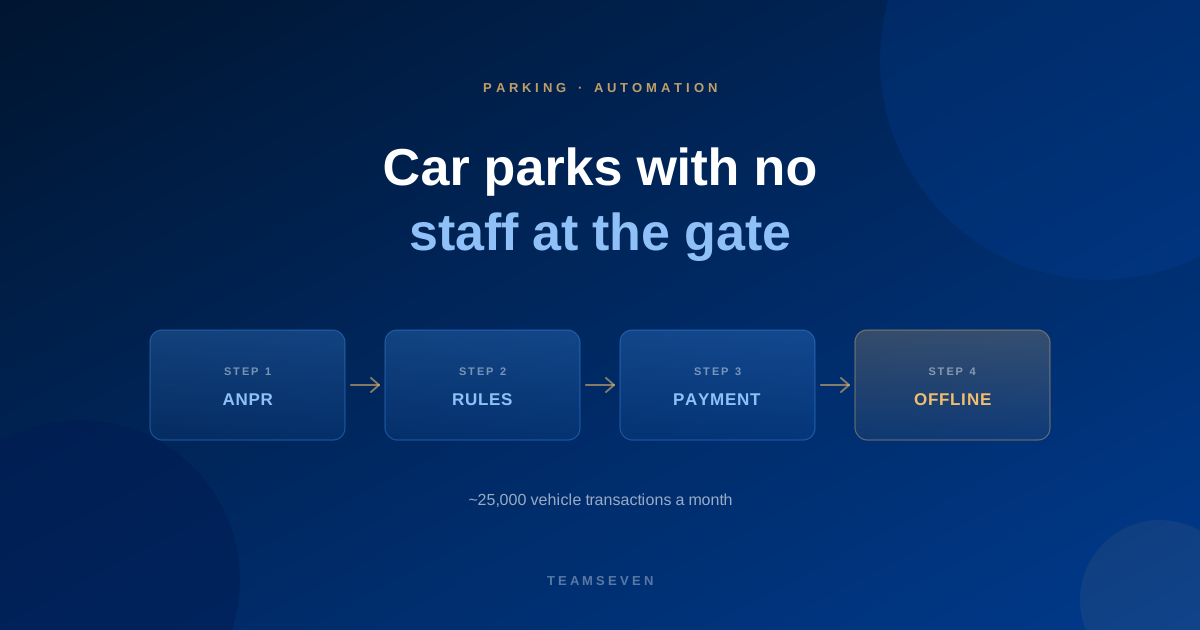
Our Australian parking client started with nothing but an idea: parking that runs without people. Today the platform we built runs across 17 sites, including a national ambulance service and major hotel chains, and handles around 25,000 vehicle transactions a month. Routine entries and exits need nobody at the gate, and operators have moved the staff time that used to go on peak-hour access to other work.
Getting there isn't about any one clever piece of technology. It's about several ordinary things all being true at once.
1. The system knows who every vehicle is
Automatic number plate recognition (ANPR) reads the plate. The software then has to decide, in a second or two, what that plate is allowed to do: a permit holder, a pre-booked visitor, a staff member, an emergency vehicle, or a walk-up visitor who will pay.
That means permits, bookings and access rules all live in one place and are checked on every read. We cover the camera side in ANPR camera integration.
2. Every site can have its own rules
No two car parks are the same. One-way and two-way sites, reserved bays, monthly permits, visitor tariffs, white-labelled sites for different operators, and pay-on-exit all behave differently. The software has to let operators set rules per site without a developer.
3. Payment is part of the flow
For visitors, the payment has to happen at the barrier or in an app, be tied to the visit, and open the gate the moment it clears. Our client uses both Windcave and Stripe; we explain why in Windcave vs Stripe for unattended parking payments.
4. The gate keeps working when the internet doesn't
This is the one people underestimate. If a site loses its connection and the gates stop, you have an angry queue, or worse. At an ambulance station, it simply can't happen.
In the platform we built, each site has a local controller that holds the current access rules and syncs with the cloud every few seconds. If the connection drops, permitted vehicles still get in and out, and the system catches up when it's back. The ambulance service deployment passed their operational reliability review on that basis. More on that in parking for hotels and hospitals.
5. Exceptions have a path
Plates are misread in bad weather. A card is declined. A visitor's car won't be recognised. Unstaffed doesn't mean no humans: it means exceptions are rare and have a clear route, such as an intercom, a help line or a remote gate release, so they don't need someone standing there all day.
6. Operators can see everything at once
Running several sites from one place needs a live view of occupancy, movements, payments and device health, with alerts when a camera or barrier needs attention. See real-time occupancy dashboards for multi-site parking.
Is it worth it?
For our client, yes: routine access needs nobody, and staff time goes elsewhere. Whether it's worth it for your sites depends on volume, the hardware you have and how varied your rules are. That's worth mapping before buying anything; our business process audit is free.
Do automated car parks still need staff?
Routine entries and exits don't. You still need a way to handle exceptions, like a misread plate or a declined card, but that can be a remote help line rather than someone at the gate.
What hardware does an automated car park need?
ANPR cameras, barriers or boom gates, a local controller on site, and payment terminals where visitors pay on exit. We build the software and integrate with the hardware you choose through its SDK or API.
Can one system run car parks for several operators?
Yes. Our client's platform supports white-labelled sites, so each operator has its own branding, data and pricing. See our parking software page.
Stay connected
Build notes, launches, and new articles from the Teamseven team.